

The UN General Assembly on Friday approved the declaration initiated by France and Saudi Arabia, calling for support of a two-state solution, with 142 countries voting in favor, 10 against, and 12 abstaining. The “New York Declaration,” discussed at a July conference in New York, aims, according to its sponsors, to outline an “irreversible” path toward establishing a Palestinian state.
Countries that voted against the measure were Israel, the United States, Argentina, Hungary, Micronesia, Nauru, Palau, Papua New Guinea, Paraguay, and Tonga. Those that abstained included Albania, Cameroon, the Czech Republic, Congo, Ecuador, Ethiopia, Fiji, Guatemala, North Macedonia, Moldova, Samoa, and South Sudan.
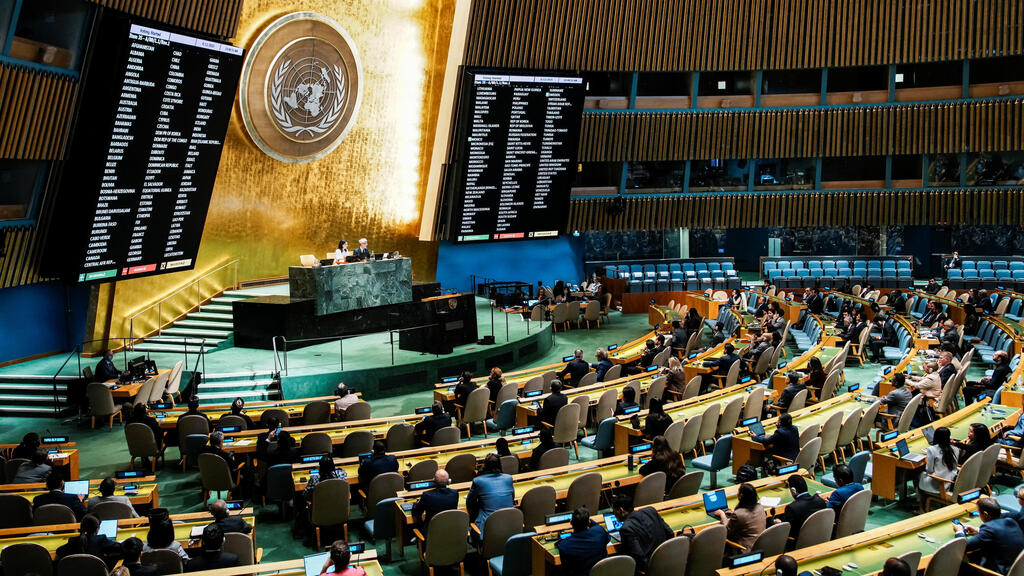
Israeli Ambassador to the UN Danny Danon sharply criticized the resolution: “This is an empty proposal that completely ignores reality—not diplomacy. It is a one-sided declaration that embraces the lies of our enemies and legitimizes Hamas. This proposal does not bring peace; it prolongs the war. When Hamas applauds such decisions, it is clear this is a reward for terror, not a step toward peace.”
Alongside condemnation of Hamas and references to hostages, the proposal includes sharp critiques of Israel, citing “forced displacement” and territorial changes, denouncing IDF strikes that “caused a humanitarian disaster,” highlighting UNRWA’s “essential role” and pledging continued funding, and calling for the “right of return.”

The UN vote
The declaration also demands that Israel immediately halt “settlement activities and settler violence,” links regional normalization to the creation of a Palestinian state, calls for full UN membership for Palestine, and includes a clause requiring revisions to educational curricula—not only in the Palestinian territories but also in Israel.
U.S. Secretary of State to highlight shared priorities
Amid these UN actions against Israel, U.S. Secretary of State Marco Rubio will visit Israel and Britain starting Saturday. Against the backdrop of tension following the Doha strike, the State Department said that in Israel, Secretary Rubio will outline U.S. priorities on the war with Hamas and broader Middle East security issues, reaffirming America’s commitment to Israel’s security.
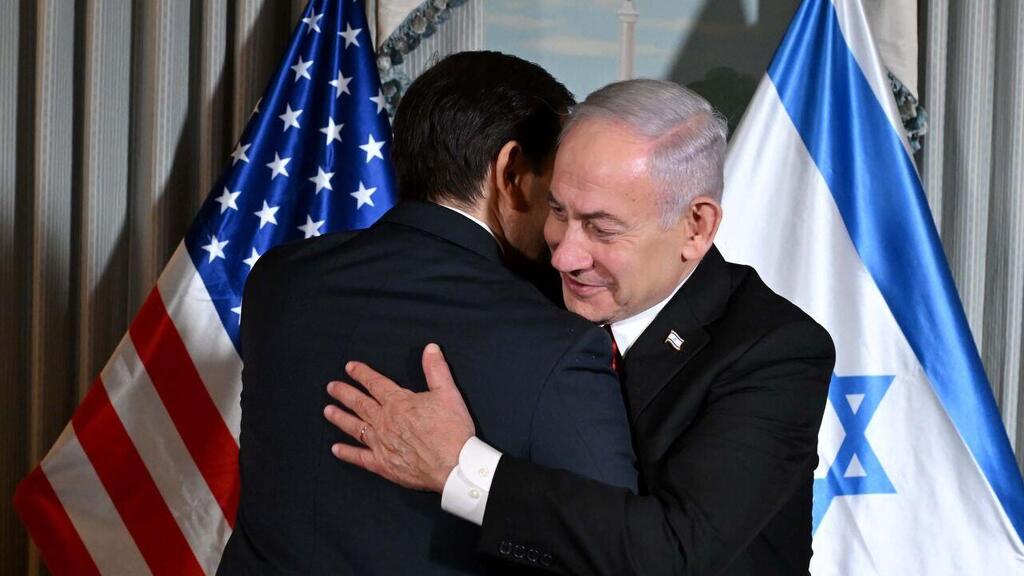
U.S. Secretary of State Marco Rubio and Prime Minister Benjamin Netanyahu
(Photo: GPO)
He will emphasize shared goals: ensuring Hamas never regains control of Gaza and securing the release of all hostages. Officials said he will discuss operational objectives related to Israel’s “Operation Gideon Chariots II” and U.S. efforts against anti-Israel actions, including one-sided recognition of a Palestinian state and legal battles in international courts.
Rubio will also meet with hostages’ families to stress that freeing their relatives remains a top priority. He will then continue to Britain, joining President Donald Trump’s delegation, although Trump is not expected to visit Israel. In London, Rubio will meet the British foreign secretary to discuss U.S.-UK cooperation on global challenges, including ending the Russia-Ukraine war, preventing Iran from acquiring nuclear weapons, securing the release of hostages held by Hamas, and achieving a ceasefire in Gaza.