

Top officials in the administration of U.S. President Donald Trump are deeply concerned that his peace plan for the Gaza Strip—designed to formally end the fighting between Israel and Hamas—may collapse because of the difficulties in implementing key parts of the proposal, Politico reported on Tuesday, citing internal documents circulated among U.S. officials.
The documents—presented at a meeting last month in Israel of some 400 officials and private‑sector attendees at the U.S. military’s newly created Civil‑Military Coordination Center (CMCC) in Kiryat Gat—were prepared by U.S. security agencies and outside advisers. Lt. Gen. Michael Fenzel, the U.S. security coordinator for Israel and the Palestinian Authority, organized the conference.

According to Politico, a 67‑slide unclassified presentation included a slide with a question mark between “Phase 1” and “Phase 2” of the Trump plan—a visual indication of uncertainty about how the next steps will be carried out.
The presentation highlighted U.S. government “situation reports” on conditions in Gaza and consulting documents from the Blair Institute, founded by former British prime minister Tony Blair, who has been involved in mediation efforts. One U.S. security official told Politico that the presentation reflected genuine concern in Washington about the initiative’s future.
While the documents stress that the U.S. remains committed to the deal, they underscore that the obstacles to stabilizing the Gaza Strip and achieving a lasting peace between Israel and Hamas are at odds with the public optimism expressed by Trump and his administration.
The next phases of the plan involve an international stabilization force to monitor a ceasefire and oversee the demilitarization of Gaza, but key details remain unclear. Questions remain about the legal mandate of the force, rules of engagement, composition, deployment location and oversight—one slide indicated the United States would oversee the force. According to the report, Israel is reluctant to withdraw from the territory while Hamas remains armed, and there is resistance to involvement of the Palestinian Authority in Gaza.
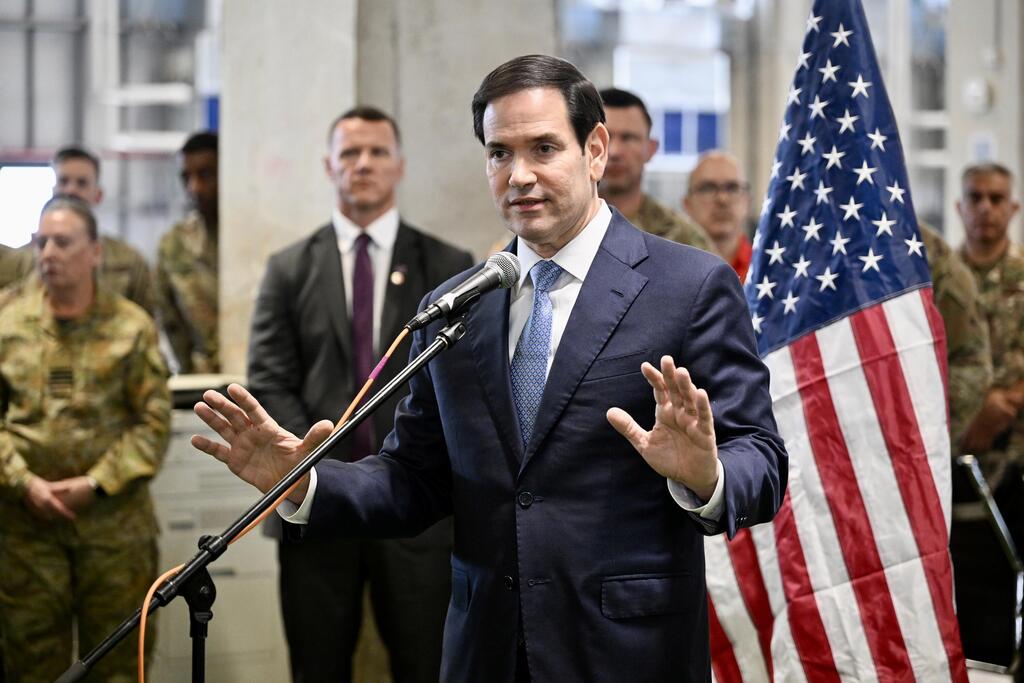
US Secretary of State Marco Rubio
(Photo: David Azagury, U.S. Embassy Jerusalem)
A second worrying trend: in the absence of sustained U.S. pressure, analysts say Gaza could effectively split into two zones—one under Israeli control, the other under Hamas—if the transition stalls. Western sources warn that a freeze in progress could yield years of de facto separation in the enclave.
David Schenker, who served as assistant secretary of State for the Middle East during Trump’s first term, told Politico the effort is “a full‑time job,” and that the administration’s small diplomatic corps may not be sufficient for the scale of work required.
“Divorced from the peace deal is a plan of how to actually implement this peace deal,” said one of the participants of the symposium. “Everyone is floating around at 40,000 feet and nobody is talking operations or tactics.”
Another internal document cited in the presentation warns that “Hamas is buying time for eventual reassertion of control. Every delay works in their favor,” and notes threats to humanitarian and security operations in areas of Gaza not under Hamas’s control.
The meeting also raised concerns about the U.S. role. Some officials asked whether a long‑term American commitment was compatible with Trump’s America First policy. One participant said, “There’s a bigger question, which is whether it’s advisable or consistent with the president’s America First agenda for the United States to have a long term involvement in Gaza. This is an issue that’s being worked out."