


The Knesset approved a bill to dissolve itself in a first reading overnight Tuesday, moving the country closer to another national election.
The bill passed by a vote of 106-0, with no lawmakers voting against it.
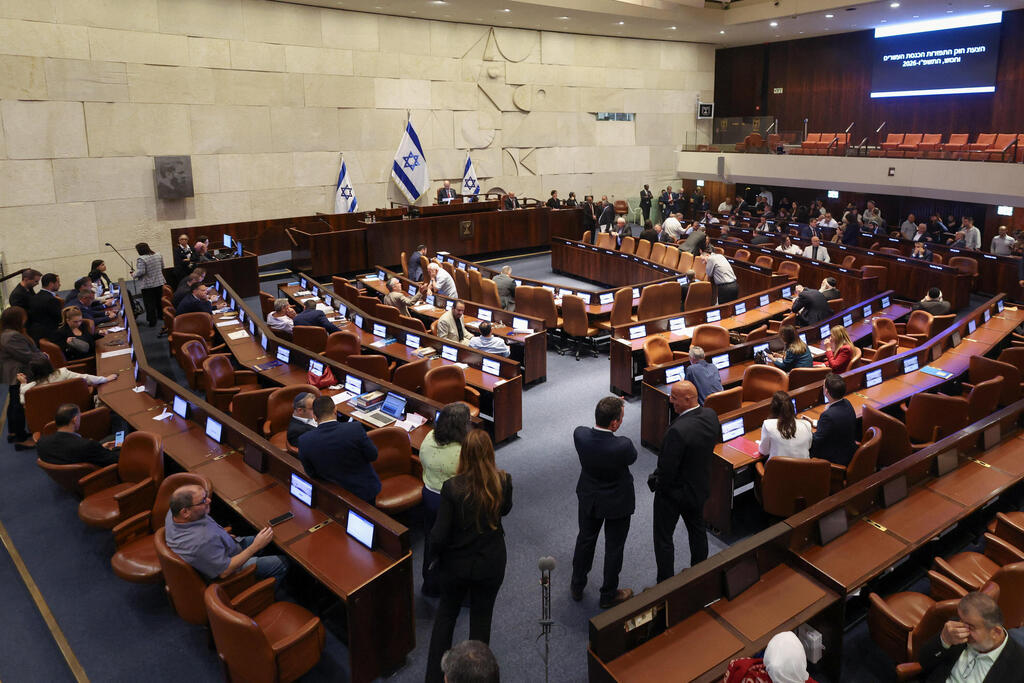
The Knesset plenum
(Photo: REUTERS/Ronen Zvulun)
Last month, the Knesset approved the dissolution measure in a preliminary vote, with support from 110 lawmakers from both the coalition and opposition. The proposal was then sent to the House Committee before returning to the plenum for its first reading.
The legislation will now return to committee for further deliberations before being brought back for second and third readings, the final stages required before parliament is officially dissolved and an election date is set.
Yinon Azoulay, a representative of Shas party leader Aryeh Deri during committee discussions on the bill, said Monday that he hoped agreement on an election date could be reached “this week, or at the latest at the beginning of next week.”
The version of the bill prepared for the first-reading vote included a proposed election window ranging from Sept. 8 to Oct. 25.
Coalition Whip Ofir Katz of Prime Minister Benjamin Netanyahu’s Likud party told the committee that a date would be finalized soon. “We will formulate an election date this week or next week,” Katz said. “We will set a date before the second and third readings of the dissolution bill.”
Dean Livneh, acting director-general of the Central Elections Committee, said the committee would be able to conduct elections on whatever date lawmakers ultimately choose, even if less than 90 days remain between the dissolution of parliament and election day. “That is not a period established by law,” Livneh said. “However, we would appreciate not being given less than 83 days between the dissolution and the election.”
Livneh also warned lawmakers about the logistical challenges posed by scheduling elections around the Jewish High Holidays. “The most complicated date for us is Sept. 15,” he said, noting that it falls between Rosh Hashanah and Yom Kippur.
According to Livneh, such timing would reduce the period available for counting ballots and conducting election oversight operations by at least one day, creating additional pressure on election officials. “If that happens, we would ask for an additional day to publish the final results,” he said. “But that would require legislative changes, because under the law we must publish final results within eight days of the election.”
Israel has held a series of elections in recent years amid recurring political deadlock, although Netanyahu’s current government has remained in power longer than several of its predecessors. The latest dissolution effort comes as lawmakers prepare for another potentially contentious election campaign.