


Eyewitness accounts obtained by ynet reveal frictions in the joint Israeli-American operations at the U.S.-led Civil Military Coordination Center (CMCC) in southern Israel’s Kiryat Gat, particularly over information security and aid coordination.
Earlier this month, during a routine morning briefing attended by intelligence officials from Jordan, Egypt, the United Arab Emirates and other nations, U.S. drone footage showing IDF combat units in the Gaza Strip was displayed on a screen. A senior Israeli officer demanded that U.S. counterparts remove the image. The footage was captured by an unmanned aerial system controlled by U.S. forces.
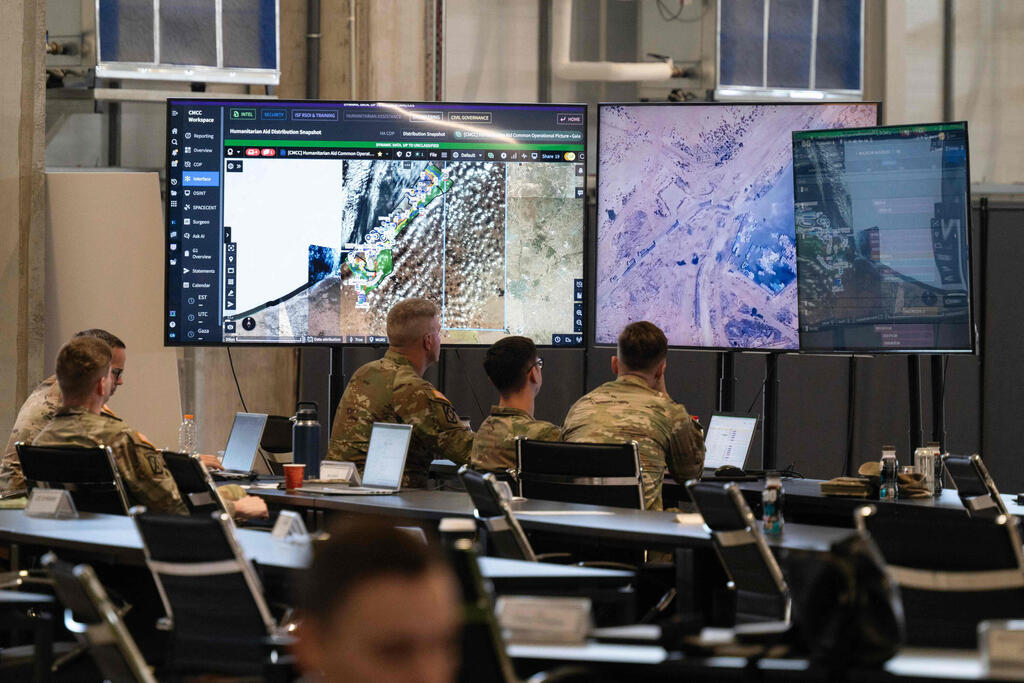
The images were taken outside the agreed scope of authority. Protocols for the multinational briefing — which include representatives from countries other than the United States and Israel — explicitly restrict imagery to humanitarian aid logistics, such as truck convoys, and prohibit showing Israeli troops in the field.
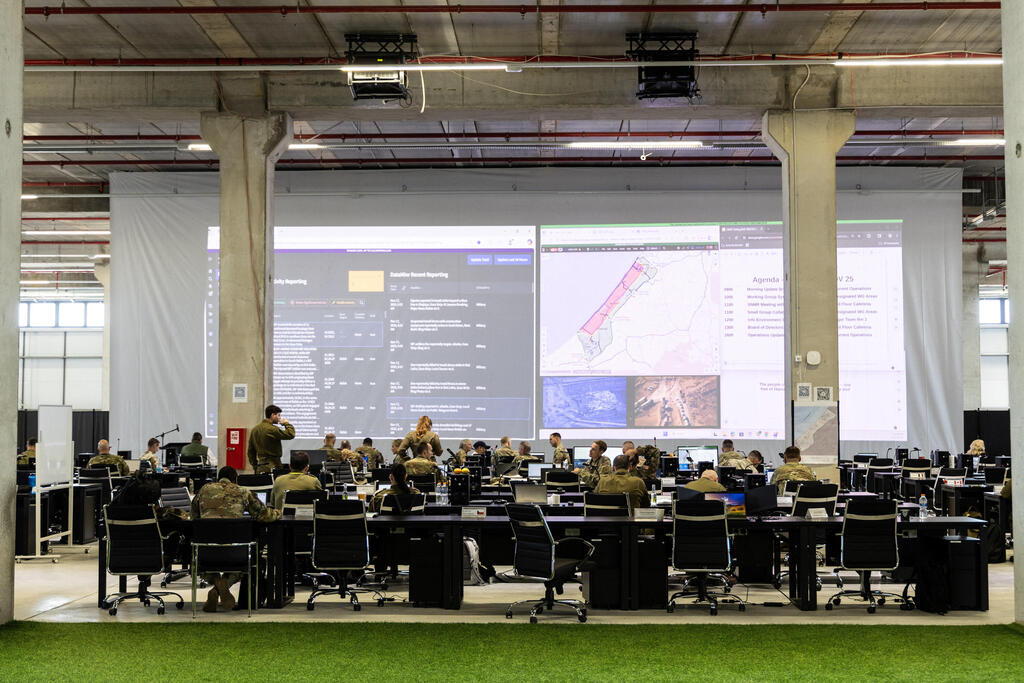
The CMCC in Kiryat Gat has become the most visible symbol on the ground of the internationalization of the conflict between Israel and Gaza. Additional accounts from the center describe near-daily friction between IDF personnel and U.S. forces over the provision of aid.
American officials have been pressing Israel to allow more so-called “dual-use” items into Gaza — civilian equipment such as generators that can support humanitarian needs but can also be repurposed for military use. The IDF has resisted, citing concerns that such equipment could be used by terrorists, not just civilians.
(Photo: AP Photo/Ariel Schalit)
Official policy holds that dual-use items can only be permitted entry with authorization from Israel’s Coordinator of Government Activities in the Territories (COGAT) — the Defense Ministry unit responsible for implementing civilian policy in the West Bank and Gaza — as well as approval from senior political leadership. Still, according to accounts on the ground, U.S. officials continue to press Israeli officers in the field to ease these restrictions.
In one dispute, according to accounts obtained by ynet, an Israeli officer opposed entry of a specific item and was told by a U.S. representative, “Don’t be paranoid.” On another occasion, Israel was asked to approve the entry of metal pipes for reconstruction of sewage infrastructure, but the parties agreed only to the entry of plastic pipes.
The CMCC issue was also raised in a closed session of the Knesset Foreign Affairs and Defense Committee. Knesset Member Amit Halevi of the ruling Likud party demanded that IDF representatives provide the full list of approved dual-use items. He made the request to the Defense Ministry as well, but received no response. Halevi said the pressure to admit such items could lead to weapons eventually reaching Hamas.
(Photo: AP Photo/Ariel Schalit)
Security officials speaking to ynet said responsibility for approving and admitting aid items remains solely Israeli. “The policy on aid entering the Gaza Strip is approved by Israeli political leadership and implemented by COGAT,” they said.
“Coordination mechanisms with international organizations and the UN, as well as the authority to approve items with Israeli authorities, remain with COGAT, including policy on dual-use items, which remains under Israeli responsibility due to the cynical exploitation by terrorist organizations in Gaza.”
‘Diplomatic focal point’ in Kiryat Gat
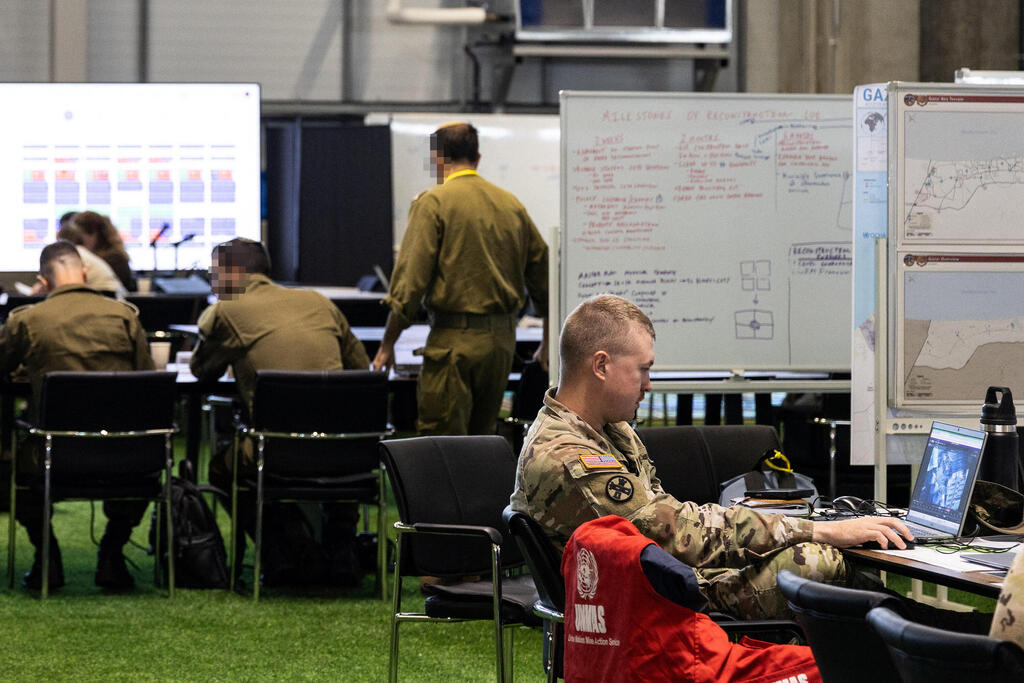
The three-story command center has been described by IDF officials in the committee as a “diplomatic focal point,” explaining why countries with no direct operational role send representatives. One floor is assigned to Israeli and IDF personnel, another to U.S. forces and a third to international delegates, some of whom represent nations reportedly slated to play active roles in a prospective peace council under U.S. President Donald Trump’s framework for ending the war in Gaza. Some of these countries, including Norway and Spain, maintain fraught relations with Israel.
The center facilitates joint working teams on Gaza’s reconstruction and logistical coordination of humanitarian aid. Nevertheless, lawmakers said they worry that anyone with a diplomatic passport could gain access. The IDF says it approves daily entry lists on a case-by-case basis and, under instruction from political leadership, has denied entry to Qatari, Turkish and Palestinian representatives. In one instance, a Palestinian official seeking to visit the command center was turned away.
The IDF declined to comment.