

President Donald Trump said the United States is not at war with Venezuela and signaled a long-term American role in the country’s future, hours after deposed Venezuelan leader Nicolás Maduro was arraigned in New York following his capture by U.S. forces.
In an interview with NBC News on Monday, Trump rejected calls by Venezuela’s opposition to hold new elections within 30 days, saying the country is not yet capable of voting.
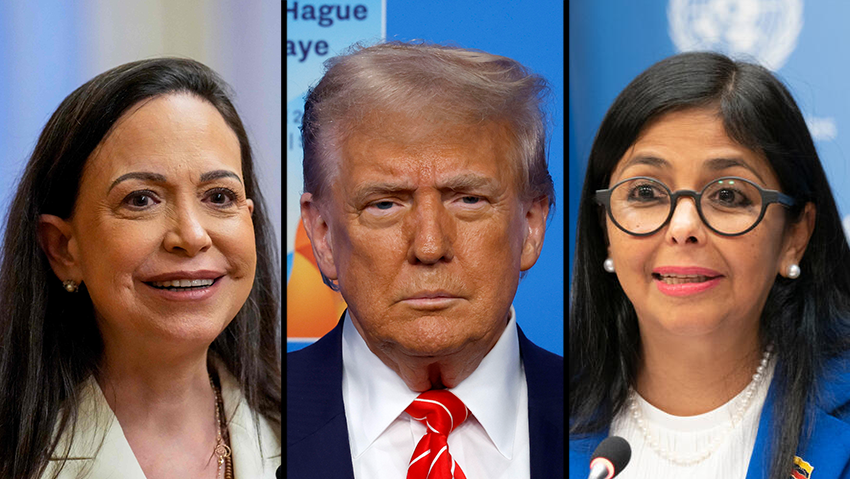
“We have to fix the country first. You can’t have an election. There’s no way the people could even vote,” Trump said. “No, it’s going to take a period of time. We have — we have to nurse the country back to health.”
Trump said the U.S. is not at war with Venezuela, despite the military operation that led to Maduro’s arrest.
“No, we’re not,” he said. “We’re at war with people that sell drugs. We’re at war with people that empty their prisons into our country and empty their drug addicts and mental institutions into our country.”
US oversight and oil plans
Trump said a group of senior U.S. officials will oversee Washington’s involvement in Venezuela, including Secretary of State Marco Rubio, Defense Secretary Pete Hegseth, Vice President JD Vance and Deputy White House Chief of Staff Stephen Miller.
“It’s a group of all. They have all expertise, different expertise,” Trump said. Asked who ultimately is in charge, he gave a one-word answer: “Me.”
He also said the United States may subsidize efforts by oil companies to rebuild Venezuela’s energy infrastructure, a project he said could take less than 18 months.
“It’ll be a lot of money,” Trump said. “A tremendous amount of money will have to be spent and the oil companies will spend it, and then they’ll get reimbursed by us or through revenue.”
Maduro arraigned, successor sworn in
Maduro was arraigned Monday in Manhattan on charges including narco-terrorism conspiracy and cocaine importation conspiracy after being seized in a U.S. raid in Caracas early Saturday. He pleaded not guilty and said he remains Venezuela’s legitimate leader.
Following his capture, Vice President Delcy Rodríguez was sworn in as Venezuela’s interim president. Trump said Rodríguez has been cooperating with U.S. officials but denied there was any coordination with her camp before Maduro’s removal.
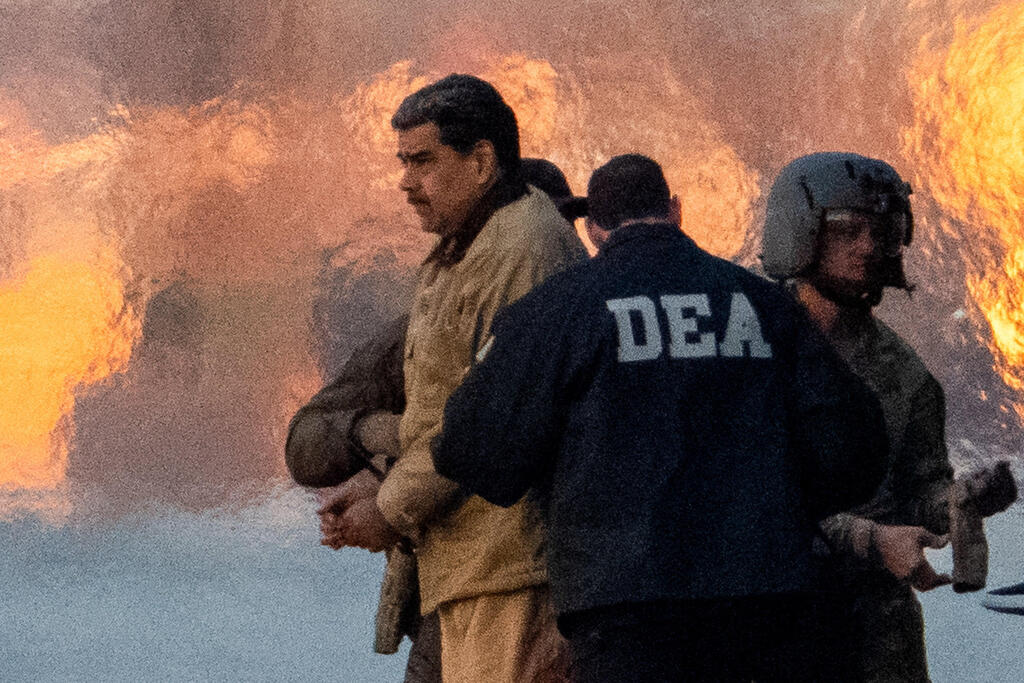
(Photo: REUTERS/Adam Gray)
“No, that’s not the case,” Trump said, adding that a decision will soon be made on whether to maintain or lift U.S. sanctions against her.
Asked whether there was any deal with Venezuelan officials to remove Maduro, Trump replied: “Well, yeah, because a lot of people wanted to make a deal, but we decided to do it this way,” saying the operation was carried out without help from Maduro’s inner circle.
Warning of further action
Trump said the United States could launch another military incursion if Rodríguez stops cooperating, though he said he does not expect that to happen.
“We’re prepared to do it,” he said. “We anticipated doing it, actually.”
He also dismissed reports that his reluctance to back opposition leader María Corina Machado is linked to her winning the Nobel Peace Prize last year, an award Trump has long sought.
“She should not have won it,” Trump said. “But no, that has nothing to do with my decision.”
Criticism and international fallout
Human rights groups reported increased security deployments in Caracas, including checkpoints, armed patrols and the temporary detention of journalists. Venezuelan authorities said at least 40 people were killed in the operation, while the U.S. military reported no American casualties.
The United Nations human rights office and France condemned the U.S. operation as illegal and a violation of international law, even as they acknowledged severe rights abuses under Maduro’s rule.
Trump said he did not seek new authorization from Congress for the raid and does not believe congressional approval would be needed for future military action.
“We have good support congressionally,” he said, declining to elaborate on what lawmakers knew in advance.