

Prime Minister Benjamin Netanyahu vowed Monday to raise the wreckage of the Altalena, the Irgun arms ship shelled during Israel’s 1948 War of Independence, after its remains were located off the Israeli coast nearly eight decades after it sank.
The announcement set off an immediate political battle over credit and memory surrounding one of the most divisive episodes in Israel’s early history.
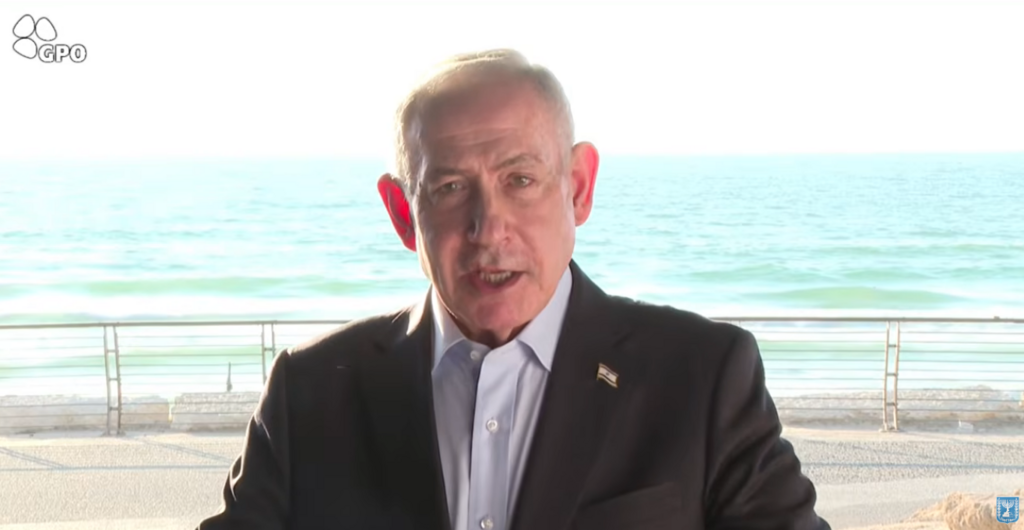
Netanyahu delivered a separate statement before National Security Minister Itamar Ben-Gvir and Heritage Minister Amichai Eliyahu held their own news conference about the discovery. Ben-Gvir’s aides described Netanyahu’s intervention as an “embarrassing event,” while Ben-Gvir used his appearance to take a swipe at the prime minister, saying Menachem Begin, the Irgun commander who later became prime minister and a founder of Netanyahu's Likud party, “knew well the taste of persecution — the taste of people not wanting to be photographed with you on the same stage.”
Despite the clash over credit, both Netanyahu and Ben-Gvir used the occasion to warn against internal conflict.
Netanyahu said the Altalena “will be raised from the depths of the sea.”
He recalled then-prime minister David Ben-Gurion’s order to open fire on the ship in June 1948, weeks after the establishment of the state and the creation of the Israel Defense Forces.
“Ben-Gurion decided to open fire on the Altalena,” Netanyahu said. “It rained fire on our fighters during the War of Independence. Haganah forces on the shore opened a deadly barrage that claimed the lives of 16 Irgun fighters and three IDF soldiers.”
Netanyahu said he had attended annual Altalena memorial ceremonies for years and accused political rivals of desecrating them with what he described as incitement against his camp.
He also sought to claim a role in the long search for the ship.
“In 2009, I established the Heritage Department in the Prime Minister’s Office,” Netanyahu said. “A few years later, in 2019, I instructed that the search be renewed with a special budget. Using documentation from the Altalena captain’s logbook, today, finally, after 78 years, we found the ship after it sank into the depths.”
Ben-Gvir: ‘The lesson of Altalena is no civil war’
At his separate news conference, Ben-Gvir said the Altalena affair left a “bleeding wound” in Israeli history.
“They tried to make this wound disappear, to erase the legacy of the fighters who fought,” he said. “That is no coincidence. It is a symbol of the national camp, of its leader and later prime minister.”
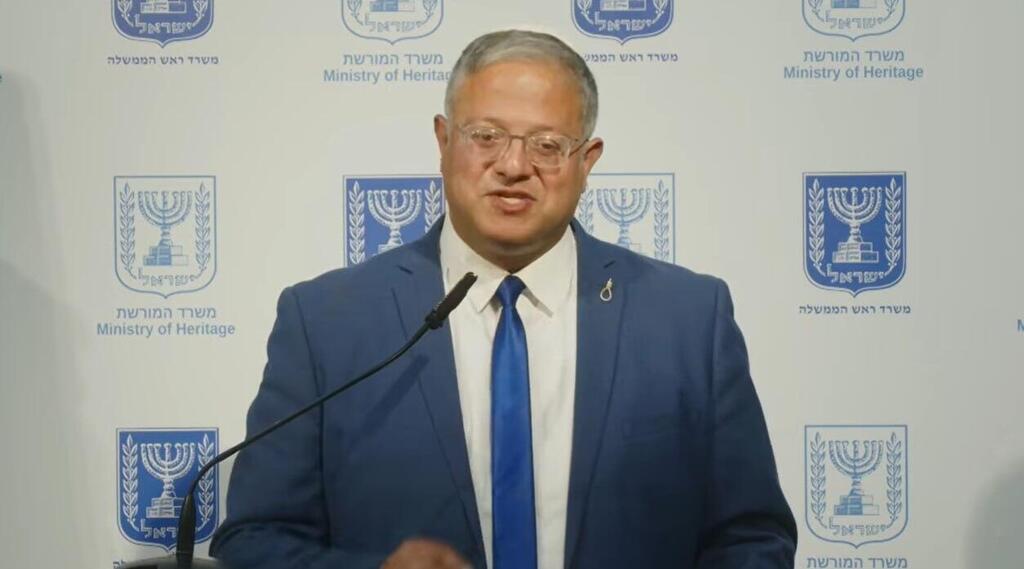
National Security Minister Itamar Ben-Gvir
(Photo: STV)
Ben-Gvir also described the discovery as personally meaningful. His mother had been an Irgun member as a teenager, he said, distributing leaflets and being arrested.
“I grew up at home on those stories of heroism,” he said. “Every home in Israel, no matter the background or community, no matter who we vote for — there must never be a civil war. That is the lesson of the Altalena.”
Likud Minister Haim Katz, who joined Ben-Gvir’s news conference, credited researcher Roni Sadeh with persistently pursuing the ship’s location and the Heritage Ministry with providing dedicated funding for the search.
Political scramble for credit
The discovery quickly became entangled in election-season politics.
Ben-Gvir moved swiftly to claim credit, releasing a video with Eliyahu in which he declared: “Today is a historic day. We found the Altalena.”
“After so many years of searching, Heritage Minister Amichai Eliyahu and I are happy to announce — the Altalena has been found,” he said. “There is a message in finding the Altalena precisely now. Disagreements are allowed. Differences of opinion are allowed. But there must never be a civil war.”
Netanyahu and Defense Minister Israel Katz were initially left outside the announcement. Netanyahu’s office was reportedly surprised by the news of the discovery, despite having known about the search, while the Defense Ministry was apparently not informed.
Netanyahu later joined the public battle over the discovery, unsurprising given the Altalena’s deep association with Begin, whose Herut movement eventually became a central component of Likud.
A ship loaded with immigrants and arms
The Altalena sailed from France to the newly established State of Israel in June 1948 carrying about 930 immigrants, including Holocaust survivors, as well as a large shipment of weapons.
The ship belonged to the Irgun, the pre-state underground militia led by Begin. The crisis erupted just after the IDF was established and the separate Jewish underground organizations were being dismantled and integrated into a single national army.
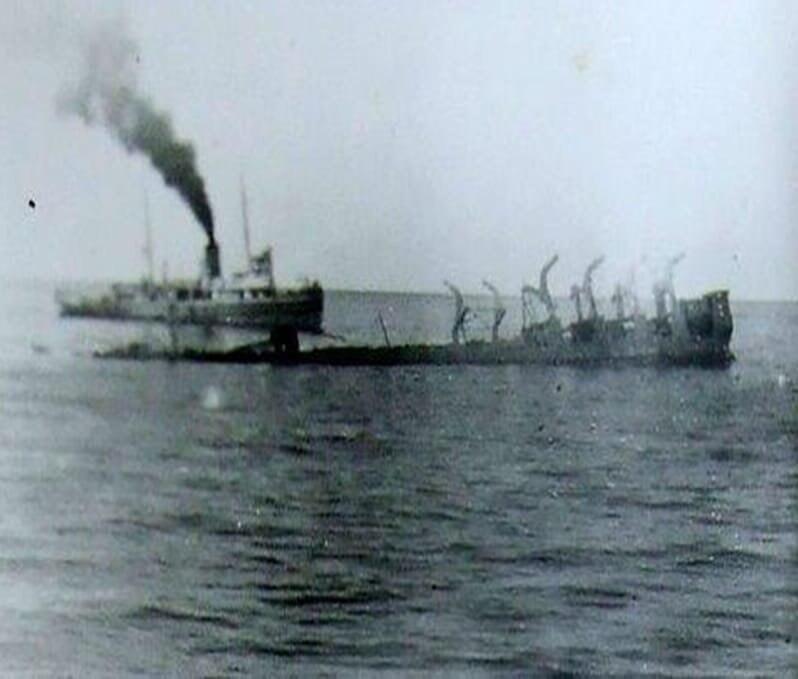
The final second of the Altalena
(Photo: Seven Seas)
Begin demanded that some of the weapons aboard the Altalena be allocated to Irgun units in Jerusalem. Ben-Gurion rejected the demand and insisted that all the weapons be handed over to the IDF.
When the dispute escalated, Ben-Gurion ordered military action against the vessel. In the ensuing fighting, 19 people were killed — 16 Irgun members and three IDF soldiers.
Begin, despite coming under fire, ordered his men not to retaliate in a way that could trigger a civil war, a decision that later became central to his political legacy.
Netanyahu promises to raise it — but experts question feasibility
The Altalena remained visible for months off the Tel Aviv coast before Ben-Gurion ordered it removed. Israeli forces later towed it farther out to sea and deliberately sank it.
The ship’s precise location was subsequently lost because records of the operation were incomplete or obscured.
Officials said Monday that the wreckage had been located about 20 kilometers, or 12 miles, off Israel’s coast at a depth of 503 meters, or about 1,650 feet, using sonar technology.
What happens next is less clear.
Netanyahu has promised that the Altalena will be raised, but recovering an entire vessel from that depth would be an extraordinarily difficult engineering operation and may prove impossible.
Among the alternatives being discussed are a floating memorial, a maritime heritage center or the recovery of selected parts of the wreck.
Veteran Yedioth Ahronoth journalist Shlomo Nakdimon, a former Begin adviser and author of a book on the Altalena affair, cast doubt on claims that the ship had been found intact.
“If they are talking about the Altalena as it once was — that does not exist,” Nakdimon said.
He said the lower part was sunk while the upper section had been dismantled and burned.
“Ben-Gvir and Eliyahu announced that they had discovered the Altalena in its entirety. It would take an act of God, because I saw it when it was sunk and it disappeared,” he said. “The lower section was sunk, the upper section was dismantled and set on fire. Irgun archives describe exactly where that section is located.”
The fight over the Altalena narrative
The discovery comes amid a broader political struggle over how the Altalena affair should be remembered.
About a year ago, seven ministers led by Eliyahu asked Defense Minister Israel Katz to remove the artillery piece known as the “holy cannon” — the IDF gun that fired at the Altalena — from the military’s Command and Staff College at Glilot and transfer it to the Menachem Begin Heritage Center in Jerusalem.
The cannon had been displayed at the senior officers’ college as a teaching tool about the tragedy and the importance of national unity.
The ministers argued that displaying it there sent a distorted educational message.
“The message is as though force and gunfire prevented disaster, while the truth is the opposite: restraint and the refusal to return fire saved the nation,” they wrote.
Katz later said he would order the cannon transferred so it could “express the true meaning of the event, out of deep appreciation for the work and legacy of Menachem Begin, who prevented a civil war.”