

As negotiations between Washington and Tehran continue without producing results, U.S. President Donald Trump’s frustration is growing accordingly.
According to a report published overnight between Wednesday and Thursday in The Washington Post, the president’s anger reached boiling point when he demanded answers from Defense Secretary Pete Hegseth over why he had apparently been misled about “extreme munitions shortages” that now threaten to limit U.S. military options against Iran.
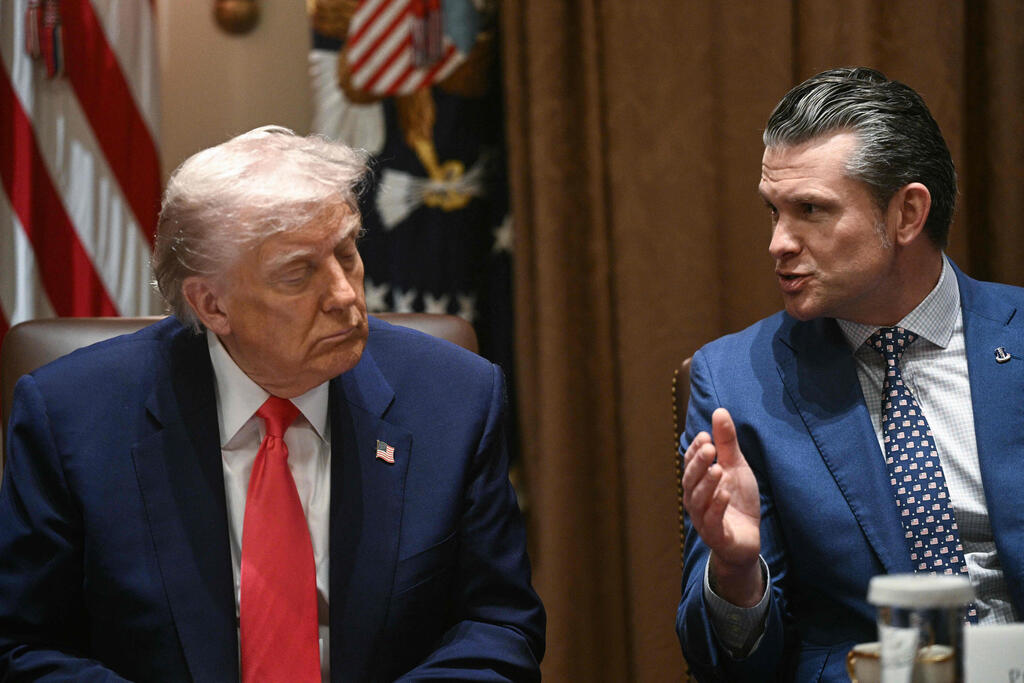
According to two people who spoke with the newspaper, the confrontation took place during a Cabinet meeting at Camp David last Friday, when Trump vented at Hegseth that he thought the munitions issue “had been fixed.”
Hegseth, for his part, reportedly shifted responsibility to his deputy, Stephen Feinberg, claiming that Feinberg had failed to ensure the president was fully informed about the shortages.
The White House and Pentagon strongly denied the report. White House press secretary Karoline Leavitt said the described confrontation was “100% fake news” and added that Trump had the “utmost confidence” in Hegseth.
Pentagon chief spokesman Sean Parnell also denied that the defense secretary had misled the president or blamed Feinberg. “Secretary Hegseth did not mislead anyone about our munitions posture, and he did not blame Deputy Secretary Feinberg,” Parnell said. “These claims about depleted stockpiles, internal disagreements, the secretary’s position on Iran … are equally fictional.”
The report follows a Reuters publication saying that the U.S. military expended a large share of its long-range precision missile inventory during five months of war with Iran, with concern growing in Washington over preparedness for future conflicts.
According to two sources, the most serious shortages involve Army Tactical Missile Systems, or ATACMS, and Precision Strike Missiles, or PrSM. The United States used “almost all” of those weapons, they said. Reuters noted that the extent to which the military had depleted the missiles had not previously been reported.
Another source told Reuters that while U.S. Central Command, which oversees American forces in the Middle East, had nearly exhausted the stock of ground-launched missiles it held before the war began, it was able to replenish some of its inventory with supplies from other parts of the U.S. military around the world.
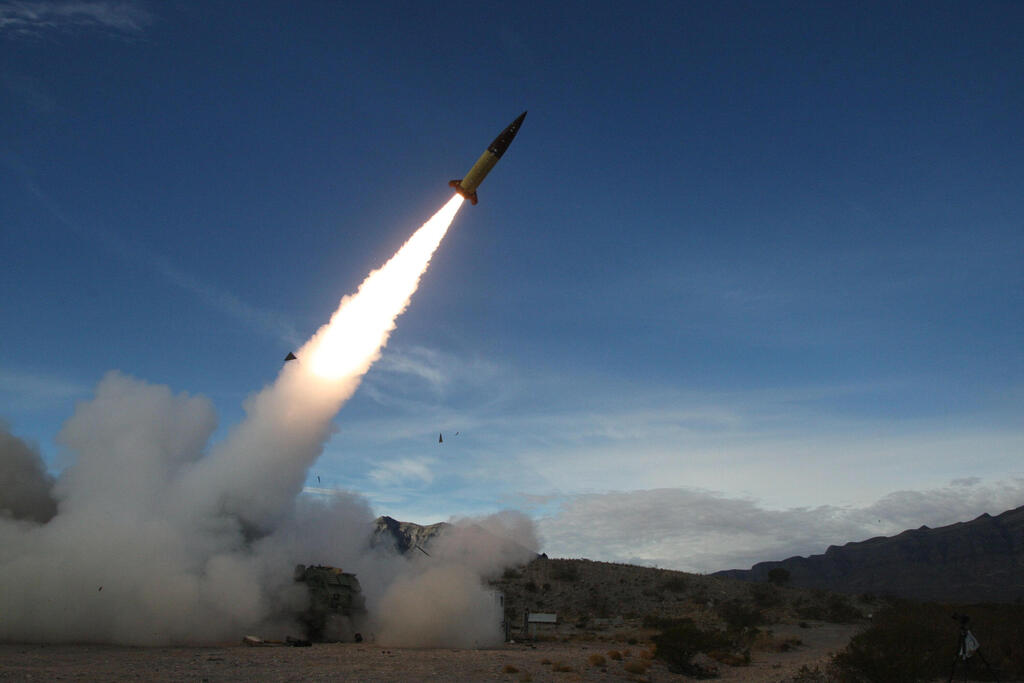
ATACMS missiles supplied by the United States to Kyiv
(Photo: AFP / JOHN HAMILTON / US DEPARTMENT OF DEFENSE)
According to The Washington Post, the scale of munitions use was already extraordinary during the first month of the war. The United States fired more than 850 Tomahawk cruise missiles and more than 1,000 Patriot and Terminal High Altitude Area Defense, or THAAD, interceptors.
A U.S. official added that more than 1,300 of the Army’s tactical ballistic missiles were used in the initial weeks of fighting. According to one of the people familiar with the matter, the ATACMS stockpile has been drained to the point that “there’s basically none left.”
The shortage of interceptors is already affecting how the U.S. military operates, according to the report. A U.S. official said that before an interceptor is launched, the military now examines the estimated trajectory of an incoming missile or drone and the danger it poses, in an effort to avoid wasting costly munitions on threats not expected to strike an important target.
The lack of interceptor missiles is altering how the United States decides whether to employ munitions against an incoming threat, based on where it is assessed to be heading and whether it is “a factor,” the official told The Post.
At the same time, newly announced production agreements are not expected to offer an immediate solution. Critical munitions, including Patriot interceptors, can take as long as two years to produce, while rebuilding the broader stockpiles could take years.
Last week, the Center for Strategic and International Studies published a report estimating that about 65% of Patriot interceptors were used between February and July and that the number of THAAD interceptors in the U.S. inventory was at least 38% lower than at the beginning of the war.
Patriot and THAAD systems detect and destroy incoming missiles and are among the most effective weapons in the U.S. arsenal. Reuters noted that although it had not seen the supply figures, those numbers aligned with internal U.S. data.
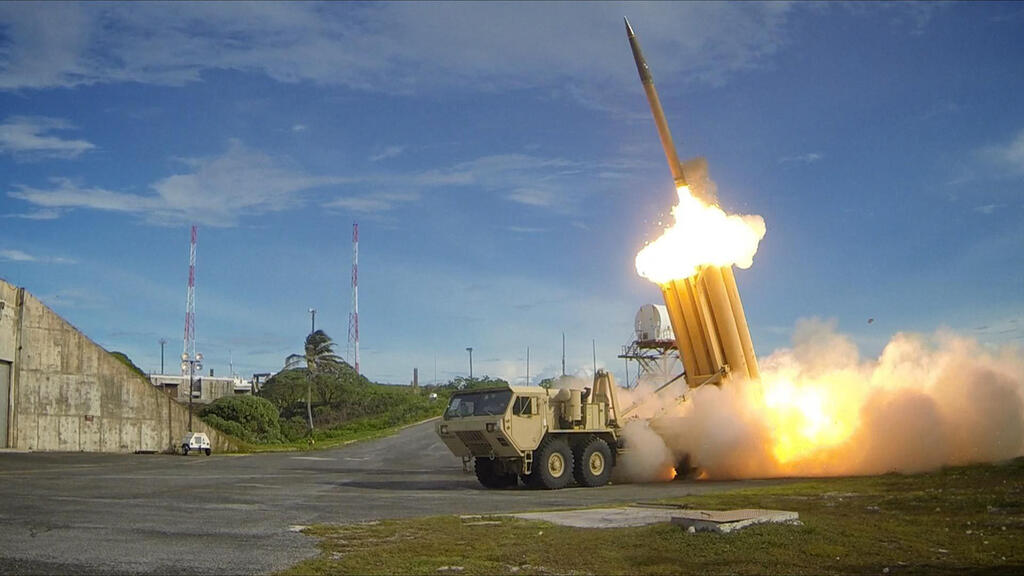
Launch of a THAAD interceptor
( Photo: AFP/John Hamilton/U.S. Department of Defense)
Long-range munitions are a key part of the military arsenal not only in the Middle East, but also in other theaters around the world. Concern is growing in Washington that the missile shortage will restrict the United States’ ability to deter adversaries such as Russia and China.
The ATACMS and PrSM missiles were described by sources quoted by Reuters as important in “any conflict with China.” In the war in Ukraine, for example, U.S.-supplied ATACMS missiles played a central role in the fight against Russia by allowing Kyiv’s forces to strike targets inside Russian territory.
Ukraine is also reporting that its inventory of Patriot interceptors is running out, directly damaging its defensive capabilities. The scarcity of defensive munitions has had an impact beyond the Middle East, The Post reported.
Ukraine is running out of air defenses, and there are few options for replenishing them from Western stockpiles, leaving the country exposed to Russia’s long-range attacks. The sources quoted by Reuters said the munitions shortage was one of the factors preventing Trump from launching massive attacks against Iran.
Over the weekend, Trump announced that he had canceled a planned attack on Iran. Writing on his Truth Social platform, he said the United States was “locked and loaded to act against Tehran with a military force and strength not seen since World War II,” but had backed away. “Nevertheless, we have just been asked by Iran and other countries in the Middle East to refrain from any attack, because the outlines of a deal have been agreed upon,” he wrote.
Trump said Monday that he had ordered and subsequently called off “the biggest attack since World War II,” pending claims of new negotiations over the Strait of Hormuz.
From Maduro’s capture to the Iran stalemate: The Trump-Hegseth relationship
The Camp David confrontation is particularly significant because, according to several officials, Hegseth was among the most prominent early advocates of going to war against Iran. He also convinced Trump that it would be a relatively quick and easy victory, the officials said.
That was despite Joint Chiefs of Staff Chairman Gen. Dan Caine warning the president before the war began that the United States did not have sufficient munitions stockpiles to sustain a prolonged conflict.
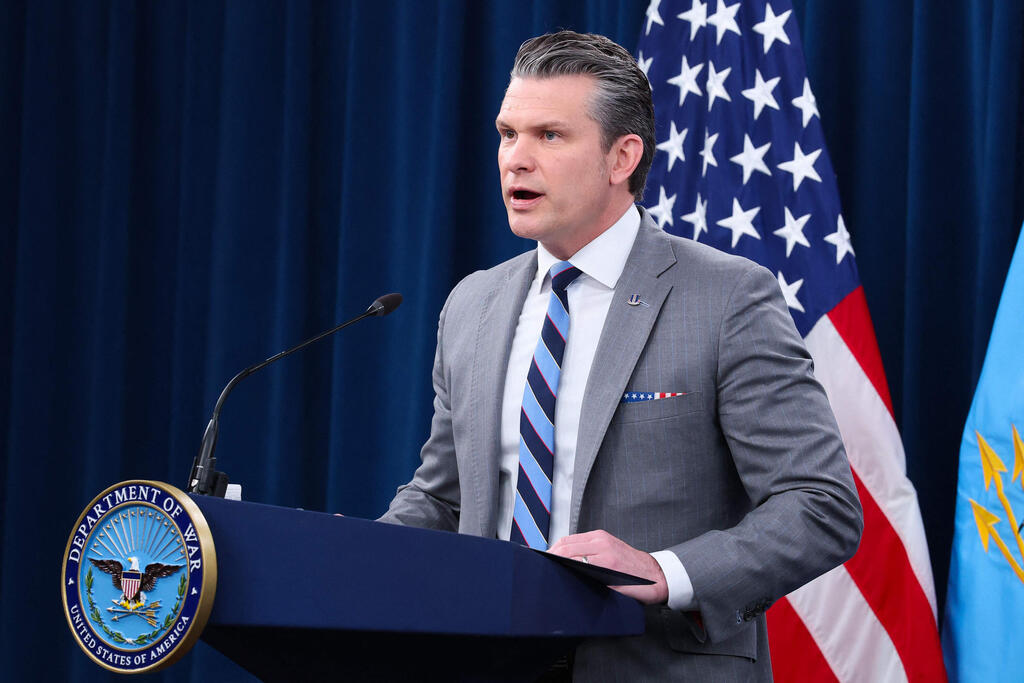
Trump called Hegseth someone who ‘loves war’
(Photo: Anna Moneymaker/Getty Images/AFP)
During a Senate hearing in July, Hegseth clashed with Democratic senators over whether he had provided Trump with honest assessments of the Iran war, including the risks that a prolonged campaign would pose to U.S. military inventories.
During the hearing, Hegseth declined to discuss the advice he had given the president and repeatedly blamed any shortages on the Biden administration’s handling of the military rather than on operations carried out under Trump.
Hegseth, Feinberg and Caine asked lawmakers to approve an additional $67 billion in military funding to cover the cost of the Iran war. Hegseth told lawmakers that the request would address an “urgent, necessary” need to replenish the military’s stockpiles. Senate Republicans have yet to agree on a strategy for advancing the package.
The administration’s overall defense budget request for the coming fiscal year is a record $1.5 trillion and includes tens of billions of dollars for missile production. The proposal has stalled as Democrats object to the massive increase, leaving the Pentagon without a clear path for replenishing critical weaponry.
Ever since Hegseth’s involvement in the “Signalgate” affair, in which he took part in transmitting classified information in a chat that included a journalist, rumors have circulated about how long the defense secretary would remain in Trump’s good graces.
The president, however, has consistently praised Hegseth, saying he looked straight out of “central casting” and that “he loves war.” Since taking office, Trump has launched military operations in seven countries: Yemen, Somalia, Syria, Iran, Iraq, Nigeria and Venezuela.
The successful operation to capture former Venezuelan ruler Nicolás Maduro appeared to strengthen Hegseth’s position further. But the stalemate with Iran and the economic consequences of the war have eroded Trump’s confidence in Hegseth, according to one person familiar with the Camp David conversation who spoke with Reuters.
More than five months after the conflict began, and with 18 U.S. service members killed and hundreds injured, Iran and the United States remain at a stalemate. Arab countries are increasingly concerned about the long-term economic consequences of the war and the effects of the closure of the Strait of Hormuz.
“Secretary Hegseth isn’t going anywhere, and he’s going to continue to work side by side with Deputy Secretary Feinberg to execute President Trump’s agenda,” Parnell said in response to questions about the reported confrontation and depletion of munitions.
Pressure on the stockpiles is not a new problem. Even before the war began, Caine warned Trump that the United States did not have the inventories required to sustain a prolonged conflict. But the pace and sheer volume of weapons used by both sides rapidly accelerated the depletion of key U.S. offensive and defensive munitions.
From February 28 through April 7, the first day of the ceasefire, the United States struck more than 13,000 targets in Iran. It also defended against more than 8,500 incoming Iranian munitions or drones. The United States launched Operation Epic Fury while already facing shortages of critical munitions.
In the summer of 2025, it expended more than a quarter of its entire THAAD interceptor inventory during Israel’s 12-day war and Operation Midnight Hammer, in which U.S. forces struck Iranian nuclear sites.
The current conflict “has made those inadequacies even worse,” said Brad Bowman, an Army veteran and senior director at the Foundation for Defense of Democracies.
Although Hegseth and the Pentagon have announced numerous new industry framework agreements intended to rebuild the arsenal, defense companies “aren’t going to start bending metal until you have a contract and congressional appropriations,” Bowman said.
As a result, it may take years to rebuild the inventories. “We’re often talking years between spending what we need to spend, getting the contracts signed, and delivery,” he said. “You don’t just flip the switch and suddenly the munition appears in the hands of the warfighter.”