

Saudi Arabia sees itself as the emerging leader of the Middle East and views normalization with Israel as a strategic imperative, said Dr. Yossi Mann, a Gulf affairs expert at Bar-Ilan University, in an interview with ynet on Sunday.
His remarks come as diplomatic and defense developments unfold between the U.S., Israel and Saudi Arabia — including the possible sale of F-35 fighter jets to Riyadh and a new UN resolution for a stabilization force in the Gaza Strip based on a peace plan proposed by U.S. President Donald Trump.
Gallery
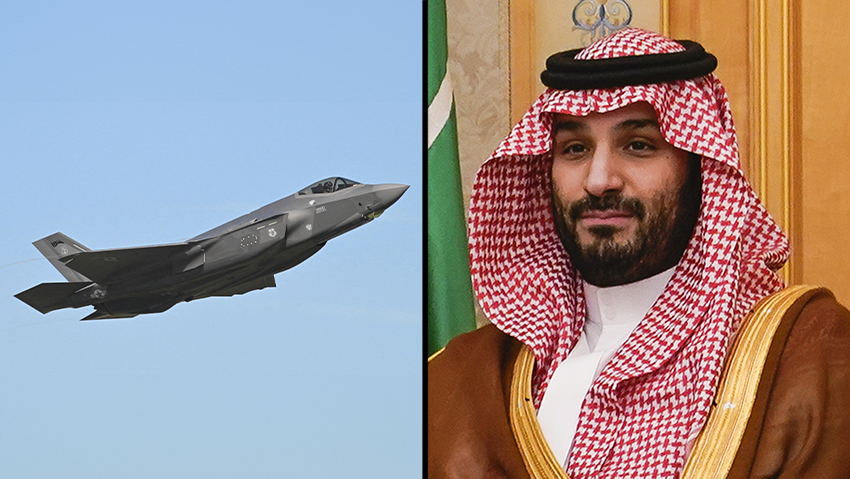
F-35 fighter jet, Saudi Crown Prince Mohammed bin Salman
(Photo: Nathan Howard, AP, REUTERS/Jana Rodenbusch)
“Saudi Arabia understands that to lead the region, it must maintain ties with Israel,” Mann said. “It can’t align with Iran while ignoring Israel — it understands that if it wants to lead meaningful regional moves, it has to position itself in the middle. For Saudi Arabia, normalization is a strategic priority and highly significant. We need to look at Saudi Arabia in a broader context: it must secure a comparative advantage. It can’t afford to see an agreement with Qatar while being left out. It needs air superiority.
“Saudi Arabia is relatively stable compared to other countries. I don’t share the concern about a strategic threat to Israel. Of course, there are steps that still need to be completed, but overall, the situation looks fairly stable. The move to purchase fighter jets is also a domestic Saudi statement. For a long time, they feared a strong air force because they understood it could threaten the regime — it’s an internal power that controls the skies. For years, they avoided it. Now, this is a message that says, ‘We trust our people and our internal stability.’”
Trump signaled over the weekend that he is seriously considering approving the Saudi F-35 deal, telling reporters on Air Force One: “They wanna buy a lot of jets, I'm looking at that. They've asked me to look at it. They want to buy a lot of '35' - but they want to buy actually more than that, fighter jets. We make the best jets, we make the best missiles—you saw that when we took out the nuclear capability of Iran.
Meanwhile, Economy Minister Nir Barkat told ynet that Prime Minister Benjamin Netanyahu is fully aware a Palestinian state will not emerge from current diplomatic efforts, despite renewed talk of a “path to statehood” as part of the revived Trump plan expected to be discussed at the UN Security Council.
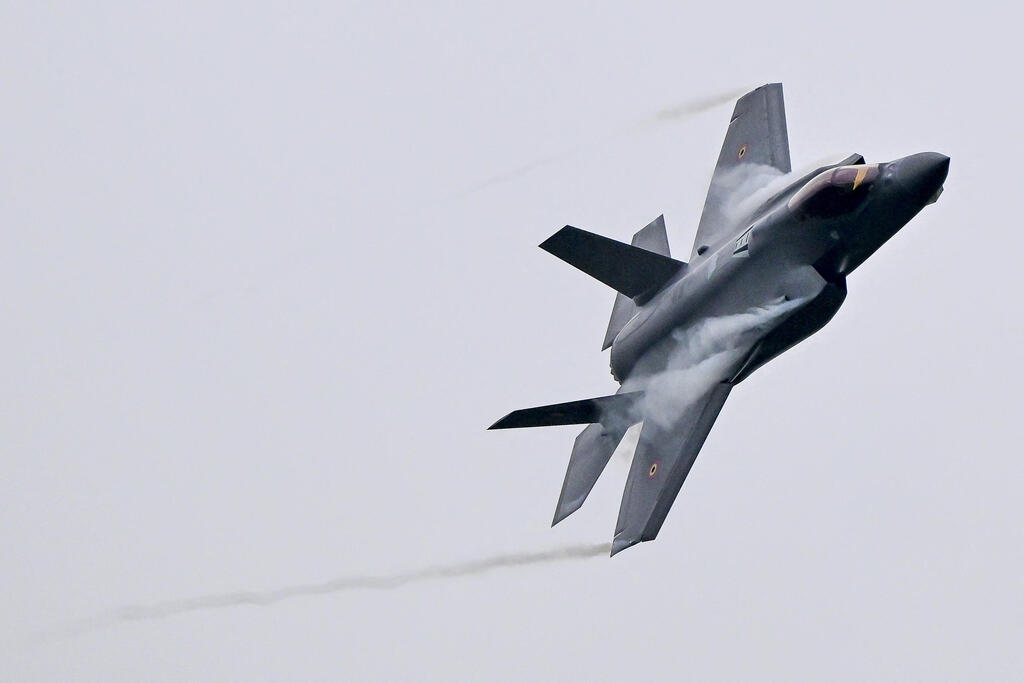
F-35 fighter jet
(Photo: DIRK WAEM / BELGA / AFP)
“There’s no need to convince the prime minister that a Palestinian state won’t be established — he knows it,” Barkat said. “What matters now is bringing Saudi Arabia into the Abraham Accords. That’s the next step.”
Barkat dismissed fears that U.S. arms sales to Saudi Arabia would compromise Israel’s military superiority, despite warnings from Israeli defense officials that such deals could undermine the air force’s qualitative edge. “The Americans and the prime minister are committed to maintaining the IDF’s superiority. I have no doubt it will be preserved,” he said.
He defended Netanyahu’s diplomatic strategy, calling it a “remarkable geopolitical maneuver” that has isolated Hamas with the tacit backing of Arab states. “We’re moving in the right direction,” Barkat said. “People are trying to scare the public — but we’re not selling them Israeli technology or secrets. Expanding the accords reduces the chance of war with Saudi Arabia.”
Barkat also reiterated his vision of dismantling the Palestinian Authority and replacing it with localized governance models. “The PA is beyond repair. I speak with the sheikhs of Hebron — they want out of the corrupt PA and to live in autonomy alongside Israel,” he said. “Most in Hebron want a deal with Israel. They know violence will only make them look like Gaza.”
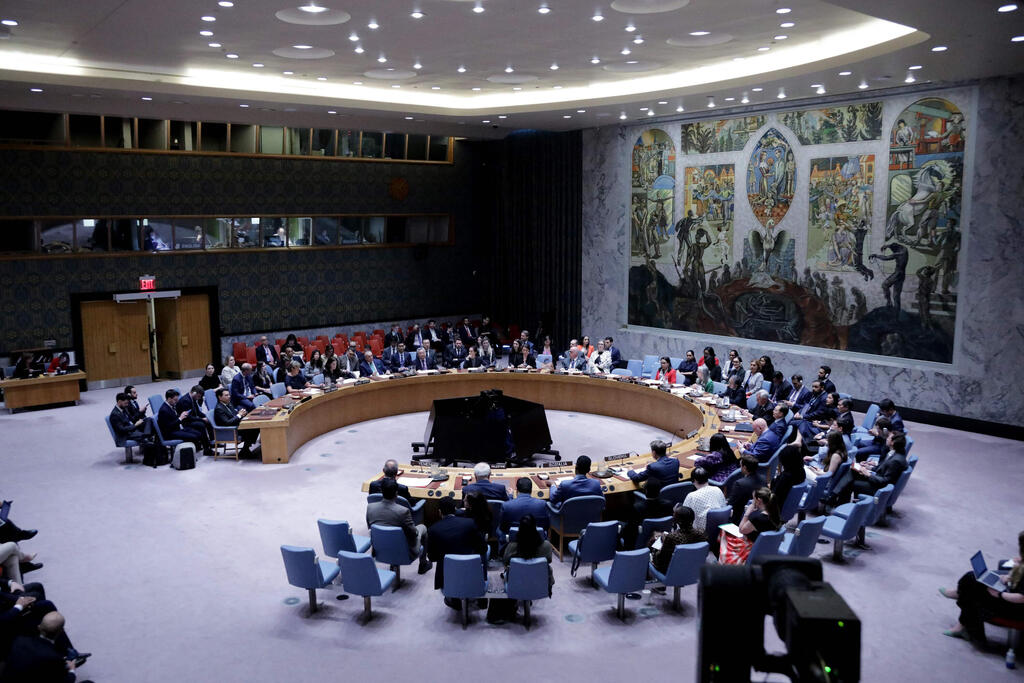
The UN Security Council
(Photo: Leonardo Munoz / AFP)
The UN Security Council is expected to review on Monday a proposal based on Trump's peace framework that would establish an international stabilization force for the Gaza Strip, which includes provisions for normalization and a conditional pathway to Palestinian statehood. The proposed resolution states that the U.S. will initiate a dialogue between Israel and the Palestinians “to agree on a political horizon for co-existence.”
While Prime Minister Benjamin Netanyahu has avoided commenting directly on the renewed American initiative, members of his government have responded sharply.
Defense Minister Israel Katz reiterated his firm opposition, stating: “Israel’s policy is clear: a Palestinian state will not be established. The IDF will remain in Mount Hermon and in the security zone. Gaza will be demilitarized down to the last tunnel, and Hamas will be disarmed — behind the yellow line by the IDF, and in old Gaza by the international force, or by the IDF if necessary.”
Foreign Minister Gideon Sa'ar also rejected the inclusion of statehood language in the draft, warning: “Israel is facing an extraordinary phenomenon — terror states, meaning territories controlled by terrorist organizations. Three of them continue to fight for Israel’s destruction: Hamas from Gaza, Hezbollah from Lebanon and the Houthis from Yemen. Israel will not agree to the establishment of a Palestinian terror state in the heart of the country, just miles from its major population centers and overlooking them from elevated terrain.”
At the start of Sunday’s Cabinet meeting, Netanyahu addressed ministers who had commented on the plan online, saying pointedly: “Our opposition to a Palestinian state on any territory has not changed. Gaza will be demilitarized and Hamas will be dismantled — the easy way or the hard way. I don’t need reinforcement through tweets, lectures or commentary from anyone.”