


European Union foreign ministers reached a political agreement Monday to impose new sanctions on what they described as “violent settlers in the West Bank,” Western diplomats told Reuters, after Hungary’s long-standing automatic protection was removed following Viktor Orban’s ouster.
The decision clears the way for sanctions against four Israeli organizations and three private individuals. The EU is also expected to impose sanctions on 10 senior Hamas officials.
Gallery

European Union foreign ministers reached an agreement to impose new sanctions on what they described as 'violent settlers'
(Photo: AFP)
EU foreign policy chief Kaja Kallas said the bloc’s foreign ministers had approved sanctions on Israeli settlers over violence against Palestinians, as well as new sanctions on leading Hamas figures.
“It is time to break the deadlock,” Kallas said. “Extremism and violence carry consequences.”
French Foreign Minister Jean-Noël Barrot also welcomed the decision, saying the EU was targeting Israeli organizations “guilty of supporting extreme and violent settlement activity in the West Bank,” as well as their leaders.
“These grave and appalling acts must stop immediately,” he said.
Barrot said the EU was also sanctioning senior Hamas leaders, describing the group as responsible for the October 7 massacre and as a terrorist organization that must be disarmed and excluded from any role in the future of Palestine.
Foreign Minister Gideon Sa’ar rejected the EU decision, saying Israel “strongly rejects the decision to impose sanctions on Israeli citizens and organizations.”
“The European Union chose, in an arbitrary and political manner, to impose sanctions on Israeli citizens and bodies because of their political positions and without any basis,” Sa’ar said. “No less outrageous is the unbearable parallel the European Union chose to draw between Israeli citizens and Hamas terrorists. This is a completely distorted moral comparison.”
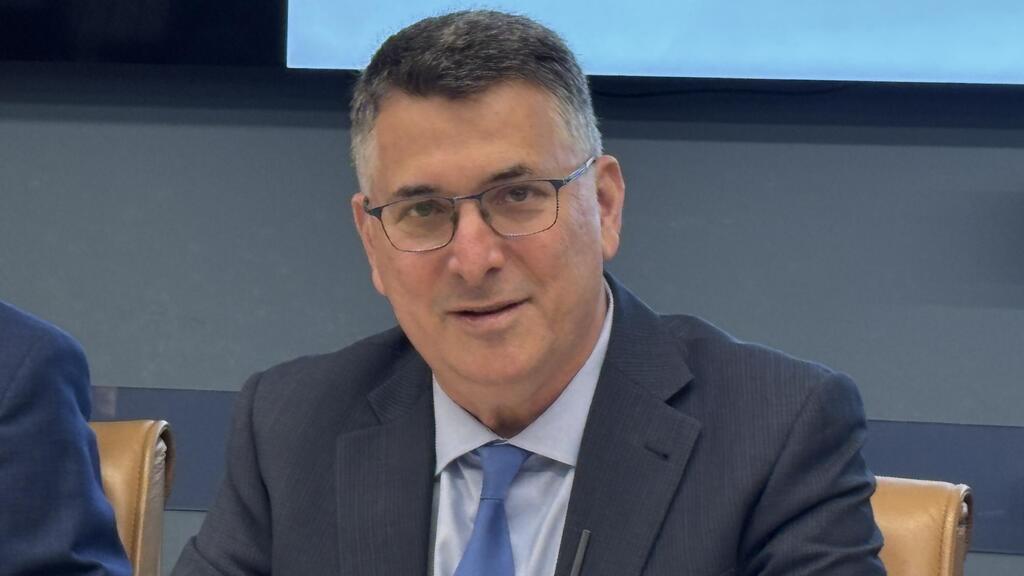
Foreign Minister Gideon Sa’ar
(Photo: Gil Yochanan)
Sa’ar added that Israel “has stood, stands and will stand” by the right of Jews to settle “in the heart of our homeland,” calling it a moral and historical right.
“The attempt to dictate political views through sanctions is unacceptable and will not succeed,” he said.
Israeli diplomats said ahead of the meeting that the decisions reflected growing anger in Europe over several recent developments in Israel, including settler violence, legislation advancing the death penalty for terrorists, plans to withdraw from the Paris climate agreement and expanded settlement construction.
Diplomats familiar with the issue said European officials view these steps as signs that Israel is moving away from core EU values, including its obligation to uphold the human rights clause in the EU-Israel Association Agreement, the main legal framework governing relations between the sides.
“This is a very bad development,” one diplomat said. “It is very bad for Israel. It means sanctions can be imposed on Israel. It is very bad that this is being linked to the settlements.”