


Saudi Arabia has declined to advance a proposal to export oil through Israel, a plan Israeli officials say could have bypassed Iran’s ability to disrupt global energy markets via the Strait of Hormuz.
Prime Minister Benjamin Netanyahu on Thursday publicly revived the idea of building regional oil and gas pipelines linking Gulf states to Israel and onward to Europe, presenting it as a strategic alternative to maritime routes threatened by Iran.

“Instead of passing through choke points like the Strait of Hormuz and Bab el-Mandeb, we can build pipelines westward through the Arabian Peninsula to Israel’s Mediterranean ports, and effectively eliminate these choke points,” Netanyahu said at a press conference with foreign media in Jerusalem.
The Strait of Hormuz, which connects the Persian Gulf to the Indian Ocean, typically handles about one-fifth of the world’s oil supply. In recent weeks, Iran has disrupted traffic through the strait, contributing to rising global energy prices and increasing pressure on the United States and its allies.
According to Israeli officials, the pipeline concept has been discussed for years, including during U.S. President Donald Trump’s first term. The proposal envisioned a roughly 700-kilometer pipeline from the Saudi city of Yanbu, crossing Jordan to Eilat, and then linking to the Eilat-Ashkelon pipeline, which would carry oil to the Mediterranean and European markets.
As an interim solution, the plan also considered transporting oil by tanker to Eilat, before transferring it overland to Ashkelon.
The idea was revisited recently in light of the war with Iran and the growing risks to maritime shipping. Israeli sources said the United States showed strong interest in the proposal and raised it again with Saudi officials.
However, Riyadh responded coolly.
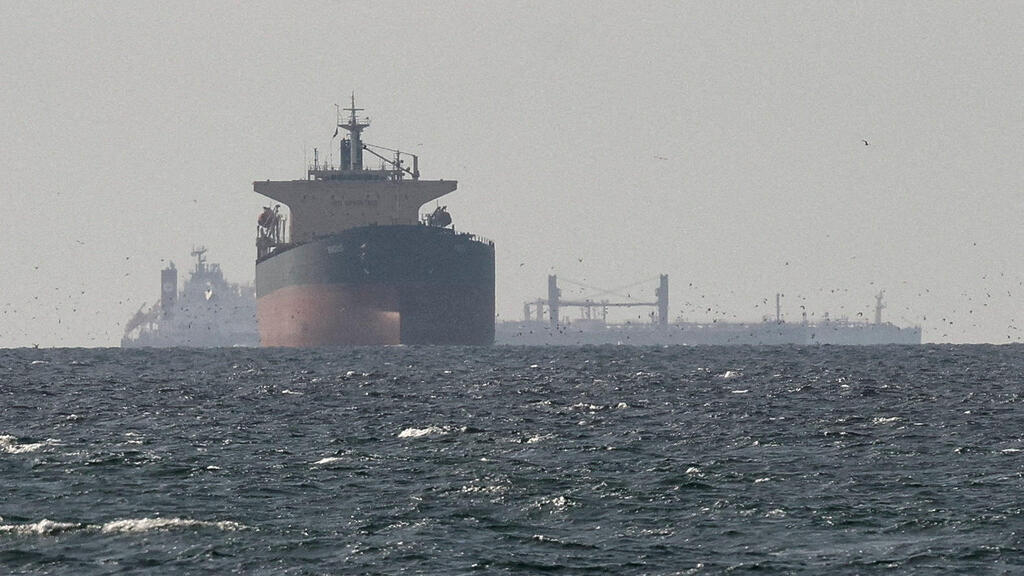
Oil tanker at the Strait of Hormuz
(Photo: Stringer/ Reuters)
“The plan was discussed during Trump’s first term. If it had been accepted, Iran would have no ability today to harm the global energy market,” a source familiar with the discussions said. “With the push of a button, you could connect Asia to Europe and eliminate the need for Hormuz and Bab el-Mandeb.”
Despite that potential, Saudi Arabia has not embraced the initiative, likely due in part to political tensions with Netanyahu.
Israeli officials had hoped the current crisis would create an opportunity for deeper regional cooperation and position Israel as a key energy corridor between Asia and Europe.
Meanwhile, the situation in the Strait of Hormuz remains volatile. About 20,000 sailors aboard roughly 3,200 vessels are currently stranded in the waterway, according to AFP, as Iran continues to threaten shipping with missiles, drones and fast attack boats.
The United States is weighing whether to deploy naval escorts for commercial vessels, but officials say the risk of Iranian attacks remains too high for now, and reopening the route could take weeks.
For Israel, the pipeline proposal represents both an economic opportunity and a strategic shift. For now, however, it remains a plan on paper rather than a regional breakthrough.