

U.S. President Donald Trump said he will keep Iran under a naval blockade until Tehran agrees to a nuclear deal that addresses Washington’s demands, rejecting an Iranian proposal to first reopen the Strait of Hormuz and postpone nuclear negotiations to a later stage.
“The blockade is somewhat more effective than the bombing,” Trump told Axios. “They are choking like a stuffed pig. And it is going to be worse for them. They can’t have a nuclear weapon.”
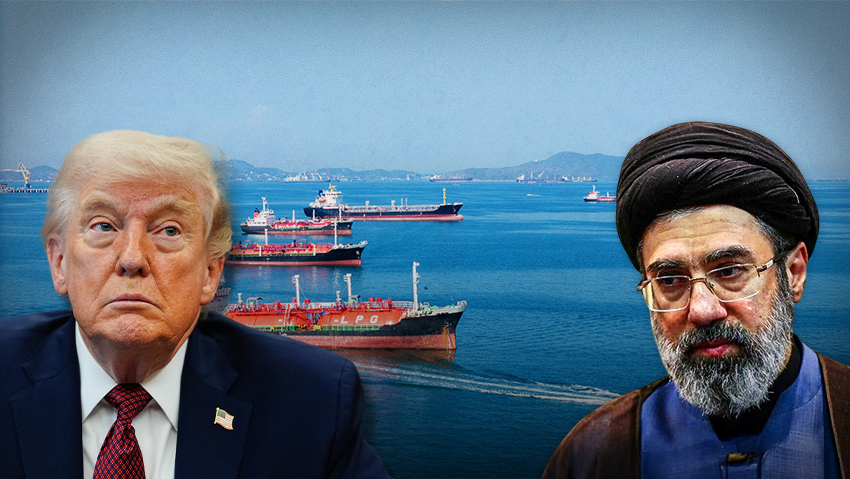
Trump said Iran wants a deal in order to lift the blockade, but argued that keeping the pressure in place is now his main source of leverage. “They want to settle. They don’t want me to keep the blockade. I don’t want to [lift the blockade], because I don’t want them to have a nuclear weapon,” he said.
The president also claimed Iran’s oil storage facilities and pipelines “are getting close to exploding” because Tehran can no longer export oil due to the blockade.
According to Axios, U.S. Central Command has prepared a plan for a “short and powerful” wave of strikes on Iran if the diplomatic deadlock continues. The strikes would likely include infrastructure targets and would be intended to push Tehran back to the negotiating table with greater flexibility. Trump has not ordered military action, according to the report, and declined to discuss military plans in the interview.
Iran, meanwhile, issued its own threat. A senior Iranian security source quoted by English-language state media Press TV said the U.S. naval blockade “will soon be met with practical and unprecedented action.” The source said Iran’s armed forces had shown restraint to give diplomacy a chance, but added that “patience has limits” if the blockade continues.
The latest exchange came as attempts to restart U.S.-Iran negotiations remained stalled. CNN reported that Pakistani mediators expect a revised Iranian proposal, possibly by Friday, after Trump rejected Tehran’s previous offer. Sources familiar with the process said the Iranian response has been slowed by difficulty communicating with Supreme Leader Mojtaba Khamenei, whose location is being kept secret.
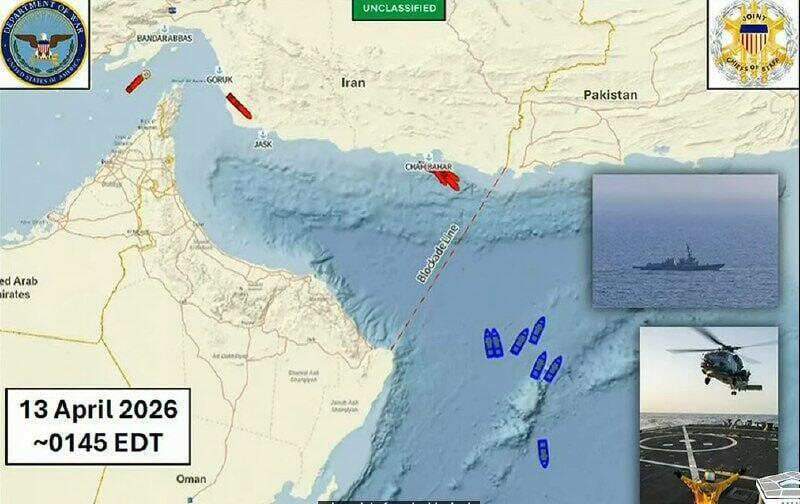
The US blockade line in the Strait of Hormuz
A senior Pakistani government official described the Iranian decision-making process as unusually slow. “The Iranians are painfully slow in their responses,” the official said. “There apparently is no unified command structure for decision-making. Sometimes, it takes them two or three days to respond.”
According to sources familiar with internal discussions in Tehran, Mojtaba Khamenei, who was formally appointed supreme leader after his father was killed at the start of the war, is not necessarily making the key decisions himself. Reuters cited sources as saying his main role is to approve instructions effectively set by generals.
Two sources close to Iran’s ruling circle told Reuters that Mojtaba Khamenei was seriously wounded in an Israeli and U.S. strike that killed his father and other relatives. They said he suffered a leg injury, has not appeared in public since his appointment and communicates through aides from the Revolutionary Guards, due to both medical and security constraints.
CNN reported a steep decline in commercial traffic through the Strait of Hormuz. According to the network, instead of thousands of cargo ships carrying oil and other goods during the month of fighting in March, only 154 vessels passed through the strait. The discussion in Trump’s office about a prolonged blockade on Iranian ports was reportedly part of a broader conversation about global oil prices, including the possibility of exporting oil from Venezuela.
In Israel, the limited security cabinet convened Wednesday at the Kirya military headquarters in Tel Aviv. The Prime Minister’s Office denied reports that Prime Minister Benjamin Netanyahu was expected to travel to Washington next week, saying he “is not expected to leave for the U.S. next week” and speaks frequently with “his friend President Trump.”
At a House Armed Services Committee hearing, a senior Pentagon official said the war has cost about $25 billion so far. Asked why the U.S. military went to war, War Secretary Pete Hegseth said Tehran had not given up its nuclear ambitions and still possessed thousands of missiles. He accused Democrats, and some Republicans, of undermining the effort with “reckless, powerless and defeatist” rhetoric.
Since declaring a ceasefire on April 7, Trump has repeatedly avoided renewing full-scale fighting, choosing diplomacy even after threatening to destroy Iranian civilization. But he is continuing to intensify economic pressure on the regime in hopes of forcing it to accept his central demand: dismantling its nuclear program.
According to The Wall Street Journal, Trump is betting that Iran will “break” and agree to compromise before the global economy breaks under the oil crisis caused by the closure of the Strait of Hormuz. But political pressure on the president is also growing, including over rising energy prices and declining poll numbers ahead of the November midterm elections.