

U.S. President Donald Trump said Thursday that he is approaching a major decision over whether to resume large-scale U.S. attacks on Iran in an effort to bring the months-long war to an end, ahead of talks with six Gulf states that could shape Washington’s next move.
“I have a big decision coming up. Do I want to go in and annihilate them [the Iranian regime] or do I not? It's a big decision. Anything could happen with me,” Trump told Axios reporter Barak Ravid in a phone interview.
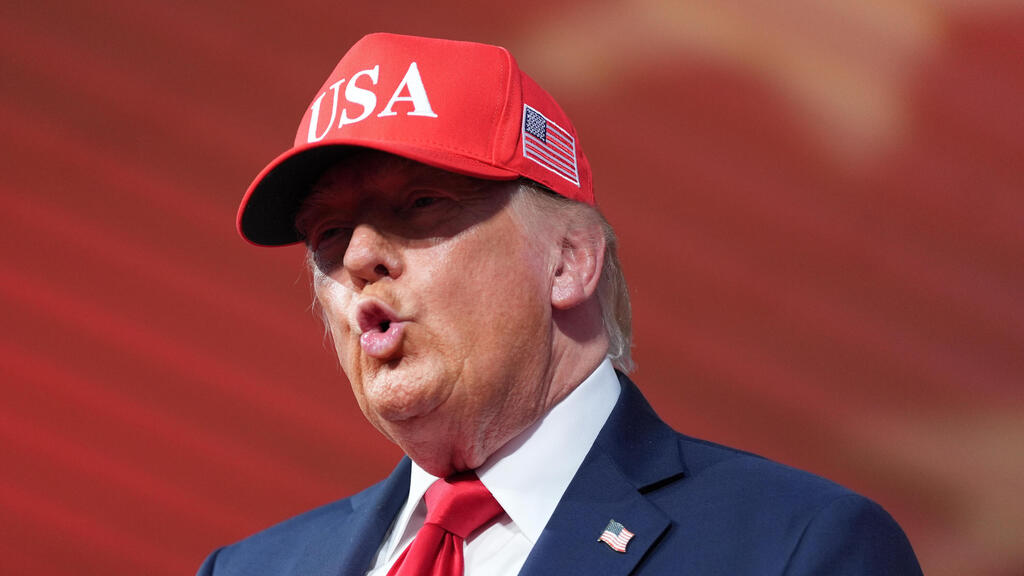
U.S. President Donald Trump
(Photo: AP Photo/Alex Brandon)
The comments come days before Trump is expected to meet leaders or senior officials from Saudi Arabia, the United Arab Emirates, Qatar, Bahrain, Kuwait and Oman on Tuesday on the sidelines of the United Nations General Assembly in New York. The meeting is expected to focus on the next phase of the Iran war and possible plans for the region after it ends.
Trump said he wants to hear directly from the Gulf states before deciding how to proceed.
“I want to find out where they are and how they are doing. We have been very protective of them,” he said.
Trump declined to say whether he expects to make his decision before or after the U.S. midterm elections in November. Some U.S. officials believe the conflict has settled into an unsustainable neither-war-nor-peace situation and that major combat operations could resume if diplomacy fails to produce an agreement, Axios reported.
The president has repeatedly said in recent days that he expects the war to end soon. On Wednesday, he said “hopefully we are towards the end of the war,” while again claiming that Iran wants an agreement and that Washington has heard that directly from Tehran.
Gulf concerns helped halt earlier escalation
Trump held back from resuming major combat operations in early August after Saudi Arabia and Qatar raised concerns that Iran could retaliate by striking Saudi oil and gas infrastructure, according to Axios.
Since then, the administration has taken a more limited approach, suspending negotiations with Tehran, intensifying economic sanctions, maintaining a naval blockade of Iranian ports and concentrating U.S. military efforts on reopening the Strait of Hormuz and increasing the flow of oil through the crucial waterway.
U.S. forces have significantly increased the number of oil and gas tankers moving through Hormuz, although traffic remains below pre-war levels and global oil prices remain elevated.
Axios reported that Trump and Defense Secretary Pete Hegseth have instructed the military to maintain its current force levels in the Middle East through the end of the year, allowing Washington to remain prepared for a possible return to full-scale fighting.
U.S. officials said the deployment cannot remain in its current holding pattern indefinitely.
“At some point you have to decide what is the end game,” one U.S. official said.
Trump also expressed satisfaction with the naval blockade of Iran, saying it had sharply restricted the country’s oil exports.
“Not one ship has gone to Iran since we started. They tried and we blew them up,” he said.
Trump said Iran remains in direct contact with the United States and that Tehran still wants to reach a deal.
White House also planning for after the war
At the same time, the Trump administration has begun drafting a broader strategy for the Middle East after the Iran war, focused on building a regional alignment to contain Tehran while expanding normalization between Israel and its neighbors.
Ideas under discussion include strengthening cooperation among U.S. regional allies, advancing the next phase of Trump’s Gaza plan, pursuing security arrangements involving Israel, Syria and Lebanon, and expanding the Abraham Accords, potentially including normalization between Israel and Saudi Arabia. The strategy remains in its early stages.
The planning is unfolding ahead of two political events that could affect the regional picture: Israel’s Oct. 27 election and the U.S. midterms in November. U.S. officials have said the administration intends to pursue its broader regional strategy regardless of the outcome of the Israeli vote.
Israeli Prime Minister Benjamin Netanyahu is also seeking a meeting with Trump while both leaders are in New York, although no meeting has been formally scheduled. Asked Thursday whether he would meet Netanyahu next week, Trump replied: “I may.”