

In an unusual move, the IDF official Persian-language account issued a message Thursday addressing the Iranian people, against the backdrop of ongoing negotiations between Tehran and Washington. “We ask patriotic citizens of Iran to follow us only through our official communication channels and to contact us for any type of cooperation,” the statement said.
The message was posted on social media as regional tensions remain at a peak, the United States continues to amass forces and mutual threats have persisted for a second consecutive month.
Gallery
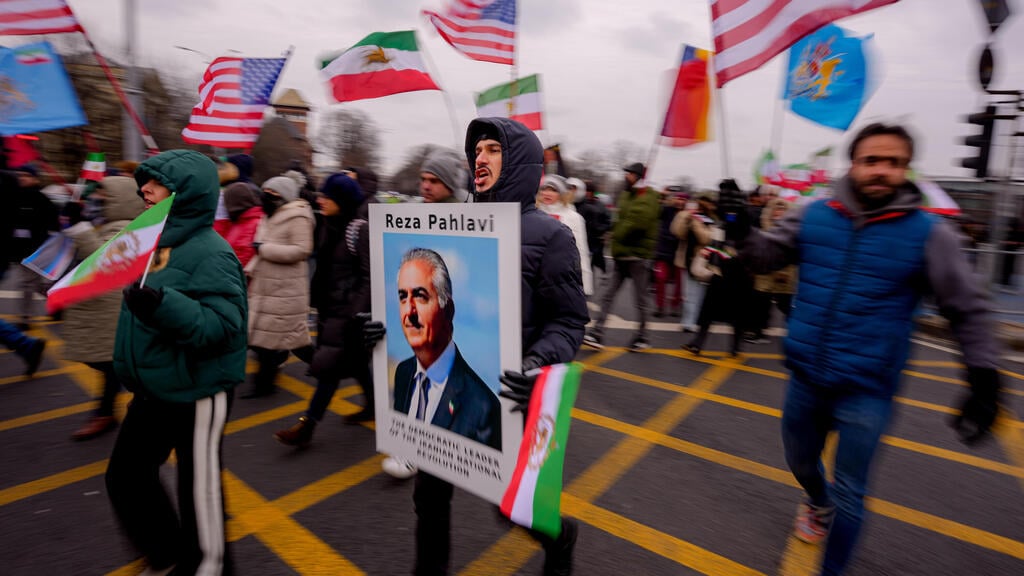
A protest calling for the overthrow of the ayatollah regime
(Photo: AP Photo/Andreea Alexandru)
U.S. President Donald Trump shared on his social media page a Wall Street Journal report stating that the Pentagon is preparing to send an additional aircraft carrier to the Middle East.
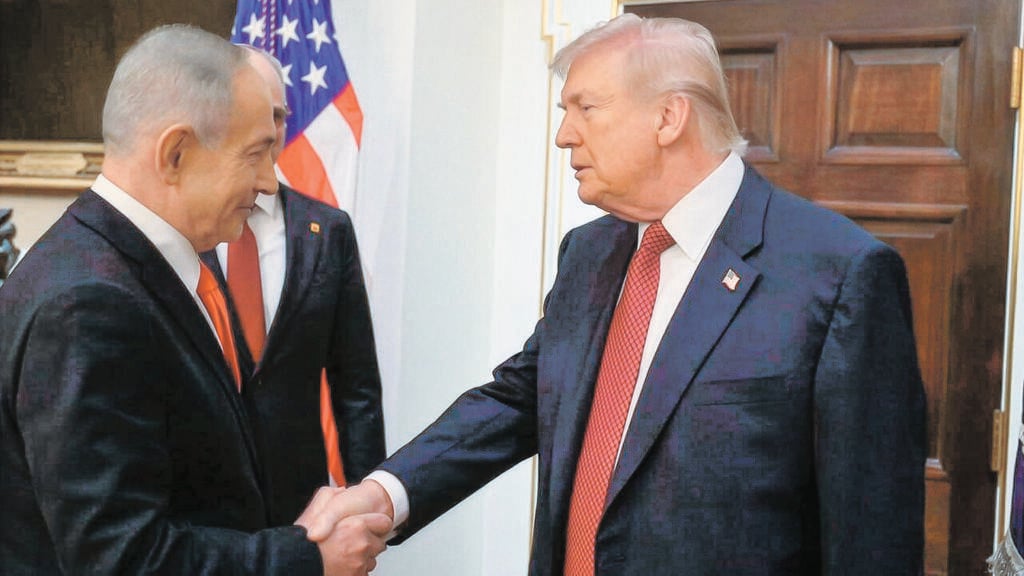
Trump and Prime Minister Benjamin Netanyahu met Thursday for talks that lasted longer than expected.
Trump said the meeting was good but that nothing was agreed upon beyond his insistence that negotiations with Iran continue to determine whether a deal can be reached. He added that he made clear to the prime minister that continuing the negotiations is the priority and that otherwise the outcome would have to be seen.
(Photo: Avi Ohayon)
Referring to Iran, Trump said that the last time it chose not to reach a deal it “took a hit” in Operation Midnight Hammer, which he said did not work out well for the country, and expressed hope that this time it would act more sensibly and responsibly.
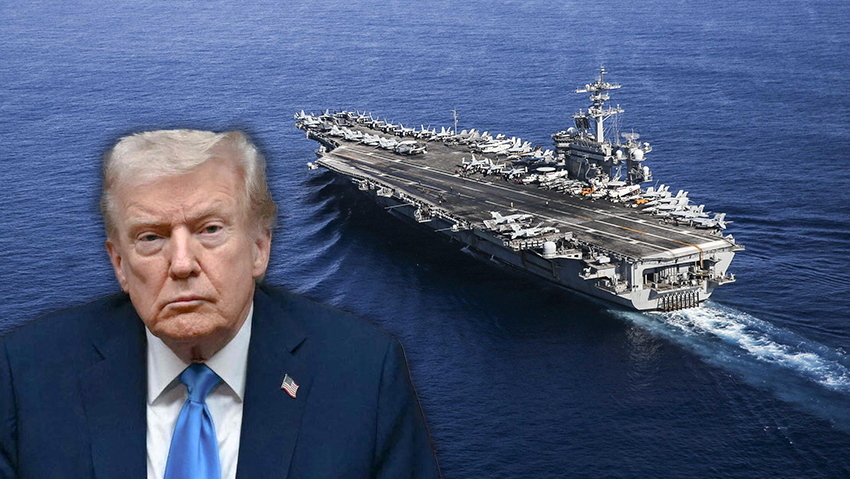
The Wall Street Journal reported Thursday evening, nearly in parallel with the end of the meeting, that the Pentagon had ordered an additional aircraft carrier to prepare to deploy to the Middle East as part of the tensions with Iran. According to one of the sources cited by the newspaper, the order could be issued within hours, but Trump has not yet given final approval and plans could change.
According to assessments, the additional carrier could arrive within two weeks and may be the USS George H.W. Bush. Trump said Thursday that he is considering sending additional aircraft carriers to the region in case the talks fail. U.S. officials have also mentioned the USS George Washington and the USS Gerald R. Ford as potential candidates to deploy to the Middle East.
(Photo: ANDREW CABALLERO-REYNOLDS / AFP, US Navy )
The meeting between Trump and Netanyahu lasted about two and a half hours. It was held in the Cabinet Room at the White House rather than in the Oval Office, reflecting the closeness between the two leaders and the substantive nature of their discussions, which focused in depth on the Iranian issue.
Trump and Netanyahu discussed the negotiations with the Islamic Republic, with the prime minister seeking to set out his red lines — primarily regarding ballistic missiles and Iran’s regional proxies, as well as key nuclear issues. Netanyahu stressed to Trump that Iran does not need intercontinental missiles to strike targets in Israel and Europe.
The prime minister also presented information indicating that Iran continues to execute its own citizens despite pledging to the United States not to carry out executions of protesters.
Various scenarios were also discussed in the event the negotiations collapse and in the event Iran attacks Israel. Netanyahu is seeking to ensure Israel’s freedom of action, while officials in Jerusalem are concerned about being constrained, as they say happened following the Obama administration’s nuclear agreement a decade ago.
The two also discussed potential strike scenarios against Iran, including whether the United States would carry out a strike alone or under a different framework.
Following the meeting, the Prime Minister’s Office said in a statement: “The meeting addressed the negotiations with Iran, Gaza and regional developments. The prime minister outlined Israel’s security needs in the context of the negotiations, and the two agreed to continue close coordination and contact.”