

On June 26, the International Day Against Drug Abuse and Illicit Trafficking, “new Syria,” under President Ahmed al-Sharaa, announced new steps to institutionalize the fight against the country’s thriving drug industry, an industry cultivated under former Syrian President Bashar Assad.
Ahead of the international day, Syria’s new authorities launched official social media accounts, including on Telegram and YouTube, for the Anti-Narcotics Directorate, an official body already operating under the Interior Ministry. According to Syrian authorities, the launch was part of the “struggle to protect society and defend the future.”
(Video: Yaron Brener)


Alongside the launch of the accounts, the directorate published a short video, apparently a trailer for a longer film, titled “Captagon: The fall of the shadow empire.” The post accompanying the video said: “This is how the drug empire was run and how its threads extended to neighboring countries. How was it dismantled and brought down?”
Although Syria’s current government presents its anti-drug activity so far as a success story, the country’s drug empire has not been fully dismantled. Much work remains to break apart the complex network built by the Assad family.
In the days after the accounts were opened, they began publishing a range of material, including updates on the directorate’s activity, public-awareness content against drug use and reports on the seizure of dealers and drug shipments.
In one video, a Syrian woman, crying, described how her young daughter consumed pills she found at home. The pills belonged to the girl’s father, who was involved in drug trafficking, and led to the child’s death. “Your children are your first responsibility. Protect them. My husband thought he could hurt people and that nothing would happen to him, that no one would see him. He lost his home, his family and his daughter. He has nothing left,” said the woman, whose face was not shown.
She added that it was important for her to share her story because she knew other families were living through similar situations, and because, she said, there was a social silence around the issue. In recent days, the Anti-Narcotics Directorate has also published ways for citizens to contact authorities and report drug dealers.
Gallery
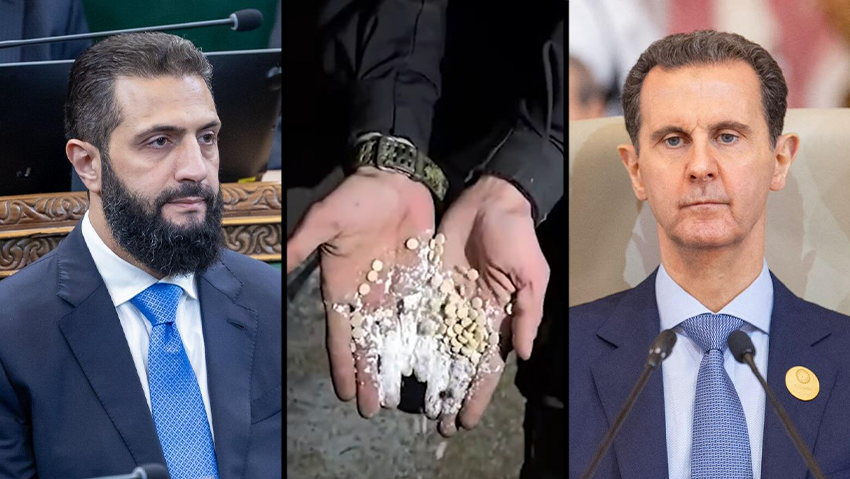
Ahmad al-Sharaa, drugs previously found in Syria, and Bashar Assad
(Photo: Reuters / Saudi Press Agency/Handout))
In another post on the Syrian directorate’s accounts, authorities said Syria had already taken steps to eradicate the drug trade in cooperation with Turkey, Jordan, Iraq, Saudi Arabia, the United Arab Emirates, Lebanon and Kuwait.
Some of the countries mentioned share borders with Syria and suffered for years, and continue to suffer, from the consequences of the Assad family’s Captagon empire. For Syria under its new government, it is crucial to show its neighbors that it is taking the issue seriously as it seeks to rebuild ties with regional states and accumulate international legitimacy.
Jordan, for example, has been one of the countries most affected by drug smuggling from Syria across the shared border. The Jordanian military has consistently reported operations to thwart smuggling attempts and has carried out airstrikes in Syria as part of its efforts to combat the trade. In May, the Jordanian army confirmed it had struck sites in Syria used for smuggling “in order to prevent the entry of drugs and weapons into Jordan, in light of the recent increase in smuggling attempts.”
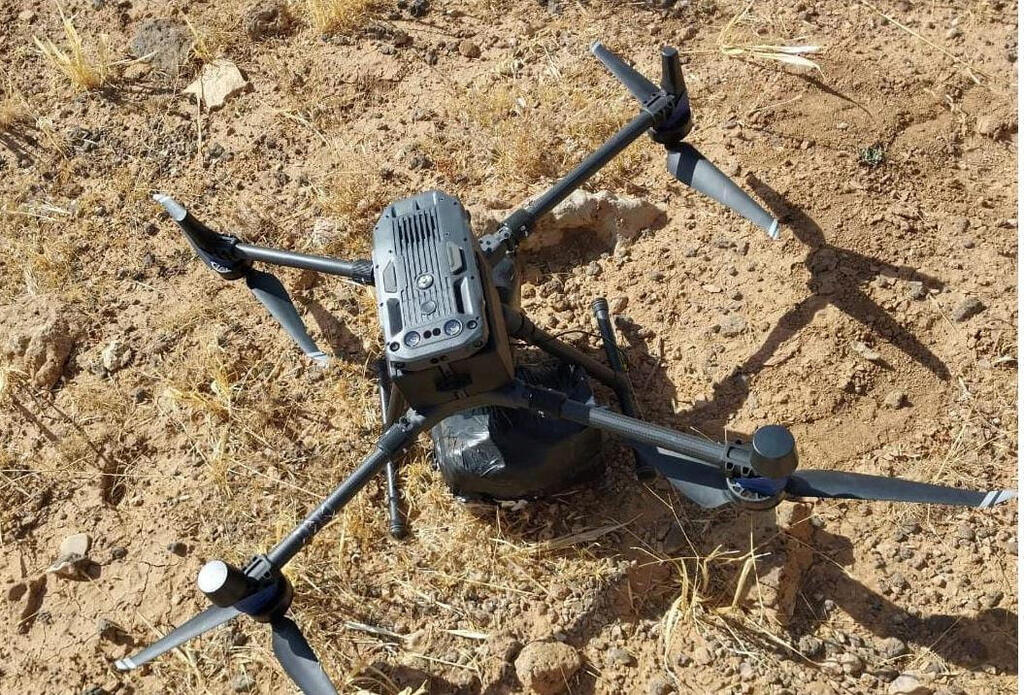
A drone that entered Jordan from Syria and was downed, 2023
(Photo: JORDAN ARMED FORCES/Handout via REUTERS )
The launch of the Syrian directorate’s official social media accounts was not the only step Damascus took for the International Day Against Drug Abuse and Illicit Trafficking. On June 26, Syria also held a major event to inaugurate the “national campaign to combat drugs and treat addiction.” Al-Sharaa, ministers, ambassadors from several countries, provincial governors, senior security officials and the Anti-Narcotics Directorate attended the launch, led by the Syrian Interior Ministry in cooperation with the Health Ministry.
On the international day, al-Sharaa wrote on X that Syria views the fight against drugs as “a national program” requiring joint efforts by state institutions and society.
“Syria inherited a heavy legacy of drug production and trafficking from the previous regime, and declaring a comprehensive war on this epidemic, in order to dry up its sources, cut off its smuggling routes and treat its effects, was among our top priorities,” he wrote.
“On the International Day Against Drug Abuse and Illicit Trafficking, Syria extends its hand to the countries of the region and the world to build an effective partnership to confront this cross-border threat and protect our societies and families from the poison and effects of drugs.”
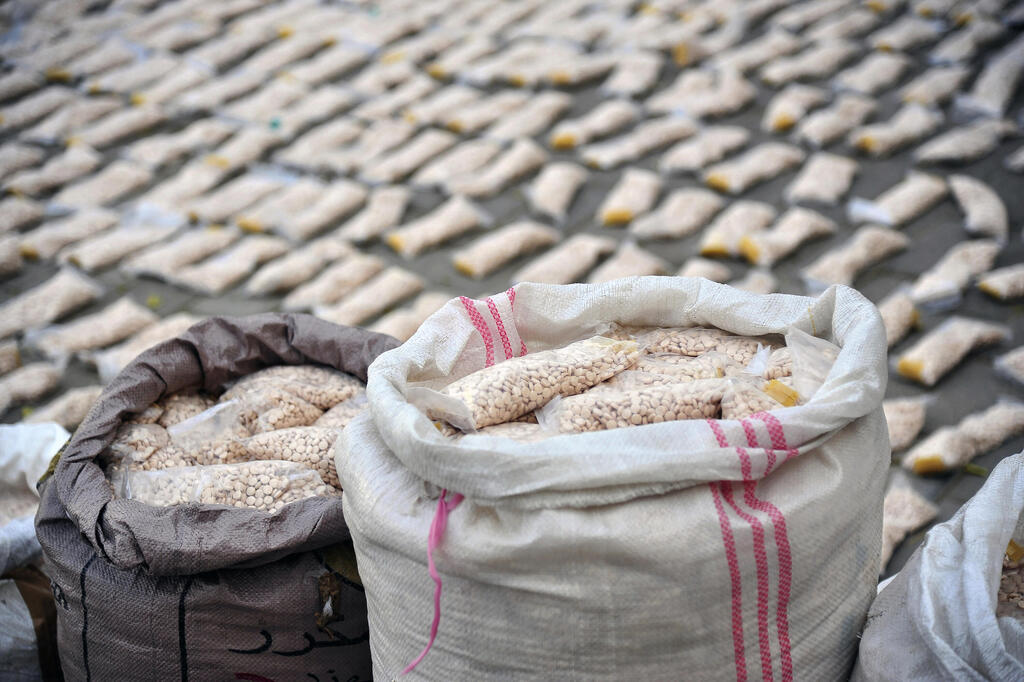
Bags of Captagon
(Photo: SANA via AP)
Syrian Interior Minister Anas Hasan Khattab also wrote on X that day: “On the occasion of the International Day Against Drug Abuse and Illicit Trafficking, we affirm to our people first and foremost, and to all countries of the region and the world, that we are continuing to confront this dangerous epidemic by all legitimate means in order to reach a drug-free Syria.”
“Syria, as it was and as it will return to be, is a beacon of knowledge and progress. This can only be achieved through concentrating efforts internally and externally. The fight against drugs today is a national, moral and international duty,” he wrote.
Under Bashar Assad, Syria’s Captagon industry flourished, largely under the leadership of his brother Maher Assad and with the help of elements tied to the Iranian-Shiite axis. Syria’s Captagon economy generated billions of dollars a year and was considered the country’s leading export sector.
Since the fall of Assad’s regime on December 8, 2024, and al-Sharaa’s rise to power, Syria has been trying in every way to erase the stain attached to it, one that still poses a threat to the country and its surroundings. The timing of the events around the international anti-drug day shows that in this field as well, “new Syria” is working according to a clear and organized plan, and is making sure to present itself as a functioning state.
The Middle East remains the largest market for Captagon. The stimulant has been dubbed “the poor man’s cocaine,” but it is also considered one of the most popular drugs among upper-class young people in the Arab world.