


For months, it seemed Israel was pushing the United States to take a tougher line against Iran. In Jerusalem, officials believed only direct American involvement could cause significant damage to Tehran’s strategic infrastructure. But now that the U.S. is leading the campaign against Iran, Israel finds itself outside the arena, at least for now.
The obvious question is whether this is an Israeli decision, an American demand or simply a rare meeting of interests in which none of the main players wants Israel to join the fighting.
Israel is currently on the sidelines. A US strike in Bushehr province


Against the backdrop of escalating tensions in the Gulf, the prevailing assessment among diplomatic and security officials is that the chances of Israel entering the campaign at this stage are very low. The reason is not a lack of military capability, but the fact that Israeli involvement could complicate matters for almost everyone involved.
For Gulf states, Israeli participation would create a serious political and domestic challenge. Many of them share a clear interest with Israel and the U.S. in containing Iran, but they prefer the confrontation to remain American-Iranian rather than take on the character of an Israeli-Iranian war. Israel’s entry could make it harder for them to continue cooperating with Washington and could ignite public criticism across the Arab world.
Israel, too, currently has no clear interest in forcing its way into the campaign. As long as the exchanges between the U.S. and Iran remain relatively limited and focused on symbolic or specific targets, Jerusalem can continue benefiting from the achievements of American pressure without paying the direct price of joining the fighting. For now, this is a power struggle between the U.S. and Iran. Unless something significant happens that harms Israeli interests, it is not certain Israel will join.
Gallery
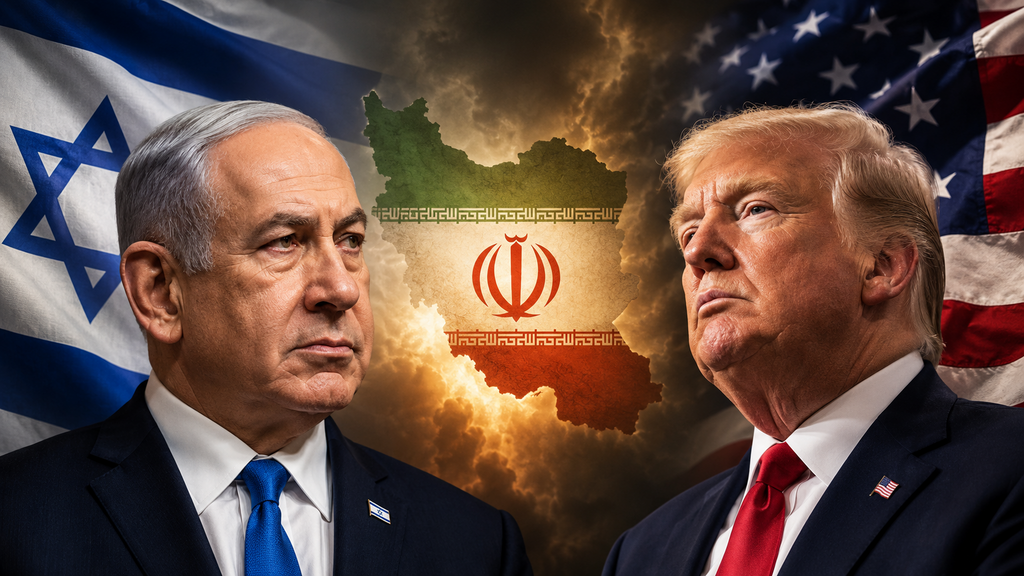
The US is leading the campaign against Iran and Israel finds itself outside the arena, at least for now
Senior Israeli officials say the greatest danger is a bad agreement. From Israel’s perspective, continued economic pressure on Iran is the preferred option and, over time, the path most likely to bring down the regime.
Washington is also showing caution. The U.S. administration wants to prevent a broader regional escalation as much as possible. Bringing Israel into the picture could change the nature of the conflict, complicate efforts to rally international support and give Iran an opportunity to present the war as a confrontation between Israel and the Muslim world, a message Tehran has tried to promote for years.
Despite the exchange of blows, some assessments suggest the damage so far to Iranian infrastructure has been relatively limited. One of the more notable strikes targeted the railway line to Mashhad, but that was mostly symbolic. There are far more strategic targets, such as oil export facilities on Kharg Island, whose destruction could dramatically disrupt Iranian oil exports.
The fact that the U.S. has so far avoided such steps indicates a desire to limit the scope of the conflict and avoid either collapsing the Iranian economy or triggering a severe shock in global energy markets.
At the same time, Iran is trying to portray developments as an achievement. The Iranian leadership is sending a message that it has managed to stand up to the U.S. and even “subdue” it politically by creating deterrence. At the same time, Iran is avoiding expanding the confrontation to certain countries in the region, such as the United Arab Emirates, which was forced to pay billions of dollars in protection money.
Iran, too, appears to have no interest in bringing Israel into the campaign. The Iranians know that Israel is waiting for an opportunity and could go all in. Israel is also preparing for an immediate renewal of the war, or as Defense Minister Israel Katz put it in a briefing with reporters, “the third Iran war.”
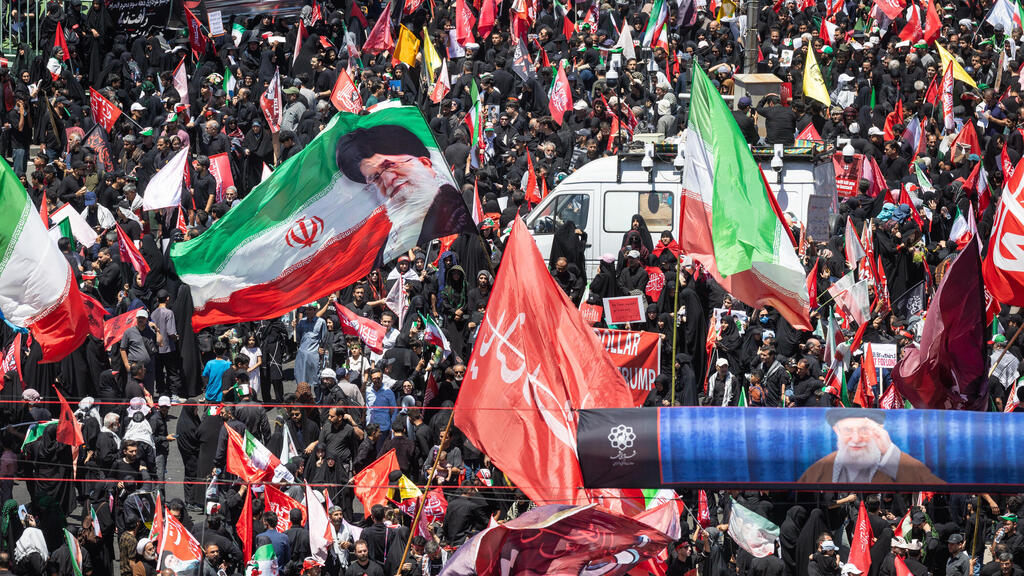
Iran knows Israel would go all in. Crowds at Khamenei’s funeral
(Photo: John Moore/Getty Images)
That means a scenario in which Israel later joins the campaign cannot be ruled out entirely. It could happen if Iran significantly expands its attacks, attempts to strike Israel directly on a large scale or if Washington concludes that Israeli capabilities are needed to achieve a specific operational goal.
A senior Israeli official said Wednesday that “right now, we are monitoring the American moves. They are leading at the moment.” At the same time, Israel is preparing for a scenario in which Iran attacks Israel, prompting Israel to strike infrastructure in an effort to undermine regime stability.
For now, it appears that all the central players, the U.S., Israel, Gulf states and even Iran, prefer to keep Israel out of the campaign. It is one of the rare cases in which the interests of all sides almost converge. But in the Middle East, a single unexpected event can change the rules of the game within hours.
Two additional elements should be added to that picture. U.S. Secretary of War Pete Hegseth was supposed to visit Israel this week and meet Prime Minister Benjamin Netanyahu and Katz, but the visit was canceled. The assumption had been that he was coming to ease Israeli concerns over the emerging F-35 deal with Turkey. But it is also possible that President Donald Trump wanted to send Hegseth to the region ahead of a possible renewal of the campaign against Iran and potential Israeli involvement.
Netanyahu is expected to travel to the U.S., though the Americans have not yet set a date, not for next week either. That may be because they have been occupied with the NATO summit. But it may also be because they understand that Netanyahu’s arrival in Washington at this time could be seen as an Israeli attempt to influence the U.S. to renew the war. That would not be good for Trump.
On the other hand, Netanyahu’s arrival could also serve as useful leverage over Iran, essentially warning Tehran that if it does not come to its senses in negotiations, Trump may give Israel a green light to act freely.
Israel, for its part, is taking no chances and is preparing for a scenario in which the war spills over quickly. Preparations are being made on both the defensive and offensive fronts. Still, the prevailing assessment in Jerusalem is that the war will most likely not reach Israel, and that the next window of opportunity for a renewed campaign will come after the U.S. midterm elections in November.