

As the United States, Israel, and Iran move uneasily between escalation and diplomacy, news outlets across the Middle East are describing the crisis in sharply different terms. Gulf and Saudi-linked outlets are treating the war largely as a threat to energy security, shipping, and regional stability. Israeli media are warning that President Donald Trump may accept a weak deal that reopens the Strait of Hormuz while leaving Iran’s nuclear and missile programs largely intact. Palestinian outlets frame the confrontation through the language of U.S.-Israeli escalation. Kurdish outlets emphasize the danger of spillover into Kurdish areas inside Iran. Iranian and Iran-aligned outlets, including media close to Hezbollah, portray the crisis as evidence that Tehran and its regional partners have gained leverage against the United States and Israel.
Much of the coverage is predictable. Israeli outlets largely reflect Israeli security concerns. Iranian outlets reflect Tehran’s official position. Saudi, Emirati, Qatari, Palestinian, Kurdish, Turkish, and Lebanese outlets generally track the dominant interests, fears, and diplomatic positioning of their own countries or political camps. The few surprises are mostly in tone and emphasis: Gulf outlets have been blunt about the economic limits of military escalation, Israeli outlets have been less celebratory than might be expected about U.S. pressure on Iran, and some non-Iranian regional outlets have treated Tehran’s leverage over Hormuz less as ideological defiance than as a hard diplomatic fact.
Gallery
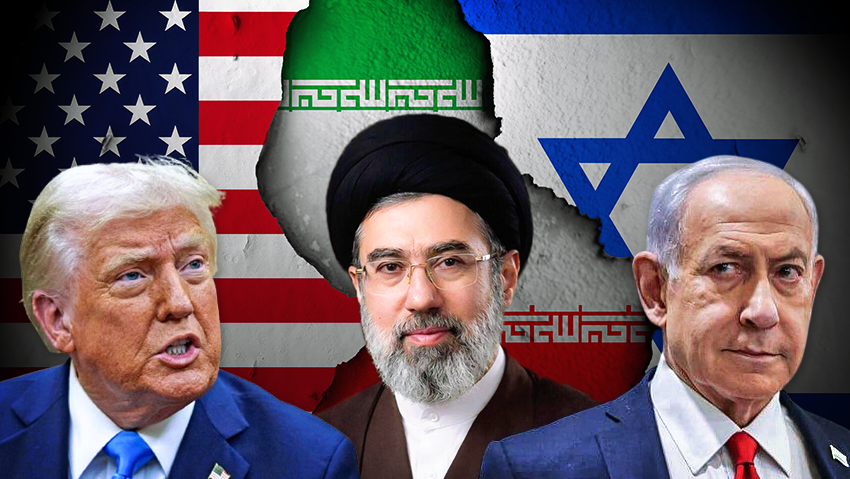
The United States, Israel, and Iran move uneasily between escalation and diplomacy
(Photo: Miriam Elster Evan Vucci/AP, shutterstock)
Gulf-oriented outlets such as Al Arabiya, Arab News, The National, and Asharq Al-Awsat have generally framed the crisis as a dangerous convergence of military escalation and economic risk. Their coverage is not openly sympathetic to Tehran, but it is deeply wary of a wider war that would leave Gulf states exposed. Oil prices, shipping disruption, mediation efforts, U.S. pressure, and the possibility that Iran could use Hormuz as a bargaining chip have all become central themes.
Arab News, carrying Reuters reporting on May 4, highlighted U.S. intelligence assessments suggesting that the war had not significantly changed Iran’s nuclear timeline. The choice to feature that report fit a broader Gulf concern: whether the conflict’s economic and maritime costs were producing strategic results.
Asharq Al-Awsat’s business coverage has focused heavily on the economic effects. One report said oil prices dipped after Iranian state media reported that about 30 vessels had crossed the Strait of Hormuz and that Iran had begun allowing some Chinese vessels through. In another report, U.S. Treasury Secretary Scott Bessent urged China to intervene: “China, let’s see them step up with some diplomacy and get the Iranians to open the strait.” In Gulf coverage, the crisis is often treated less as an ideological confrontation than as a practical test of leverage, diplomacy, and economic self-interest.
The UAE-based The National has taken a similarly practical line. In a May 4 report by Vanessa Ghanem and Aveen Karim, the outlet framed “Project Freedom” around competing claims: Iran said it had turned a U.S. warship away from Hormuz, while U.S Central Command denied Iranian claims that the ship had been hit. The report said, “Analysts believe the plan is a U.S-led attempt to restart limited commercial movement through the vital waterway without the mission becoming a full wartime convoy campaign.”
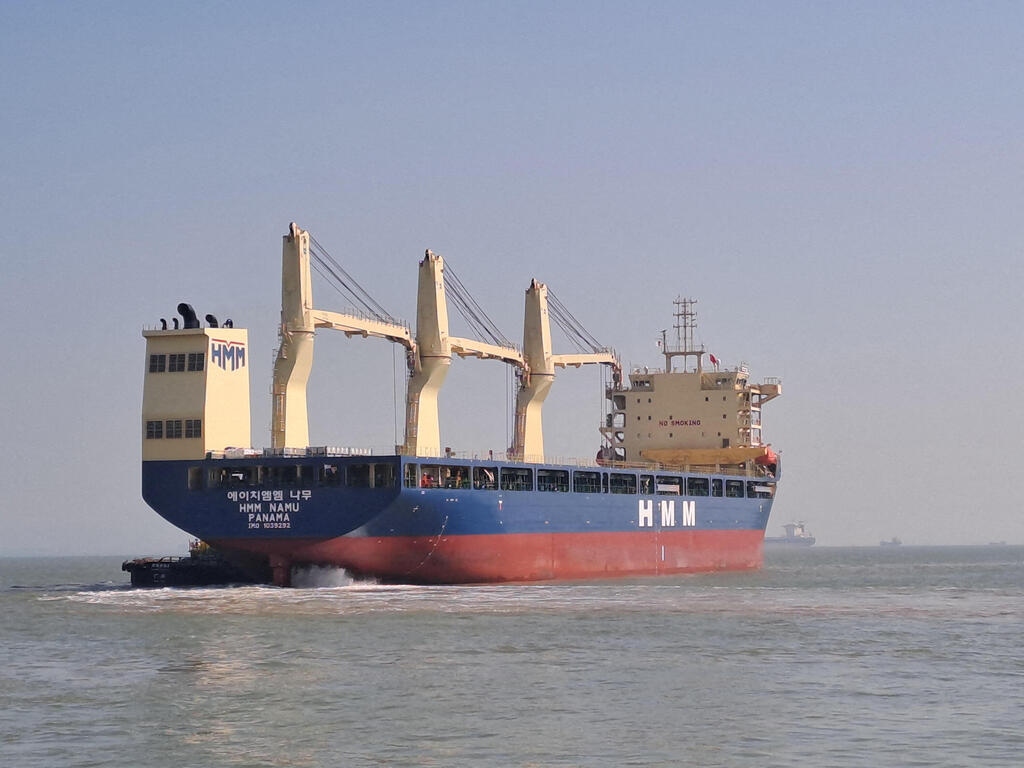
Iran said it had turned a U.S. warship away from Hormuz, while U.S Central Command denied Iranian claims that the ship had been hit
(Photo: HMM/Handout via REUTERS)
In later reporting, The National also reflected the Gulf’s concern that any deal would be judged first by whether it reopened shipping. A May 29 report by Jihan Abdalla said President Trump would make a “final determination” on a proposed agreement with Iran. The report said the U.S. president described a deal that “would reopen the Strait of Hormuz immediately and permanently bar Tehran from obtaining a nuclear weapon.” In Gulf coverage, Hormuz is not a secondary issue. It is where the war enters daily economic life.
Israeli media are reading the same events through a more urgent strategic lens, though not in a single voice. Outlets across the Israeli spectrum—Israel Hayom, The Jerusalem Post, ynet, The Times of Israel, and Haaretz—have focused on the danger that Washington could accept an interim arrangement that ends the immediate fighting while leaving Iran’s enrichment capacity, uranium stockpile, ballistic missiles, drones, and regional armed partners largely in place. In that view, reopening Hormuz would not be a victory if the price is postponing the core nuclear problem.
Israel Hayom, generally closer to Israel’s political right, has focused heavily on whether President Trump is giving Iran room to use Hormuz as leverage. A May 6 report by Or Shaked said, “In a late-night Truth Social post, the president froze the Hormuz operation while keeping the blockade in force, citing major progress toward a final agreement with Tehran.” The report reflected an anxious Israeli reading of the moment: Washington was moving from pressure to diplomacy while Iran’s core capabilities remained unresolved.
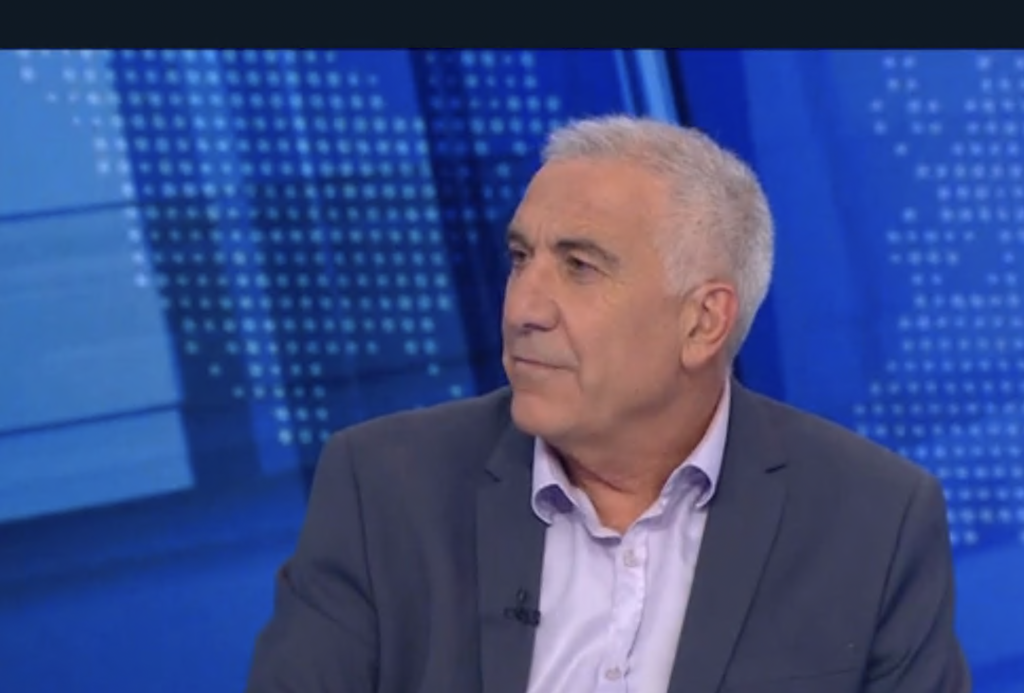
Danny Zaken
(Photo: Channel 12)
A later Israel Hayom analysis by Danny Zaken warned that the U.S. president was focused mainly on Hormuz and the effect of its closure on global oil prices. Another analysis argued that “Iran, as is its way, wants to drag things out, hoping something will happen along the way.” It continued: “It is willing to give up Hormuz now, and it is demanding the lifting of sanctions now, but it wants to give up the nuclear issue only at the end, in measured doses.” Tehran may use the strait to buy time while preserving the program Israel sees as existential.
Israel’s most widely read Hebrew-language news site, ynet, has taken a similarly skeptical but more practical approach. In a May 6 report by Liran Friedmann, Daniel Edelson, and Ron Crissy, ynet reported that President Trump had set a one-week deadline for a deal to end the war and resolve the Hormuz crisis. The report also quoted U.S. Central Command saying, “The U.S. blockade against vessels attempting to enter or leave ports in Iran remains in effect.” The maritime crisis had become not only a diplomatic issue but an active military enforcement problem.
A space to criticism from the American right was given by ynet. In a report by Lior Ben Ari and Amir Ettinger, former Secretary of State Mike Pompeo was quoted as denouncing the emerging deal. “Not remotely America First,” Pompeo wrote. “It’s straightforward: Open the damned strait. Deny Iran access to money. Take out enough Iranian capability so it cannot threaten our allies in the region.” For Israeli readers, Pompeo’s objection echoed a familiar fear: President Trump might reopen Hormuz without doing enough to degrade Iran’s military capabilities.

Lior Ben Ari
The Times of Israel has been blunt in some of its analysis. One report said the emerging memorandum would reopen the Strait of Hormuz while pushing the fate of Iran’s nuclear program into later talks, with no requirement for Iran to export its highly enriched uranium. It quoted Eran Lerman, a former deputy director of Israel’s National Security Council, warning that Iran appeared to have “left open the possibility of discussing” the removal of enriched uranium, while preserving the freedom to refuse later. The same report quoted former U.S. Ambassador to Israel Dan Shapiro as saying that the apparent direction of events “enhances Iran’s leverage over its neighbors, particularly in the Gulf.” Shapiro added, “They see that Iran took the United States and Israel’s best punch and survived.”
The Jerusalem Post has emphasized the same concern from a policy and security angle, including the unresolved question of whether the United States would separate reopening Hormuz from the fighting in Lebanon and the broader Iranian threat. For Israeli readers, that distinction is crucial because Hezbollah is one of the main ways Iran projects power against Israel.
Haaretz adds another layer to the Israeli debate. Its coverage and analysis have been sharply critical not only of Iran but also of the strategic assumptions behind Israeli and U.S. policy. Rather than presenting a possible Trump deal only as a betrayal of Israeli security demands, Haaretz has also treated it as a potential consequence of years of Israeli policy choices, including Prime Minister Benjamin Netanyahu’s campaign against earlier nuclear diplomacy. In that reading, Israel may have helped push the region toward a confrontation that now risks ending with Iran damaged but not strategically defeated.
That makes the Israeli press more varied than a simple pro-Israel bloc. Israel Hayom tends to stress the danger of Iranian deception and the limits of the U.S. president’s patience, ynet focuses on the terms of the emerging deal. The Times of Israel gives prominent space to the fear that the war may fail to achieve its stated objectives. The Jerusalem Post emphasizes security implications and policy options. Haaretz is more willing to ask whether Israel’s own approach helped produce the current dilemma.
Still, Israeli outlets converge on several points. Iran’s highly enriched uranium remains a central concern. Tehran’s missile and drone programs are treated as strategic threats, not bargaining details. Hezbollah in Lebanon and the Houthis in Yemen are generally seen as part of Iran’s wider regional system. Hamas is less central to the Hormuz issue itself, but in Israeli coverage, it is still usually placed inside the same Iranian-backed axis.
Iran’s highly enriched uranium remains a central concern
(Photo: shutterstock)
Coverage in the Qatari media giant Al Jazeera falls into a different category. Its May 5 liveblog described the conflict as the “U.S.-Israel war on Iran” and included Israel’s attacks on Lebanon within the same frame. Its May 6 coverage led with President Trump threatening a “much higher level” of attacks if no deal was reached, while highlighting the pause in “Project Freedom” and the possibility that diplomacy was gaining ground.
Al Jazeera often presents the conflict as a U.S.-Israel confrontation with Iran and gives significant attention to Israeli operations in Lebanon, civilian suffering, and the broader costs of escalation. Its framing gives Iran more room as a negotiating actor than Israeli outlets generally allow, while still treating the nuclear dispute and the shipping crisis as central issues.
The Palestinian press has tended to place the crisis inside a broader story of U.S.-Israeli military pressure across the region. Al-Quds, in its English-language coverage of President Trump’s announcement that the United States would begin directing commercial ships through Hormuz, described the move in the president’s own terms as a “humanitarian initiative,” but focused on whether Washington was merely providing navigational guidance or preparing to secure sea lanes by force. The report also described the war as a U.S.-Israeli campaign against Iran.
An Al-Quds analysis described the crisis as a phase of “political and economic attrition,” while The Palestine Chronicle framed the Hormuz standoff as evidence that Washington’s pressure campaign had backfired. In much of this coverage, Hamas, Hezbollah, and the Houthis are not treated as central causes of the crisis but as part of a wider confrontation with Israel and the United States.
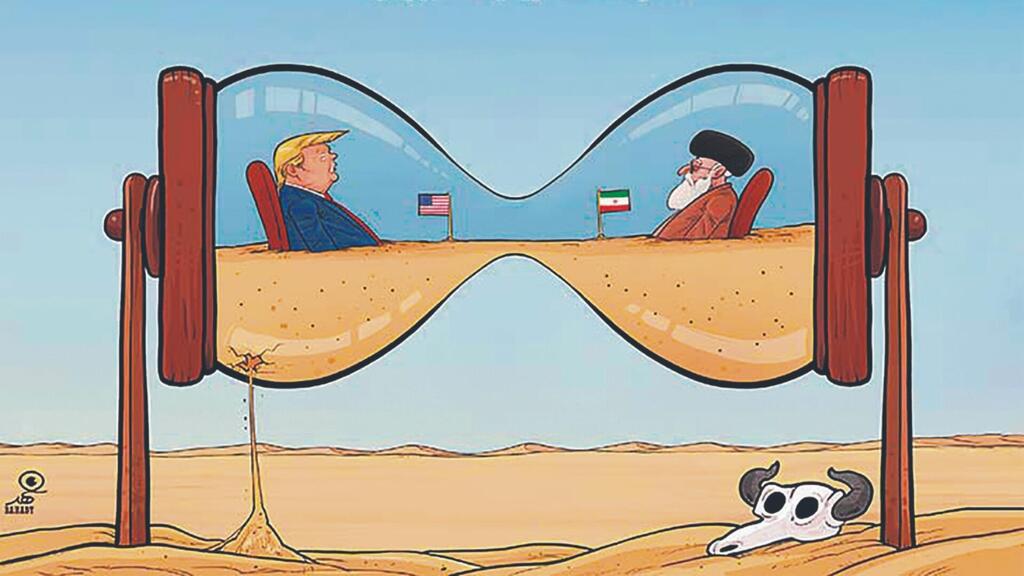
Al-Quds' coverage of the conflict
(Illustration: From 'Al-Quds Al-Arabi')
Kurdish coverage has added another angle, especially in outlets such as Rudaw and Kurdistan24. Kurdistan24 framed the crisis as a U.S.-Iran-Israel conflict driven by nuclear tensions and centered on the Strait of Hormuz, where threats to shipping could disrupt global oil flows. Rudaw has followed the Hormuz negotiations and the impact of U.S.-Israeli strikes on Iranian military and security sites in Rojhelat, the Kurdish region of western Iran. That gives Kurdish coverage a more local security focus than much Gulf or Israeli reporting.
The Iranian press goes much further. Tehran Times and other Iranian-aligned outlets portray the conflict as a war of aggression launched by the United States and Israel. Iranian missile strikes, drone attacks, and pressure on Hormuz are presented as legitimate defensive responses. In this coverage, Iran’s nuclear enrichment is a sovereign right, not a proliferation crisis. Western and Israeli demands that Tehran surrender enriched uranium, restrict missiles, and cut ties with armed groups are framed as coercion dressed up as diplomacy.
Tehran Times offered a clear example in its coverage of Iran’s negotiating position. Citing Iranian Foreign Ministry spokesman Esmaeil Baghaei, it said Iran would “certainly not negotiate or compromise on its rights” and that Iran’s right to uranium enrichment had already been recognized under the Nuclear Non-Proliferation Treaty. In another report, Baghaei was quoted as saying, “The Strait of Hormuz has nothing to do with America,” and that Iran and Oman, as coastal states, should define any mechanism for the waterway. Those quotes show how Iranian media link the nuclear issue and Hormuz to the same claim: Tehran, not Washington, should define the limits of Iranian power.
Support for Iran’s nuclear and missile programs is strongest in Iranian outlets. They generally do not describe enrichment as destabilizing. They argue that the destabilizing force is the U.S.-Israeli military campaign. The missile program is presented as deterrence. Iran’s ties to Hezbollah and the Houthis are usually described as regional partnerships or allied fronts rather than proxy warfare. Hamas, Hezbollah, and the Houthis are not portrayed as causes of the crisis, but as parts of a broader anti-Israel and anti-U.S. camp.
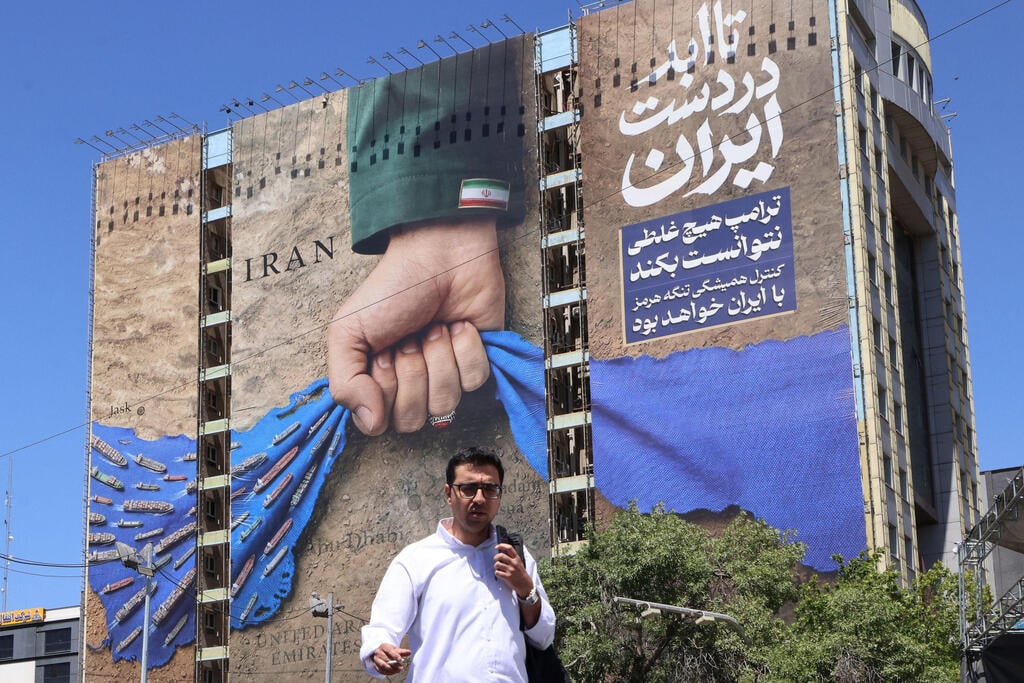
Support for Iran’s nuclear and missile programs is strongest in Iranian outlets
(Photo: ATTA KENARE / AFP)
There is little surprise in the Iranian coverage. It is almost entirely consistent with Iran’s official line: enrichment is a right, missiles are deterrence, Hezbollah and the Houthis are allied forces, and the U.S. and Israel are the aggressors. What stands out is how openly the coverage treats Hormuz as leverage. Iranian media are not hiding the fact that the strait gives Tehran bargaining power.
Lebanese outlets aligned with Hezbollah, such as Al-Akhbar, follow a similar line, though with more emphasis on the regional balance of power. Hormuz is treated as a strategic pressure point. Lebanese coverage outside the Hezbollah-aligned camp is more complicated because Lebanon itself is exposed to the conflict through Hezbollah and Israeli strikes. For Lebanese media, the conflict is also about whether Lebanon is being pulled deeper into a war it cannot control.
Turkish coverage, including Daily Sabah, has tended to describe the crisis in diplomatic and geopolitical terms. The tone is often critical of U.S. and Israeli military action, but less committed to Iran’s position than Iranian or Hezbollah-aligned media. Reports on Hormuz have emphasized competing claims, maritime incidents, U.S. denials, and the fragile shape of possible talks.
Daily Sabah’s May 4 coverage reported Iran’s warning that any foreign armed force, especially the U.S. military, approaching or entering the Strait of Hormuz would be targeted. The same report described the Iranian blockade as choking major flows of oil, gas, and fertilizer to the global economy, while noting that the US had imposed its own counterblockade on Iranian ports. Daily Sabah also quoted the Revolutionary Guards as saying the American president had to choose between “an impossible operation or a bad deal with the Islamic Republic of Iran.” Turkish coverage is pragmatic: critical of Washington and Israel, attentive to Iran’s leverage, but not especially eager to celebrate Iranian enrichment or missile power.
The deepest divide is over responsibility. Israeli outlets place the blame heavily on Iran’s nuclear ambitions, missile development, and support for armed groups across the region. Saudi and Gulf-linked outlets are more restrained, but their coverage still reflects serious concern about Iran’s regional conduct and the danger of allowing Tehran to turn Hormuz into a permanent bargaining tool. Al Jazeera, Palestinian outlets, some Kurdish outlets, and Turkish outlets tend to spread responsibility more broadly, stressing U.S.-Israeli military action and regional escalation. Iranian and Iran-aligned outlets put the blame squarely on Washington and Jerusalem.
The Strait of Hormuz has become the clearest symbol of these divisions. For Israel, it is leverage Iran must not be allowed to normalize. For Gulf states, it is an economic nightmare that must be defused. For Iran, it is proof that the country cannot be bombed or sanctioned without imposing costs on everyone else. For Palestinian outlets, it is another front in a confrontation led by Washington and Israel. For Kurdish outlets, it is part of a wider conflict whose consequences could reach Kurdish regions inside Iran. For President Trump, at least as he is portrayed in regional media, it is both a pressure point and a political trap.
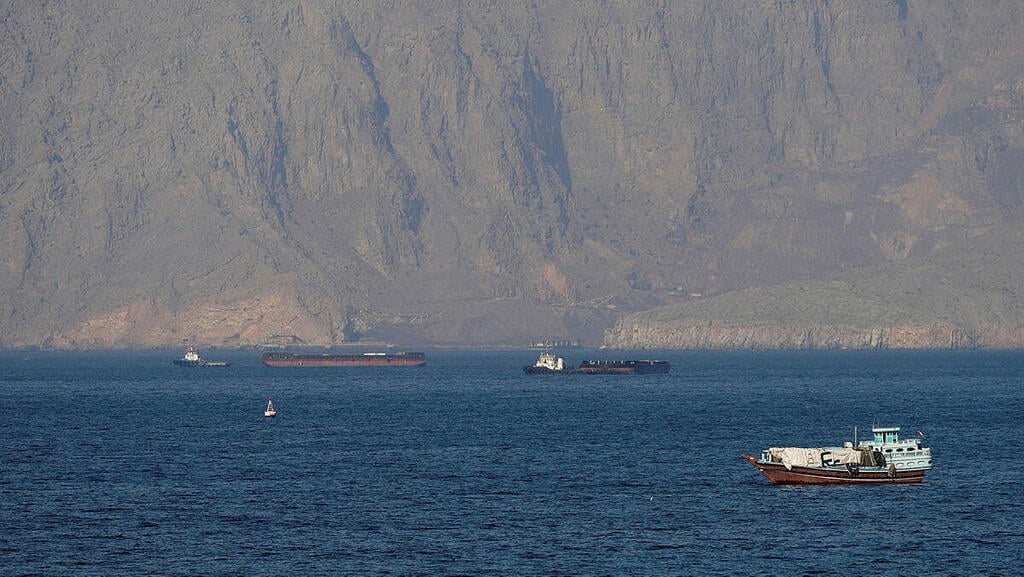
The Strait of Hormuz has become the clearest symbol of these divisions
(Photo: REUTERS/Stringer/File Photo)
In nearly every version of the story, the nuclear issue remains unresolved. Gulf outlets worry that Iran’s enrichment and missile capabilities will survive the war. Israeli outlets warn that any pause leaving those capabilities intact would amount to a delayed crisis, not a solution. Iranian outlets insist that enrichment is nonnegotiable unless Iran’s rights and security are recognized. Al Jazeera, Palestinian outlets, and Turkish outlets focus more on diplomatic sequencing: whether Hormuz comes first, whether uranium comes later, and whether Washington can accept a phased agreement.
Surprises in the coverage are limited but meaningful. Israeli outlets are not simply cheering U.S. pressure; many are worried that the American president will trade long-term security goals for a shorter-term diplomatic win. Gulf outlets are not defending Iran, but they are often more interested in whether the war is useful than in whether it is morally justified. Turkish coverage is critical of the US and Israel but less openly committed to Tehran’s nuclear claims than Iranian media. Palestinian and Kurdish outlets add other angles: Palestinian coverage focuses on U.S.-Israeli escalation and the effects on Gaza and Lebanon, while Kurdish outlets focus on the risk that the conflict could destabilize Kurdish areas or draw Kurdish opposition groups into a wider confrontation.
There is no single regional view of Iran. Sympathy for Tehran is strongest in Iranian and Iran-aligned outlets, more qualified in some anti-Israel or anti-U.S. coverage, and largely absent in Israeli and many Gulf-aligned outlets. Concern about proliferation is strongest in Israeli media, present but often secondary to stability concerns in Gulf coverage, and mostly rejected as a Western pretext in Iranian state-aligned media.
What most outlets recognize is that the war has moved beyond missiles and airstrikes. It is now a contest over leverage: uranium, sanctions, shipping lanes, armed allies, oil markets, and political survival. The regional press is divided over who caused the crisis, but it broadly agrees that Hormuz has turned the confrontation into a global economic threat. Any deal that reopens the strait without settling the nuclear and missile questions may end the current phase of the conflict while leaving the next one already in sight.