


Six Democratic members of the U.S. House are introducing legislation Thursday that would impose sanctions on foreign individuals and entities involved in building or expanding Israeli settlements and outposts in the West Bank and Gaza, a proposal that could potentially apply to senior Israeli government officials.
The Stop the Settlements Act is being introduced by Reps. Joaquin Castro of Texas, Madeleine Dean of Pennsylvania, Don Beyer of Virginia, Greg Casar of Texas, Sara Jacobs of California and Veronica Escobar of Texas. More than 30 other House Democrats have signed on as original co-sponsors, including several longtime members of the party.

The bill would require sanctions against foreign individuals or entities involved in establishing new Israeli settlements or outposts in the West Bank or Gaza, including through infrastructure development, construction in the area known as E1 or facilitating the movement of Israeli civilians into settlements. It would also authorize measures targeting those involved in maintaining or expanding certain existing settlements and outposts.
E1 is a strategically sensitive tract of land east of Jerusalem between the city and the Israeli settlement of Maale Adumim. Settlement construction there has long drawn international opposition because critics say it would make a contiguous Palestinian state more difficult to establish.
Potential penalties under the legislation include blocking assets and denying or revoking U.S. visas. The measure would also prohibit imports into the United States of goods produced wholly or partly in Israeli settlements and outposts in the West Bank and Gaza, moving beyond product-labeling requirements to an import ban.
Because the legislation applies broadly to foreign individuals and entities involved in settlement activity, Israeli government officials could potentially fall within its scope. U.S. citizens would be exempt from the sanctions provisions, including Israeli settlers who also hold American citizenship.
The proposal does not itself provide a comprehensive list of locations considered settlements, leaving implementation and sanctions designations to the executive branch.
The bill represents a broader approach than previous U.S. sanctions targeting individuals accused of violence or destabilizing activity in the West Bank. Its sponsors say they are seeking to use economic pressure against settlement construction and expansion itself.
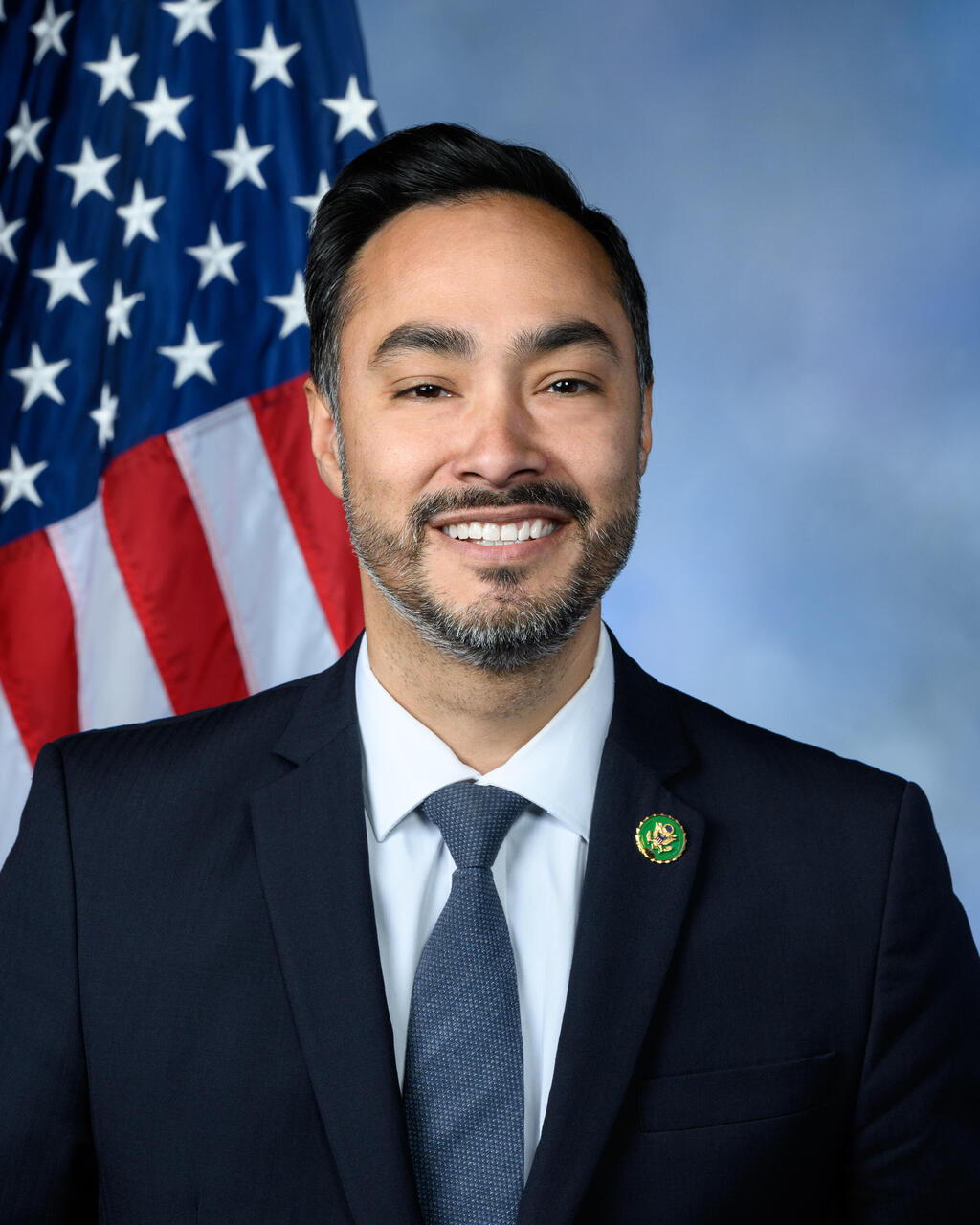
Rep. Joaquin Castro of Texas
(Photo: from Wikipedia)
Castro said the legislation was intended to give individuals and companies a choice between participating in settlement activity and maintaining access to the U.S. economy. He said he plans to continue pressing the issue “in the coming months and in the next Congress.”
Supporters of the legislation argue that settlement expansion displaces Palestinians and undermines the prospects for a negotiated Israeli-Palestinian settlement. Several sponsors also characterize Israeli settlements as violations of international law. Israel disputes some international legal characterizations of the settlements and has historically argued that the status of the territories should be resolved through negotiations.
The proposal comes amid growing criticism among congressional Democrats of Israeli settlement policy. J Street, a U.S. organization that describes itself as pro-Israel and pro-peace, endorsed the legislation, saying economic consequences were needed after decades of international opposition to settlement expansion.
The legislation faces significant obstacles in the current Republican-controlled House and under President Donald Trump, making enactment in the current Congress unlikely. Its sponsors, however, are framing it partly as groundwork for a future Congress.
A senior Democratic official said the prospects for such legislation would also be affected by the outcome of Israel’s elections and whether Prime Minister Benjamin Netanyahu’s current governing coalition remains in power. The official said senior Democrats’ ability to block such measures “depends entirely on whether the current coalition continues. If it does, these laws will pass.” That assessment represents the official’s political judgment rather than a certainty about future congressional action.