

The IDF is beginning an internal review of the Gaza ground offensive carried out during the war with Hamas, in what is expected to be a highly sensitive and politically charged process. The review comes alongside political pressure to complete investigations into the failures that led to the October 7 massacre, particularly the military’s handling of Hamas’ invasion plan, known as “Jericho Wall.”
In the coming days, IDF Chief of Staff Lt. Gen. Eyal Zamir is expected to convene a high command conference that will formally launch a comprehensive series of operational investigations, the most extensive in the IDF’s history. The review will cover the Gaza ground offensive, fighting in southern Lebanon and the capture of two refugee camps in the West Bank, near Tulkarm and Jenin, during the war. The information was confirmed to ynet and its parent newspaper Yedioth Ahronoth.
The process began in a closed meeting of IDF major generals, during which Deputy Chief of Staff Maj. Gen. Tamir Yadai presented conclusions from investigations into the October 7 attacks. The findings have been compiled into a structured lessons-learned process that will shape the IDF’s multi-year development plan, which is currently being finalized. According to military officials, only minor follow-up requests from the political echelon remain before the October 7 inquiry is considered complete.
In recent weeks, the IDF’s Doctrine and Training Division within the Operations Directorate outlined the scope and methodology for the upcoming war reviews. The findings will be presented to the chief of staff, bereaved families and the Israeli public by the end of 2026, assuming the war is not reignited in any of the theaters, which could shift operational priorities.
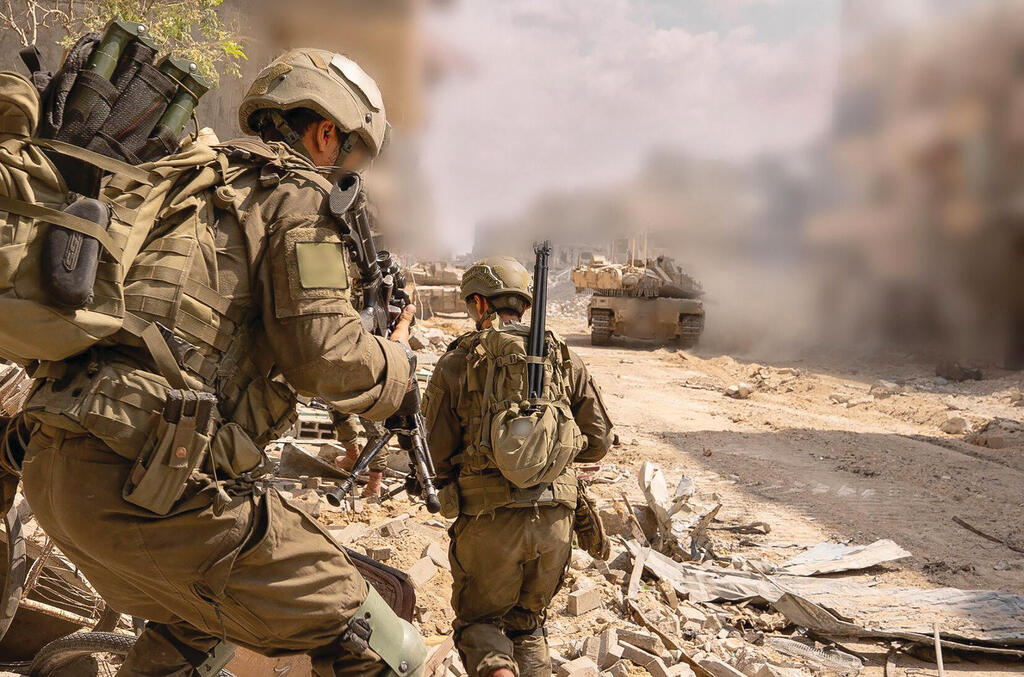
According to the plan, the investigations will be divided into six major battles: The Battle for Gaza City (late October 2023), including the initial entry into the northern Gaza Strip by two regular armored divisions: the 162nd Division, advancing from the coast, and the 36th Division, cutting through the north from south of Gaza City along what would become known as the Netzarim Corridor. The 252nd Reserve Division operated from the east, near Beit Hanoun.
The Battle for Khan Younis, the largest city by area in the enclave, led by the 98th Division, which deployed nearly 10 brigade-level combat teams—more than double the capacity of a single division.
The Battle for Rafah (May 2024), conducted by the 162nd Division and involving sensitive coordination with Egypt along the Philadelphi Corridor.
Two separate maneuvers in Jabaliya, in northern Gaza—first by the 162nd Division, and later, in mid-2024, by the 98th Division.
36th Division forces prepare to enter Gaza City as part of Operation Gideon Chariots II
(Video: IDF)


Operations outside the original war plans, including Operation Gideon's Chariots I, which drew internal criticism, and Operation Gideon's Chariots II, which was canceled at the last moment following the ceasefire with Hamas and the release of most hostages.
The upcoming investigations will begin with unit-level debriefings already conducted within the brigades and divisions that operated in Gaza. Those internal reviews have already yielded operational lessons that influenced training methods, basic combat instruction at IDF training bases and how various weapons systems are used.
However, the General Staff’s focus in these broader war investigations will be on macro-level issues that shaped the outcome of the campaign, particularly the fact that the war ended without the military defeat of Hamas, despite it being an official objective.
Among the key questions: Why did Southern Command fail to prepare full-scale plans to capture the entire Gaza Strip, despite years of political directives calling for Hamas’ removal during prior clashes, yet stopping short of ordering its collapse?
Investigators will also examine whether the decision to begin operations in northern Gaza was the correct one, and to what extent the presence of living hostages throughout the war constrained IDF operations and limited deeper damage to Hamas.
Another point of inquiry will be the drawn-out nature of the major battles. For example, the 162nd Division had to abandon its missions in northern Gaza to lead the offensive on Rafah due to a shortage of available forces. The 98th Division—a top-tier formation granted nearly unlimited time and resources to locate hostages and capture Hamas commanders in the stronghold city of Khan Younis—struggled to meet its objectives.
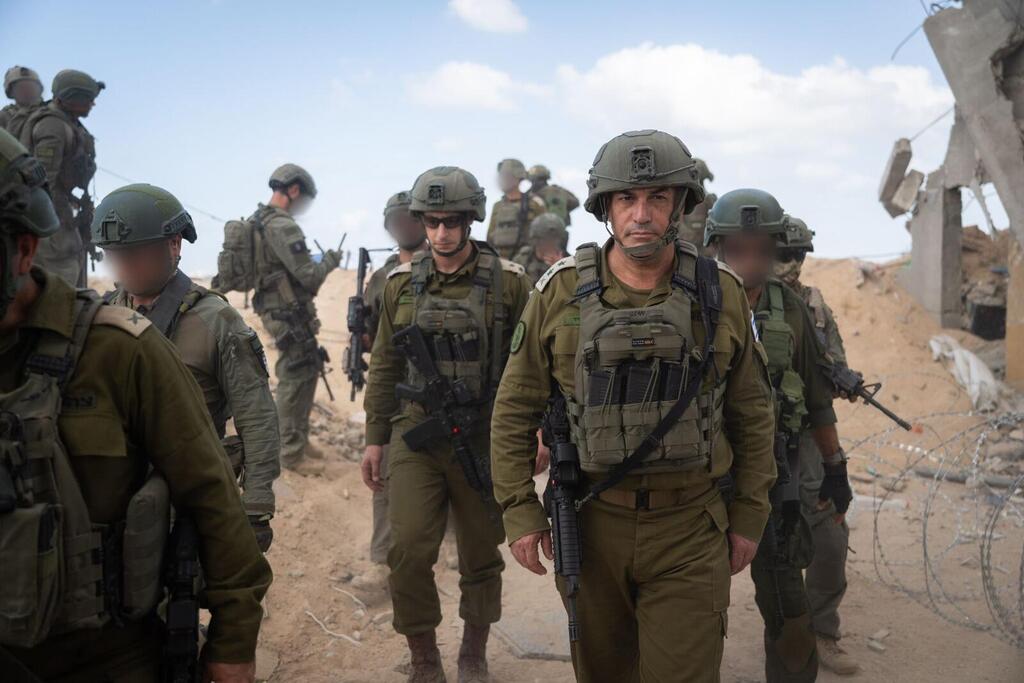
IDF Chief of Staff Lt. Gen. Eyal Zamir tours Gaza
(Photo: IDF)
One particularly difficult question will concern the army’s return to Jabaliya. In late 2023, the 162nd Division dismantled Hamas’ underground terror infrastructure there and declared the local battalion defeated. Yet Hamas later resumed operations in the area, prompting the 98th Division to return for another major assault on the city’s refugee camp.
The effectiveness of Gideon's Chariots I and II will also be scrutinized. Though the IDF and political leadership declared by late 2024 that Hamas had been dismantled as a fighting force, and agreed to pursue a hostage deal, only part of the agreement was implemented in January. Contrary to the plan, fighting resumed in Gaza in April 2025.
The investigations will also address the military’s overall conduct during the prolonged maneuver, not only ground forces. A central failure expected to be reviewed is the intelligence gap surrounding Hamas’ tunnel network. The IDF reportedly lacked prior knowledge of how to locate, target and neutralize the full extent of Hamas’ underground system, which still spans miles inside Hamas-controlled territory.
Although the military had encountered the tunnel threat in past operations, especially in the decade leading up to the war, forces were forced to improvise tunnel warfare methods in real time during the campaign.
The investigations will be led by commanders directly involved in the fighting, many of whom now hold senior positions. These include Operations Directorate head Maj. Gen. Itzik Cohen, who commanded the 162nd Division during the war, and Maj. Gen. Dado Bar-Kalifa, now head of the IDF Personnel Directorate, who led the 36th Division.
Nonetheless, the IDF is expected to recommend the appointment of external oversight teams to review the findings, to be led by retired generals. Chief of Staff Zamir is expected to make a final decision on that recommendation in the coming weeks.
In the coming months, the IDF will expand its internal war investigations beyond Gaza, launching similar reviews of its ground operation in southern Lebanon aimed at neutralizing the invasion threat by Hezbollah's elite Radwan Force, and the capture of two refugee camps in the West Bank. Those camps, located near Jenin and Tulkarm, remain under constant Israeli military presence, with two battalions stationed there full-time.
The review of northern theater operations will be broken down by topic. First, the IDF will assess the initial year of defensive fighting, during which Gaza was the primary focus, alongside operations designed to degrade Hezbollah’s capabilities, through heavy Israeli Air Force strikes and dozens of covert ground missions.
The prelude to the ground incursion in Lebanon, known as Operation Northern Arrows, will be examined as a standalone case, along with the series of high-impact strikes and targeted eliminations that dismantled much of Hezbollah’s senior leadership.
Another focus will be Operation Arrow of Bashan, a campaign that is technically ongoing involving the largely uncontested seizure of the Syrian Golan Heights and Mount Hermon summit following the collapse of the Assad regime and the withdrawal of Syrian forces. Investigators are expected to review complex issues, including the operational maintenance of IDF positions inside enemy territory.
Separately, the IDF has completed its internal probe into Operation Rising Lion, a 12-day strike campaign against Iran carried out in June, which is regarded within the military as a success. Ten different investigative teams reviewed operational processes, key decision points from recent years in which the IDF came close to launching similar operations and the rationale behind the timing of the strike.
While lessons from the operation are expected to inform future planning in the event of another escalation with Iran, the IDF has made clear that some of the elite capabilities deployed during Operation Rising Lion—which contributed to its success—were effectively “burned” due to their exposure and would take years to rebuild.
Across all these multi-front war investigations, the military’s stated aim is to extract immediate lessons and apply them in real time, preparing the IDF for future conflict scenarios—particularly potential surprise attacks—in what officials expect will be years of intermittent, multi-theater confrontations.