


In a rare response, Iran’s Supreme Leader Ali Khamenei on Monday publicly rebuked former defense minister Yoav Gallant, who last week claimed in an open letter that Israel had dismantled Tehran’s decades-old strategic doctrine in their first-ever direct military clash, dismissing the letter as “propaganda” and part of a “full-scale psychological operation.”
Writing on his official website, Khamenei argued that the true battlefield lies not in territory, but in shaping public perception.
Gallery
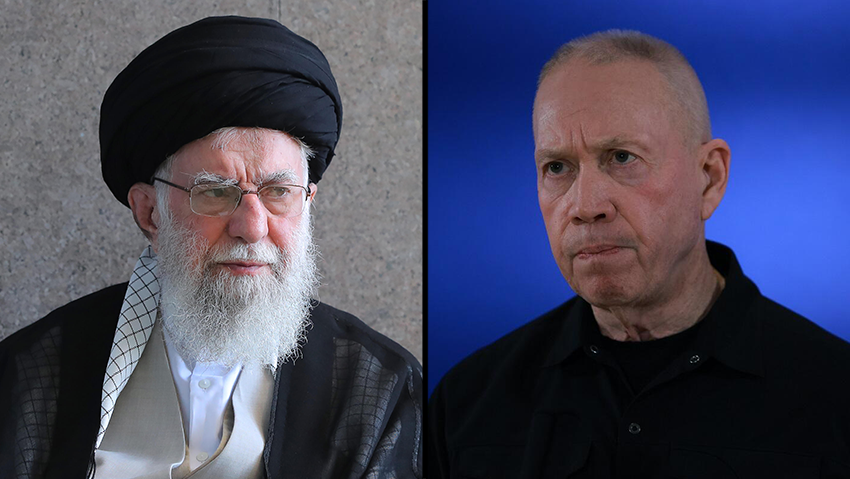
Iran’s Supreme Leader Ali Khamenei, Yoav Gallant
(Photo: Iranian Leader's Press Office - Handout/Getty Images, Tal Shahar)
In his letter, Gallant touted Israel’s achievements in the latest clash between the two arch foes. “What unfolded in June 2025 was not merely a military campaign. It was the strategic collapse of a system you spent four decades constructing,” he wrote.
Gallant warned that Israel had penetrated Iran’s internal systems, including military planning and top-level decision-making. “But more than physical damage, something deeper was revealed: We see everything. We hear everything. We are everywhere,” he declared, asserting that Israel had monitored Iran’s sites, communications, schedules and even conversations between Khamenei and allies in Beirut, Damascus and Tehran—“most of whom are no longer with you.”
Get the Ynetnews app on your smartphone: Google Play: https://bit.ly/4eJ37pE | Apple App Store: https://bit.ly/3ZL7iNv
“We knew your schedules. Your sites. Your communications. Your timelines. Your fallback plans. And your blind spots. In more ways than one, we knew more about you than you knew about yourselves,” he continued.
He posed a pointed challenge: “Can you build a secret nuclear program when you have no secrets?” Describing Iran’s nuclear ambitions as “a dream” and “an act of faith in systems that have already failed,” Gallant argued that Iran lacked the conventional capabilities needed to protect such a program. “Hope is not a strategy. Would you risk your future and your country's on a race you cannot conceal and are unlikely to finish? To protect a nuclear program, you need conventional defensive and offensive capabilities. But those capabilities have already proven ineffective," he added.
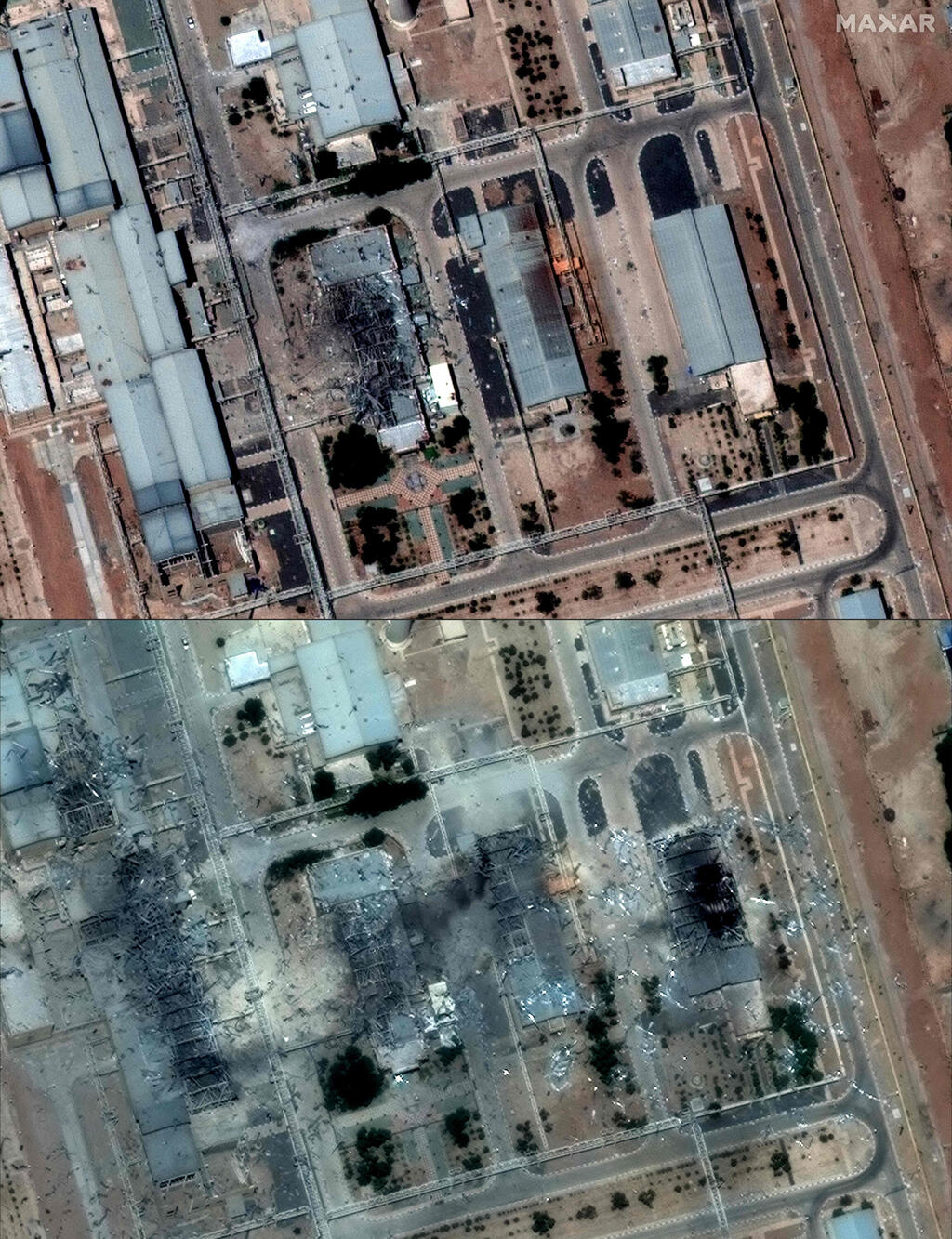
Satellite images of Iran's Isfahan nuclear facility before and after US-Israeli airstrikes
(Photo: SATELLITE IMAGE ©2025 MAXAR TECHNOLOGIES / AFP)
He also pointed to weaknesses in Iran’s air defenses and warned that any effort to rebuild the nuclear program would provoke future strikes. “Abandon your war against a small, determined country a thousand miles from your border, and focus instead on the welfare and future of your own people,” he urged.
Gallant's claims appeared to be reinforced by U.S. assessments. Earlier this month, the Department of Defense concluded that joint Israeli-American strikes had set Iran’s nuclear program back by one to two years. Pentagon spokesman Sean Parnell confirmed that key nuclear facilities at Fordow, Natanz and Isfahan were destroyed, noting the delay is “likely closer to two years.”
The announcement came after more than a week of conflicting reports about the effectiveness of the strikes, particularly at Fordow, Iran’s most heavily fortified and strategically vital enrichment site.