

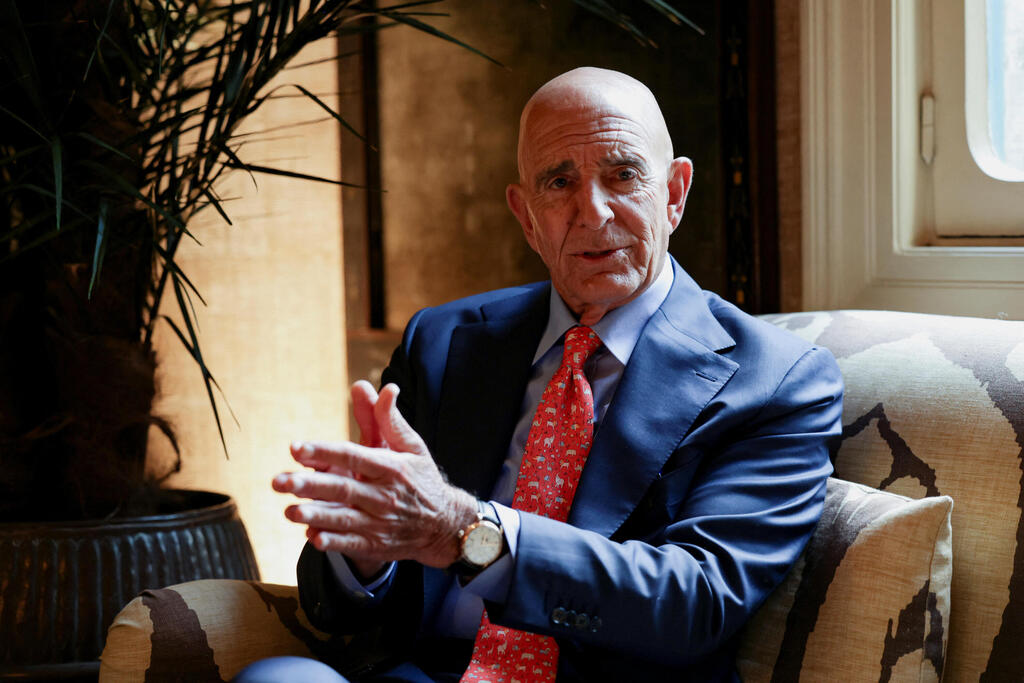
U.S. Ambassador to Turkey and President Donald Trump's special envoy Tom Barrack said Friday that an American strike on Iran was possible as early as this weekend. Asked by online commentator Mario Nawfal whether a strike could take place over the weekend, Barrack replied: "Absolutely."
However, Barrack immediately stressed that Washington remained open to a diplomatic agreement with Tehran. "The president is very clear. He's open and available and accessible to a deal," Barrack said, adding that negotiations had been underway for months.
US president Donald Trump


His remarks contrasted with the White House's statement Thursday that the United States would not resume attacks on Iran before the November 3 midterm elections. White House spokesperson Anna Kelly explicitly ruled out American strikes before the vote, although officials said Trump continued to keep military options available.
Meanwhile, the Financial Times reported that Washington was preparing for a prolonged confrontation with Iran, citing an interview with Mike Waltz, the U.S. ambassador to the United Nations, as the administration seeks to use military and economic pressure to extract concessions from Tehran in stalled negotiations.
Waltz was asked whether the United States could still find itself in a deadlock with Iran a year from now, without an agreement on its nuclear program or a return to prewar shipping conditions in the Strait of Hormuz.
"I'm not going to put out hypotheticals," Waltz told the Financial Times, expressing hope that Iran would return to serious negotiations well before then.
However, he emphasized that "the president and the US Navy can maintain this blockade for the foreseeable future," referring to restrictions on Iranian ports. Waltz also said the administration was tightening its economic pressure campaign.
Waltz subsequently challenged the Financial Times' characterization of his remarks as a warning that Washington was prepared for a prolonged confrontation. Responding to coverage of the interview, he said the newspaper had misrepresented his statements and emphasized that decisions on how long to maintain the blockade and pursue diplomacy rested with Trump.
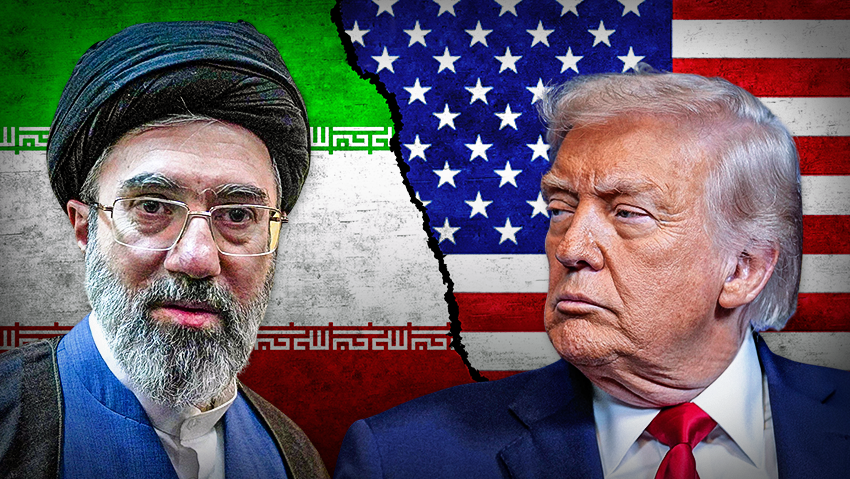
(Photo: Hamed Jafarnejad/ISNA/WANA (West Asia News Agency) via REUTERS, shutterstock, AP/Alex Brandon)
Meanwhile, Trump has repeatedly threatened to launch renewed strikes against Iran following the U.S. midterm elections on November 3, just one week after Israel's own elections.
Speaking to reporters outside the White House on Friday, Trump suggested that Washington could bring the war to a swift conclusion but was weighing whether to do so or allow the conflict to weaken gradually.
"We could end it very quickly," Trump said. "Do we want to finish it off or just want to let it wither?"
Trump also described Iran as a failing state and touted what he presented as American achievements in the conflict, including increased oil shipments through the Strait of Hormuz. He claimed the United States was obtaining the results it wanted.
The war, which Trump initially said would last four to five weeks, is now approaching its ninth month. It has driven gasoline prices to record highs as Iran has disrupted shipping through the Strait of Hormuz, one of the world's most important maritime trade routes.
Perhaps even more significantly for Trump, the war has severely damaged his popularity in the United States, including among Republican voters. His approval rating has fallen to approximately 31%, less than two weeks before the midterm elections.
The Republican Party also faces the possibility of losing control of both chambers of Congress, amid growing public frustration over high prices.
In an effort to bring down fuel costs, Trump reached an agreement this month with Russian President Vladimir Putin allowing Russian diesel to be sold to the United States after years of sanctions. The move drew sharp criticism from Western leaders, who warned that the revenues would provide Moscow with a financial lifeline to continue its war against Ukraine, which is approaching its fifth year.
Waltz, who according to the Financial Times had advocated U.S. support for Ukraine's government while serving in Congress in 2024, defended Trump's agreement.
He argued that the arrangement was necessary to address a global shortage of refined petroleum products that had affected industries ranging from aviation to agriculture. Waltz said fertilizer shortages were contributing to a humanitarian crisis in East Africa.
According to Waltz, Trump was balancing global energy needs, particularly the supply of diesel. He suggested that revenues from the arrangement could also encourage Russia to engage seriously in negotiations aimed at ending the war in Ukraine.
Plans for a brief, intense strike
Earlier this week, The New York Times reported that the U.S. and Israeli militaries had developed detailed plans to resume strikes against Iran following the American midterm elections early next month.
American officials and sources familiar with the discussions said preparations were progressing for a brief, intense operation, likely involving attacks on nuclear and energy facilities, as well as missile and drone systems.
Prime Minister Benjamin Netanyahu
(Photo: REUTERS/Amir Cohen)
Senior Iranian officials said they were aware of the American and Israeli war plans and were developing new targets and tactics of their own. Among other measures, Iranian officials have threatened to target data centers and undersea internet cables, warning that any renewed confrontation would not be brief.
Peyman Salehi, a political analyst in Tehran, said that if Iran were attacked, its response could include strikes on major oil refineries in Saudi Arabia, including facilities operated by the national oil company Aramco.
According to Salehi, such strikes would trigger an immediate and sharp rise in global oil and energy prices. He argued that the war had demonstrated that increasing energy costs was one of Tehran's most effective means of exerting pressure on Trump because of the economic consequences for American consumers.
The New York Times stressed that no American decision to launch an attack had yet been made.
An earlier Financial Times report said the IDF had prepared for several days of fighting with Iran about a week and a half ago, but Trump opposed resuming hostilities before the American midterm elections and blocked the move. Prime Minister Benjamin Netanyahu subsequently denied that report.