

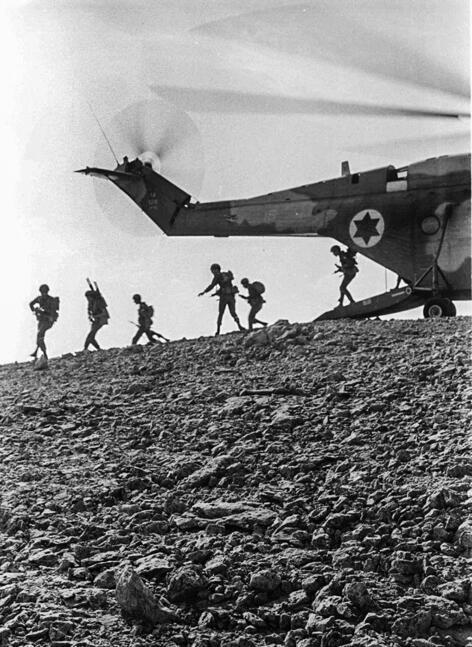
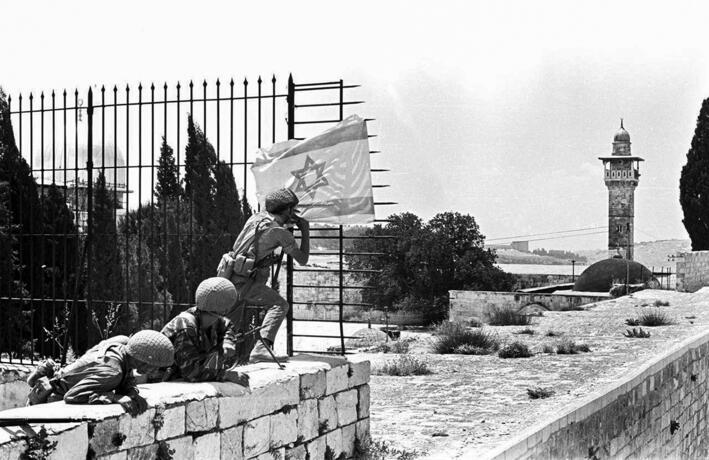
The Paratroopers Reconnaissance Unit, one of the IDF’s elite combat units, is marking 70 years since its establishment. Seven decades after its founding, the unit remains heavily involved in combat operations, with its soldiers moving repeatedly between fronts.
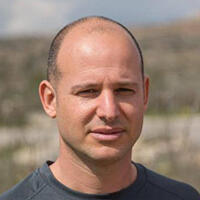
“We’re now moving from Gaza and heading up to the West Bank, to Jenin. We’ll be there over the holidays,” said Lt. Col. N., the unit’s commander, who, like the other officers interviewed for this article, can be identified only by his initial under IDF information security rules.
“We’ve all been in continuous combat since Oct. 7,” he said, referring to the Hamas-led attack on southern Israel on Oct. 7, 2023, that triggered the war in Gaza. “We carried out operations and took part in hostage missions. We operated in most areas of Gaza, including incidents connected to the hostages. From there, the unit moved to Lebanon and then Syria. There, in a single night, we seized the security zone and destroyed capabilities. From there, we went back down to Gaza, to Khan Younis. Operations night after night. Last week, we marked the unit’s 70th anniversary, a significant and special day with the veterans.”
‘The unit was my dream’
Asked what best captures the unit’s character, its deputy commander, Maj. A., pointed to fighting in Bint Jbeil, a Hezbollah stronghold in southern Lebanon.
“For me, it was mainly Bint Jbeil,” he said. “We went in initially and took commanding positions, and on the third day we operated alongside the Givati Brigade. We began identifying movement in the sector and brought the entire system into action. Fifteen terrorists were killed that morning, and it was a major event. There were six different positions, each operating as effectively as possible.”
“There was a lot of drive from the soldiers, and it wasn’t simple,” he said. “We had to gain control of the Silvester Ridge, and we identified the enemy withdrawing.”
“I grew up in this unit,” A. added. “The Paratroopers Reconnaissance Unit was always my dream. I went through my training here, served as a team commander, and on Oct. 7 I deployed with the unit.”
The prolonged fighting has put the unit’s defining characteristics to a daily test.
(Phot: IDF)
“First and foremost, the unit’s DNA is initiative,” said another Maj. A., a company commander. “We encountered all kinds of situations. We established positions when the attack began on Oct. 7, including a position from the sea, and all of that was initiated by the company’s soldiers through creative thinking. It reflects the values that come from the unit they grew up in.”
He recalled one encounter in which members of the unit were wounded.
“We had an encounter that didn’t go particularly well, with casualties, and that story explains what the Paratroopers Reconnaissance Unit is about,” he said. Rather than allowing the incident to develop into a crisis, he said, battalion and company commanders focused on drawing lessons from what had happened and determining how to move forward.
“The soldiers’ spirit changed over the course of the fighting, but it remained very strong throughout,” he said. “It’s really not something to take for granted — continuing to push, carrying out relevant operations, going through sleepless nights. I want to emphasize that there were crises and it was difficult, but it never broke them.”
Some soldiers who served under him during their mandatory service later returned to fight alongside him as young reservists in Lebanon, he said.
“Our ability as a system and as a reconnaissance unit is to support the soldiers after every encounter,” he said.
Maj. M. recalled another moment from the fighting in southern Israel that illustrated the unit’s experience on Oct. 7.
“Someone sitting here had just learned that his brother had been killed,” M. said, referring to one of the unit’s company commanders who was present during the interview. “Meanwhile, we heard gunfire and understood that someone had been wounded.”
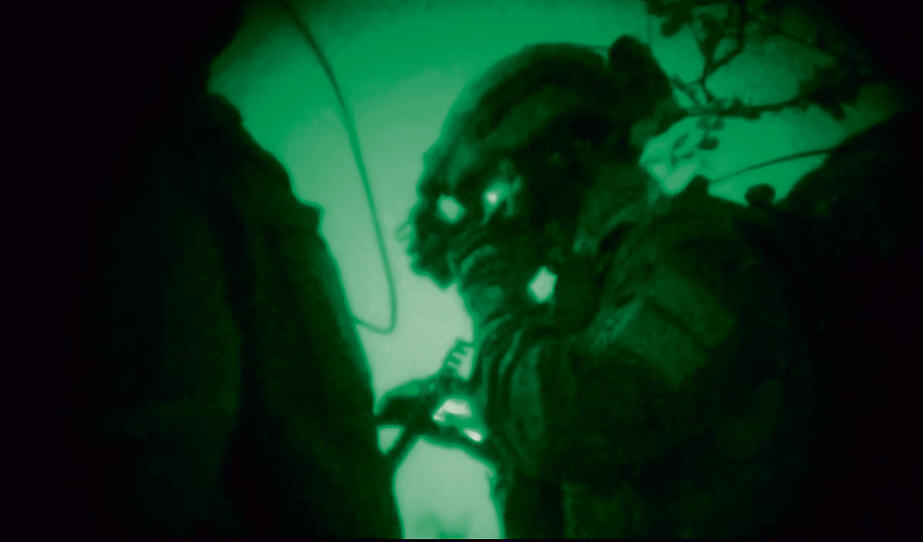
The Paratroopers Reconnaissance Unit in Lebanon
(Phot: IDF)
“I’ve never told anyone this, but it’s a story that illustrates what the Paratroopers Reconnaissance Unit is and what the people of Israel are,” he said. “We were fighting near the Gaza border when we learned that his brother had been killed. He was next to me when he received the news, and then they started shooting at us. I’m telling you, it happened literally minutes after we understood what had happened to his brother. It was still the beginning, and without thinking too much, we charged forward and fought.”
M. said the young soldiers joining the unit today arrive with a different outlook after years of war.
“The soldiers enlisting today are different soldiers,” he said. “You see it in every aspect of the exercises. You see the way they talk to one another, with a real understanding. They simply understand what it means.”
“The fear exists, but in the end it isn’t paralyzing fear. It’s a sense of solemn responsibility,” he said. “By the end of the exercise, the soldier really understands what is required of him. They see the teams, both those that suffered casualties and those that didn’t. You see an incredible cohesion here and an inseparable bond, and they talk about it a lot.”
Maj. Y., who commanded a training company on Oct. 7 and was later appointed the reconnaissance unit’s operations officer, recalled being wounded that morning.
“I’ve been here for four months as commander of the Orev anti-tank company,” he said. “During the war, I was a training company commander at the brigade training base, and then I came here as operations officer.”
He said he was wounded by shrapnel in his leg after a group of company commanders from the Paratroopers Brigade training base gathered in the southern city of Sderot on Oct. 7.
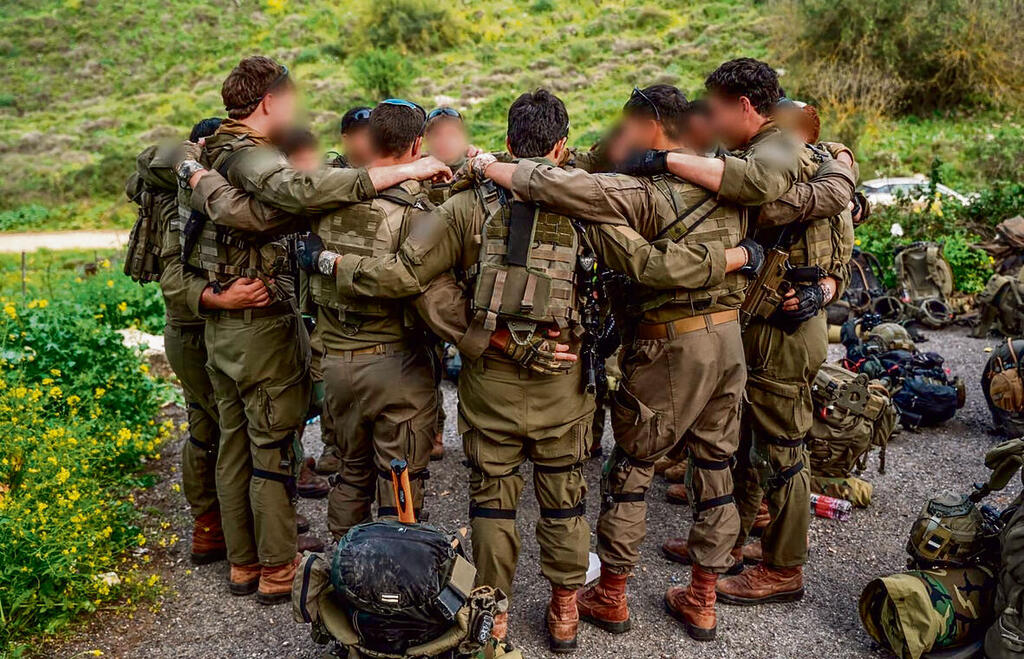
The Paratroopers Reconnaissance Unit
(Phot: IDF)
“There was an encounter involving the deputy commander of Maglan, and before I understood what was happening, I got hit,” he said, referring to another elite IDF unit.
“Maj. A. here, to his credit, played a huge role in keeping me alive,” Y. said. “Without getting into politics, Noam Tibon also took part in rescuing me.”
Tibon, a retired IDF major general, independently headed south on Oct. 7 and joined fighting against Hamas terrorists while trying to reach his son and his family at Kibbutz Nahal Oz.
Y. said his lengthy rehabilitation left him struggling with the feeling that the war was continuing without him.
“I experienced the beginning of the fighting as a spectator,” he said. “For a long period, I personally knew everyone fighting in the field, but I felt like I was ‘sitting in the stands.’”
‘We are not fighting machines’
Maj. A. said the unit’s repeated moves among Gaza, Lebanon, Syria and the West Bank have created their own challenges.
“First of all, we are not fighting machines and we are not mercenaries,” he said. “All of this moving from one front to another is rooted in Zionism.”
From a professional standpoint, however, he said many of the combat challenges are similar.
“With many of the challenges we encountered in the north, we relied on existing combat doctrine and methods,” he said. “You make adjustments for every sector, but it isn’t overly complicated.”
The most difficult transition, he said, is between Gaza and the West Bank.
“The work in Jenin is very intensive, but you know that there are still hostages in Gaza, and that is not an easy mental challenge,” he said.
Maj. S. recalled the morning of Oct. 7, when the unit was rushed to communities near the Gaza border as Hamas-led terrorists attacked Israeli towns, military bases and a music festival.
“I really remember that on Oct. 7, you felt like they were looking for you and trying to hunt you,” he said. “Very quickly, the unit tried to reverse that equation so that we would be hunting the enemy.”
“In my opinion, the drive to engage the enemy is what distinguishes us from other units in the IDF,” he said.
S. said his older brother had commanded the unit’s reconnaissance company six years earlier.
“I remember how much he loved the position and the unit, for exactly the same reasons,” he said. “Wherever the unit is needed, that’s where it will go.”
S. began fighting at Kibbutz Re’im before moving to the area around Kibbutz Holit, another community near the Gaza border that was attacked on Oct. 7.
“At around 8 in the morning, we were in the orchards north of Holit,” he said. “As soon as we entered, we encountered them. The deputy battalion commander was wounded first, then another officer and I were hit. It was a complicated encounter.”
Beyond his personal experience, S. said the battle demonstrated the importance of how the unit responds under fire.
“In the end, the reconnaissance unit produces operational results even in an encounter like that, and the way you operate is critical,” he said. “That drive to engage the enemy was evident everywhere we operated.”
Looking back on the unit’s 70-year history, Lt. Col. N. said the years since Oct. 7 have left their mark on everyone serving in it.
“I feel it myself, and I see it in everyone who has been here from the first day,” he said. “We’re all carrying this war on our backs.”