

The far-right Alternative for Germany party’s landslide victory in the eastern state of Saxony-Anhalt has triggered a political earthquake whose effects are being felt far beyond Germany.
Near-final results showed the AfD winning 43.8% of the vote, more than doubling its previous support and securing 39 of the 83 seats in the state parliament. It fell just short of the 42 seats needed for an outright majority, making it difficult for the party to form a government because most other parties have ruled out working with it.
Gallery
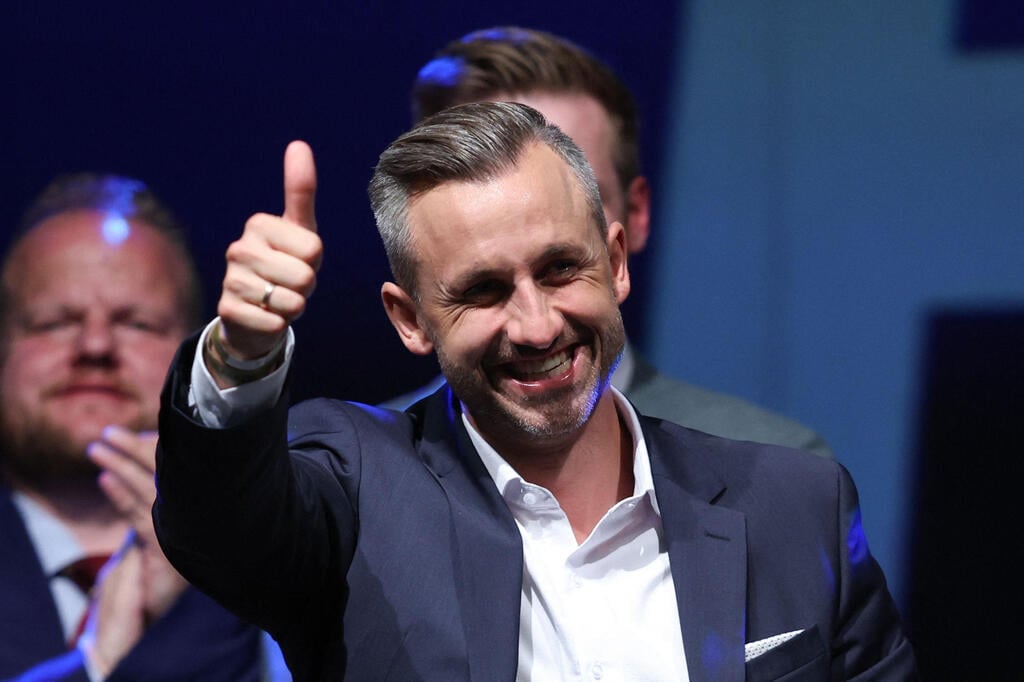
Ulrich Siegmund, leader of the AfD in the German state of Saxony-Anhalt
(Photo: Ronny HARTMANN / AFP)
Even so, the result is an extraordinary breakthrough for a party founded only 13 years ago and represents a particularly painful defeat for Chancellor Friedrich Merz, whose center-right Christian Democratic Union, or CDU, has seen public support fall sharply since he took office last year.
The CDU, which had controlled Saxony-Anhalt’s state government for 24 years, won only 17.2% of the vote and 15 seats, roughly halving its support. The center-left Social Democrats received 9.3%, the Greens 8.9% and the Left Party 8.6%. The Sahra Wagenknecht Alliance, or BSW, narrowly cleared the 5% electoral threshold and secured five seats.
The result leaves Germany confronting a question that would have been almost unimaginable only a few years ago: whether a far-right party could eventually take control of a state government for the first time since the end of Nazi rule in 1945.
The ‘firewall’ leaves AfD short of power
Most German parties have long maintained what is known as the “firewall,” a refusal to cooperate with the AfD in forming governments. That barrier previously kept the party out of power after another state election victory in neighboring Thuringia.
All the parties elected to the Saxony-Anhalt parliament except BSW have again ruled out cooperation with the AfD, leaving the formation of a government extremely complicated.
BSW opposes the idea of a blanket firewall and has said it could cooperate with the AfD on specific issues, although it has indicated that it would prefer an outside candidate for state premier rather than one of the existing party leaders.
Ulrich Siegmund, the 35-year-old AfD leader in Saxony-Anhalt and the party’s candidate to head the state government, signaled that he would not accept political maneuvering that required his party to abandon its principles.
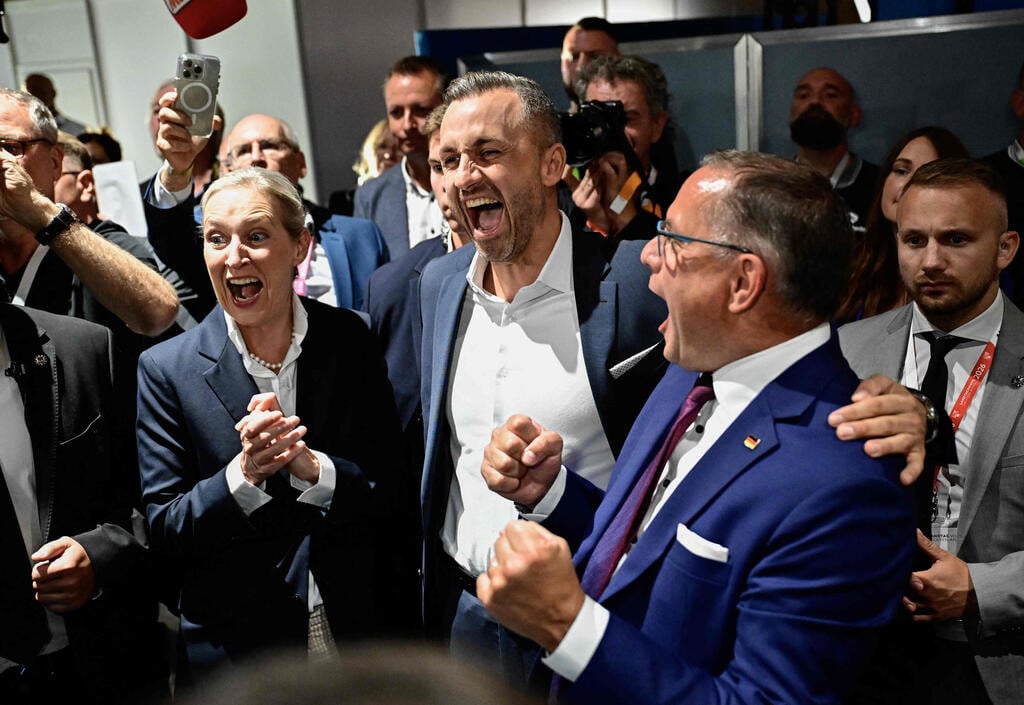
(Photo: Tobias SCHWARZ / AFP)
“If necessary, we’ll simply have new elections, and then we’ll get 50 or 55%,” he said after the victory, while also saying his party remained open to cooperation with others.
The result is nevertheless being viewed as a turning point for the AfD. The party entered Germany’s federal parliament, the Bundestag, for the first time only in 2017. It finished second in the February 2025 federal election with more than 20% of the vote and is now the largest opposition party in Berlin.
Its rise was initially concentrated in the poorer eastern states of the former East Germany, but support has increasingly spread into wealthier western regions as frustration has grown over mass immigration, economic stagnation and dissatisfaction with mainstream parties.
Current polling ahead of Germany’s next federal election, expected in 2029, places the AfD at around 28%, roughly eight points ahead of Merz’s CDU.
Anti-immigration platform and ties to Russia
The AfD has built much of its identity around opposition to immigration, particularly Muslim immigration into Europe. It advocates what it calls “remigration,” a policy aimed at returning migrants to their countries of origin, and has proposed separating refugee children from German children in schools.
It also holds strongly pro-Russian positions. Senior party figures maintained close contacts with Moscow throughout the war in Ukraine, have called for restoring relations with the Kremlin and want Germany to stop sending financial support to Kyiv, arguing that the money should instead be spent on Germans.
The AfD is Euroskeptic and has called for Germany, Europe’s largest economy, to leave the euro currency system. It also opposes major elements of green climate policy and has embraced the kind of culture-war politics increasingly associated with populist right-wing movements elsewhere.
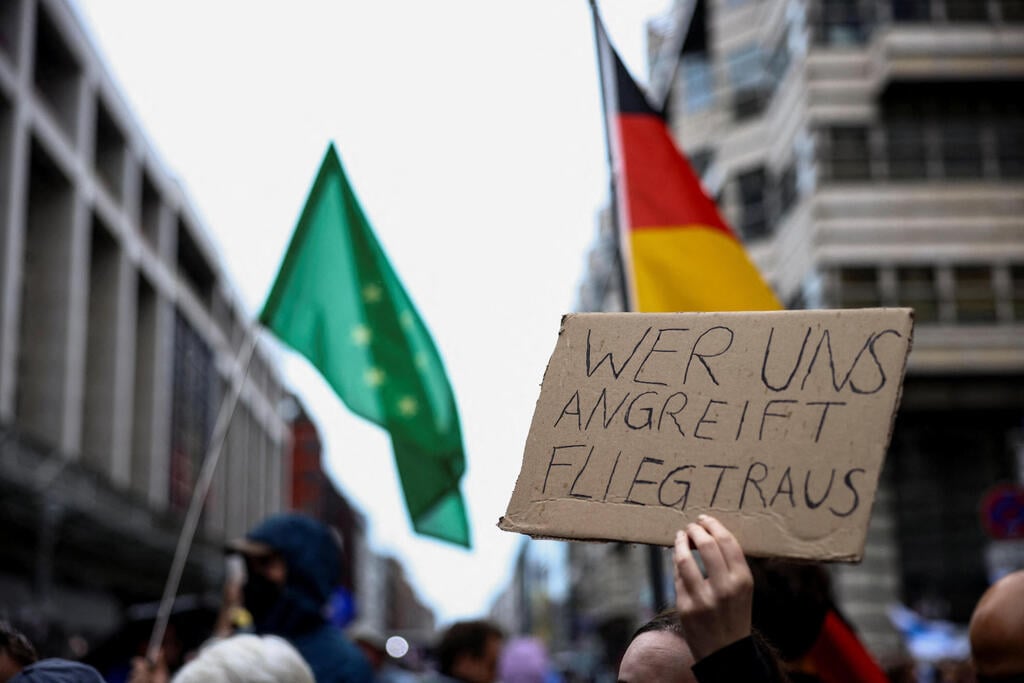
Sign reading ‘No Kremlin in Berlin’ at a protest against the pro-Russian BSW party, which could cooperate with the far-right AfD in forming a government in Saxony-Anhalt, Germany, September 4
(Photo: REUTERS/Liesa Johannssen)
Critics accuse the party of providing a political home for neo-Nazis and of attempting to minimize Germany’s Nazi past as part of its campaign to restore pride in German national identity. One of its slogans is “Germany for Germans.”
The AfD rejects those accusations and says its opponents are using state institutions to exclude it from legitimate democratic politics. In Saxony-Anhalt, domestic intelligence authorities have classified the party’s state branch as a confirmed far-right extremist organization, allowing it to be subjected to enhanced surveillance.
Party officials have also proposed banning Pride flags from schools while requiring German flags to be flown, establishing civilian patrols to help fight crime and reforming public broadcasting, which Siegmund accuses of spreading “disinformation.”
‘The people want change’
The scale of the AfD victory also reflects widespread frustration with Merz’s federal government. Surveys in Saxony-Anhalt showed that 87% of residents were dissatisfied with the national government.
Merz has struggled to fulfill promises to revive Germany’s sluggish economy and reduce illegal immigration, and the scale of the CDU’s defeat has intensified discussion over whether he can remain the party’s candidate for chancellor at the next federal election.
Germany’s ARD public broadcaster said the question now being asked was “how long he will survive” politically.
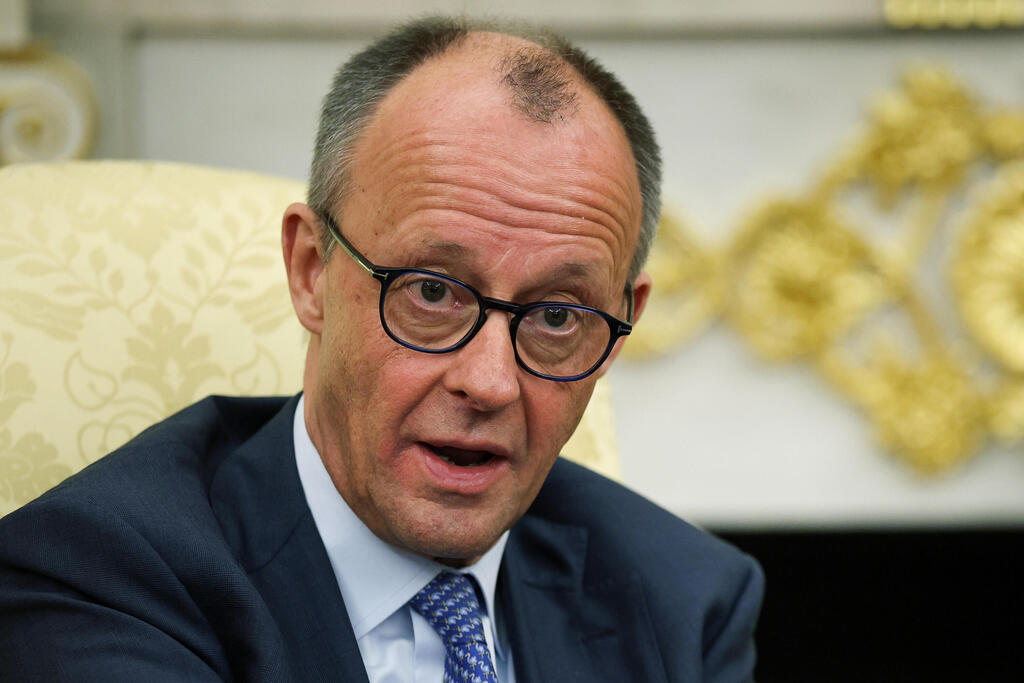
Chancellor Friedrich Merz
(Photo: Win McNamee/Getty Images)
The CDU nevertheless reiterated that it would not cooperate with the AfD.
“It is a far-right party. It wants to leave the euro, which would be an economic disaster. It works closely with Russia, and it wants a completely different social model,” CDU Secretary-General Franziska Hoffmann said. “We will not work with them.”
The AfD’s success, however, cannot be explained solely by anger at Berlin. Much of the result is also being attributed to Siegmund, a charismatic local leader who drew thousands of supporters to rallies and used social media effectively to soften the party’s image despite the accusations surrounding it.
Der Spiegel has described him as “the most dangerous man in Germany” because of his ability to give the party a more positive public image.
“We made history,” Siegmund said after projections showed an even stronger result than polls had predicted. “The people sent an absolutely clear message that they finally want political change, and above all they showed that they want that change with us.”
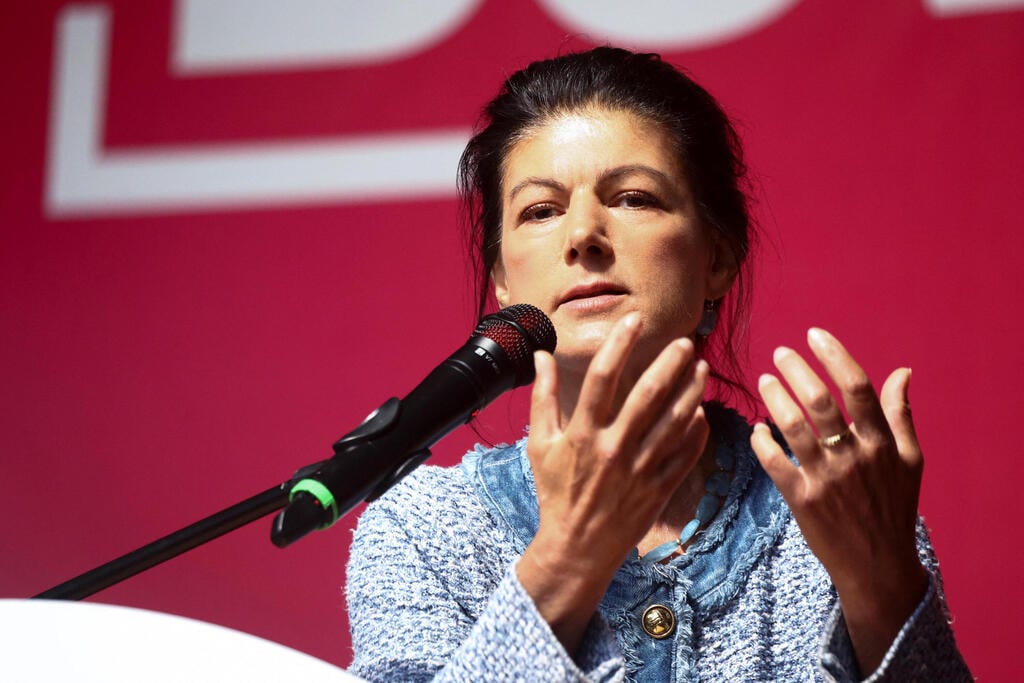
Sahra Wagenknecht, leader of Germany’s far-left BSW party
(Photo: REUTERS/Liesa Johannssen)
One AfD voter told the BBC that while other parties merely promised improvement, he believed Siegmund could actually deliver it.
“This man gives us something no one else can give,” he said. “This is a party for working people. It is the alternative for Germany.”
Another voter said people in eastern Germany increasingly felt that things were going wrong.
“It has to get better for us, for my family. I have three children,” he said. “I’m afraid, I’m genuinely afraid that security is being eroded more and more.”
Trump, Musk and Kremlin figures react
Although the vote was a state election, the scale of the AfD victory drew reactions from across Europe, the United States and Russia.
Italian Deputy Prime Minister Matteo Salvini, leader of the right-wing League party, said “another Europe is possible.” Former Hungarian prime minister Viktor Orbán also celebrated the result, calling it “a huge night for Germany and Europe” and adding: “Buckle up. This is just the beginning.”
Elon Musk, a prominent supporter of right-wing movements in both the United States and Europe, responded to a post by national AfD leader Alice Weidel with the German phrase “Gut gemacht,” meaning “well done.”
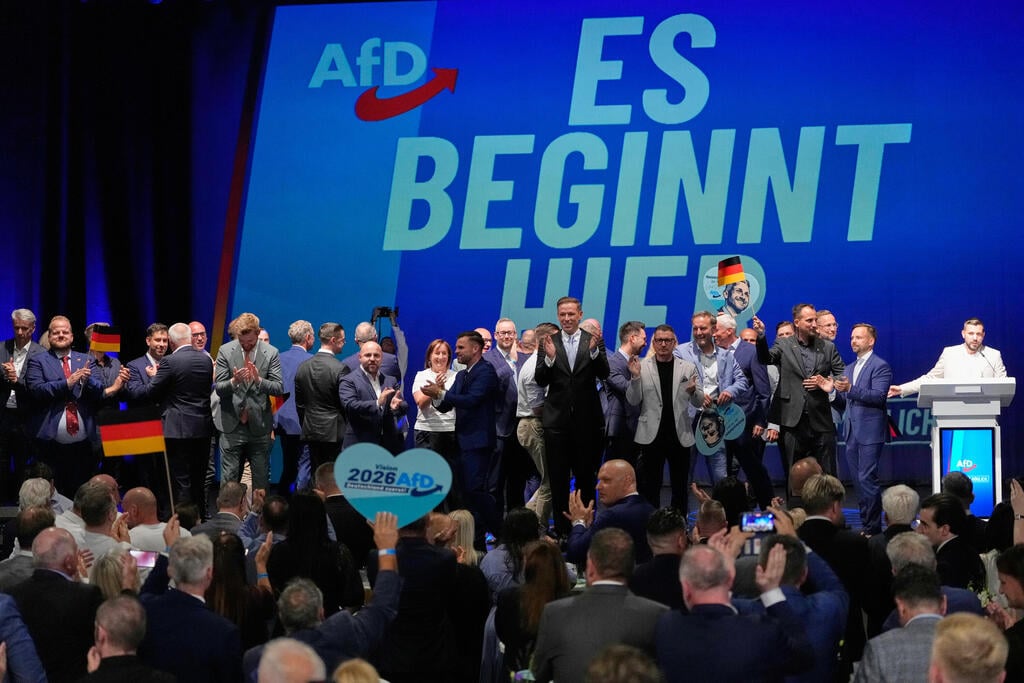
(Photo: AP Photo/Matthias Schrader)
U.S. President Donald Trump, whose Vice President JD Vance publicly challenged Germany’s exclusion of the AfD ahead of last year’s federal election, shared a graphic of the Saxony-Anhalt results on Truth Social without adding a comment.
Russia also welcomed the result. Kirill Dmitriev, a special envoy for President Vladimir Putin, shared Trump’s post and described the AfD victory as a “humiliation” for what he called the arrogance, warmongering, incompetence and hypocrisy of Germany’s governing coalition.
At the other end of Europe’s political spectrum, the reaction was markedly different.
Polish Prime Minister Donald Tusk said that “in Poland, only idiots and traitors could rejoice” over an AfD victory in Germany. French officials also expressed concern, with France itself approaching a presidential election in which the far right is expected to be a major force.
Jewish leaders warn of danger
The result has also caused deep unease in Germany’s Jewish community.
A senior Israeli official told ynet anonymously that the outcome was a “real alarm” and posed a serious threat to German Jews.
“They are not for us, and they are also in favor of stopping aid to Ukraine,” the official said. “On the other hand, the far left is also strengthening. It is very troubling.”
The AfD presents itself as strongly supportive of Israel and argues that its opposition to illegal immigration, particularly from Muslim countries, helps protect Germany’s Jewish community. But senior party figures have also faced accusations of minimizing or attempting to rewrite aspects of Germany’s Nazi history, while others have been criticized over the use of Nazi symbols.
On Israel, positions within the party have also varied. Some AfD figures have opposed weapons shipments to countries involved in active wars, while others have stressed the importance of maintaining defense cooperation with Israel.
For many German Jews, however, the party’s rise remains deeply alarming.
Charlotte Knobloch, the 93-year-old Holocaust survivor who has long led the Jewish community in Munich and Bavaria, said the election result frightened her.
“On days like this, I find it hard to recognize my homeland anymore,” she said, urging Germany’s mainstream political parties not to stand aside and allow what she described as the country’s continuing political deterioration.