


Briefings presented at the most recent Cabinet meeting, held ahead of Prime Minister Benjamin Netanyahu’s upcoming departure for a critical meeting with U.S. President Donald Trump, indicate that three countries have agreed to a U.S. request to send troops to an international stabilization force in Gaza (ISF). The countries were not named, but one of them is Indonesia.
There is uncertainty regarding Azerbaijan, which in the past expressed willingness to send forces but is now hesitating after pressure from Turkey. Other countries previously mentioned as potential contributors include Italy, Pakistan and Bangladesh.
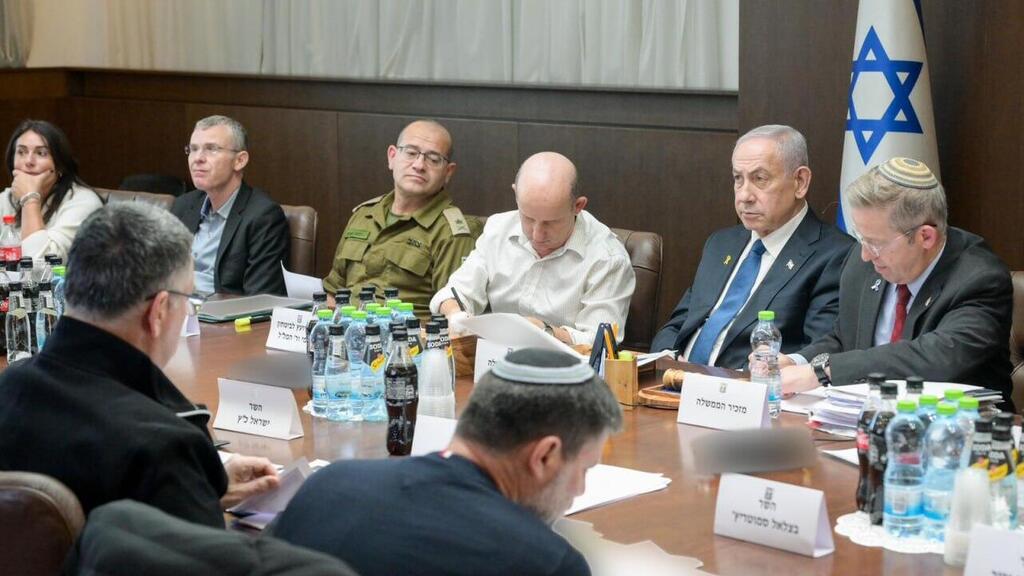
In any case, even if the United States announces a transition to Phase Two of Trump’s 20-point plan, additional logistical preparations will be required. At least several more weeks are needed to finalize the plan, assemble the stabilization force and deploy troops to the Gaza Strip.
A senior Israeli official said following the Cabinet meeting that “the main plan of Trump and Netanyahu was to expand the Abraham Accords after the war ends and the hostages are returned. Now this has run into a much greater challenge. The focus at the moment is Phase Two and the question of the multinational force. Turkey will not be part of it. No one will force on us a country we do not want, and we do not want Turkey.”
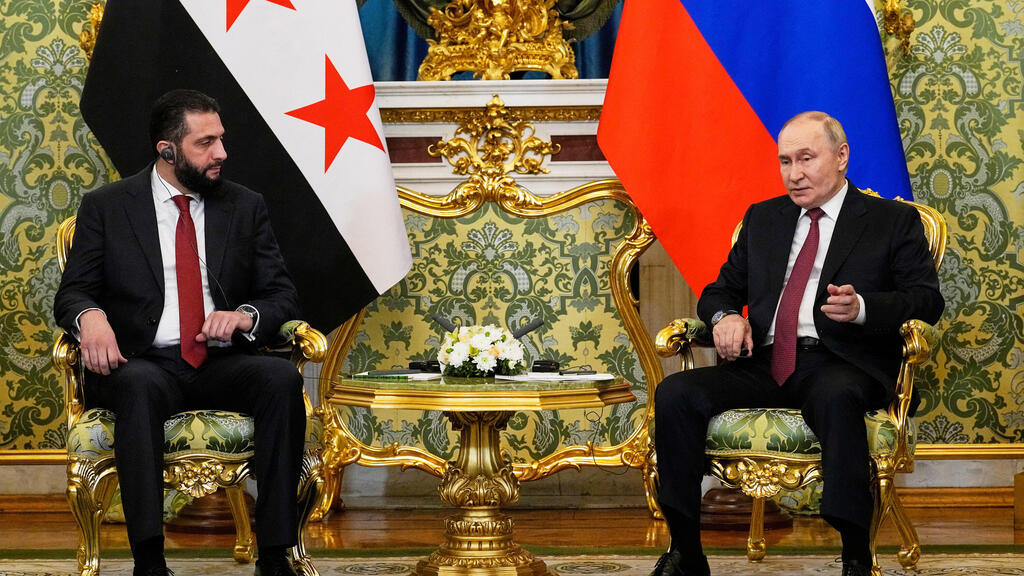
Syrian President Ahmad al-Sharaa hosted by Vladimir Putin at the Kremlin in Moscow
(Photo: Alexander Zemlianichenko/ Reuters)
According to the official, “the move to Phase Two would have taken time even if Ran Gvili had returned alive, because the force is not ready. The Americans want everything in order before the force enters. In Israel there are very serious doubts about the international force’s ability to disarm Hamas, but it must be given a chance.”
On the possibility of Russian involvement, amid Moscow’s renewed engagement with Syria, the official said: “Russian involvement is not necessarily a bad thing. Russia could actually serve as an anti-Turkish factor. But it appears that al-Sharaa has many internal problems in Syria.”
Regarding a potential security arrangement with Syria, the official added: “We thought a preliminary security framework could be signed more quickly, but Syria is unstable.”
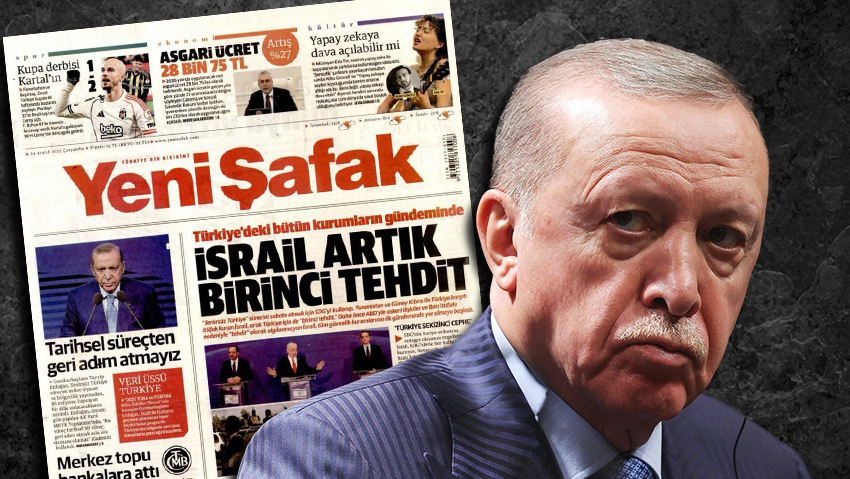
'Turkey will not be forced on us'; Erdogan and his mouthpiece, which this week called Israel 'enemy No. 1'
(Photo: Umit Bektas/ Reuters)
The official also addressed tensions with Lebanon, where the IDF carried out strikes earlier on Friday, saying that “the Lebanese government very much wants to dismantle Hezbollah but is finding it extremely difficult.” Less than a week remains before the expiration of Lebanon’s internal deadline for the first phase of Hezbollah’s disarmament. “The tendency in Israel is to continue holding territory and conducting operations,” he said. “We are assessing the situation on an ongoing basis and are prepared to act if and when we feel that all options have been exhausted and there is no alternative.”
Briefings at the Cabinet meeting also indicated that Hamas remains active, continues to arm itself and is regaining strength, though it has not returned to its former capabilities. In addition to developments in Gaza and Lebanon, officials noted an increase in Iran’s pace of ballistic missile production. During a review by the Foreign Ministry’s political directorate on Israel’s international standing, Justice Minister Yariv Levin intervened and diverted the discussion to a video from the Sde Teiman detention facility.