


Prime Minister Benjamin Netanyahu arrived at the White House on Tuesday evening for a meeting with U.S. President Donald Trump in the Oval Office. The meeting was closed to the media, with no joint statements or questions from reporters. It took place as Trump weighs the next stage of the U.S. campaign against Iran and considers whether to escalate or give diplomacy another chance. Netanyahu sought to persuade Trump to abandon the possibility of an agreement with the Islamic Republic.
The meeting was one of the shortest held between the two leaders. Netanyahu was accommodated at Blair House, but was not greeted with a red-carpet reception upon arrival. There was also no one-on-one meeting between him and Trump, with senior officials present throughout. There were smiles, but no statement to the media. A senior official familiar with the talks said the meeting “focused on Iran and was very positive,” adding that the chemistry between the two leaders was evident.
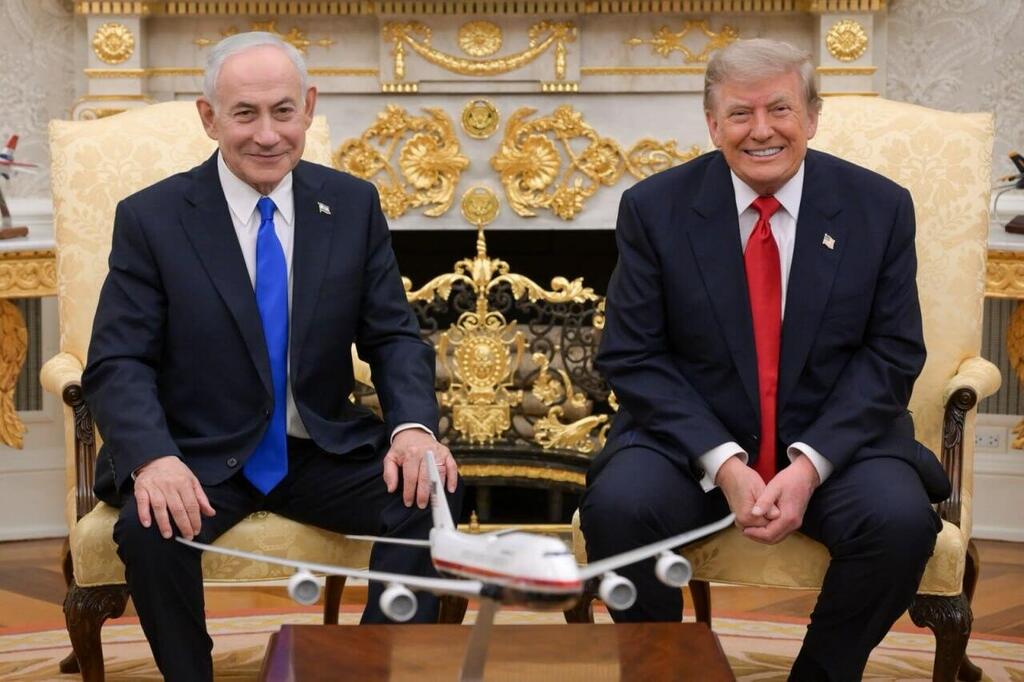
“Trump and Netanyahu reiterated their shared goal of preventing Iran from obtaining a nuclear weapon,” the official said. “They also discussed various opportunities in the Middle East.”
White House press secretary Karoline Leavitt added that the meeting was “positive and productive.”
Netanyahu sought to persuade Trump to abandon the possibility of an agreement with the Islamic Republic and presented updated intelligence on Iran’s military and nuclear rebuilding efforts, including activity at the fortified underground site known as Pickaxe Mountain.
Also attending the meeting on the American side were Vice President JD Vance, Secretary of State Marco Rubio, Defense Secretary Pete Hegseth, CIA Director John Ratcliffe and special envoy Steve Witkoff.
The Israeli delegation includes National Security Council chief Shmuel Ben Ezra, Israeli Ambassador to the United States Yechiel Leiter, chief of staff Ido Norden, military secretary Brig. Gen. Guy Markizano, Caroline Glick and Ophir Falk.
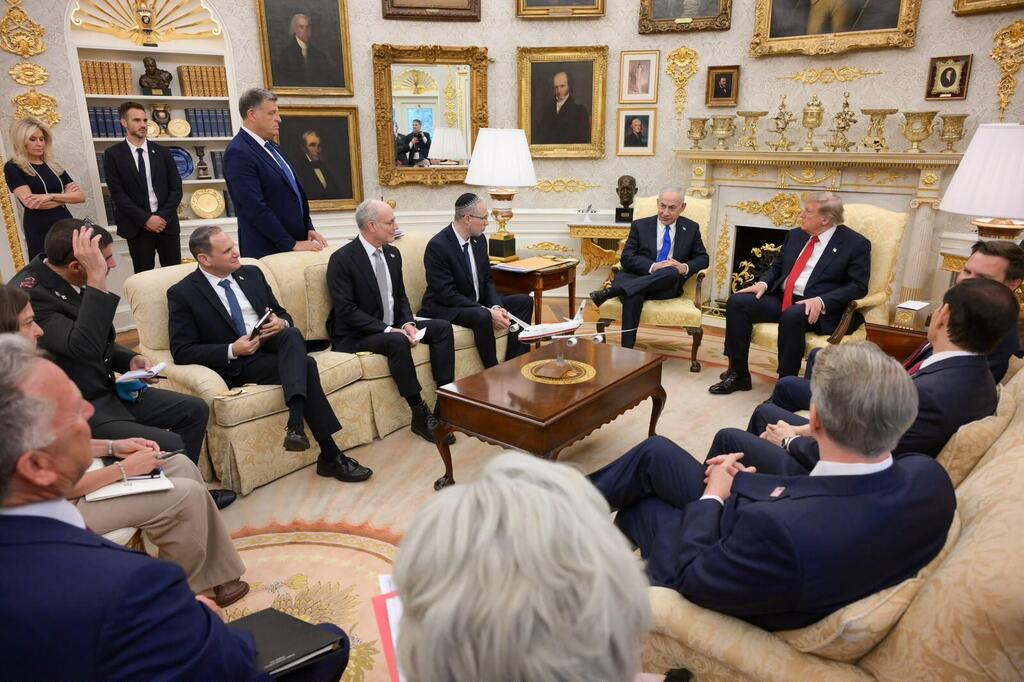
At Netanyahu-Trump meeting: Vance, Rubio, Witkoff, Hegseth, CIA chief, national security adviser and other senior officials
(Photo: Maayan Toaf, GPO)
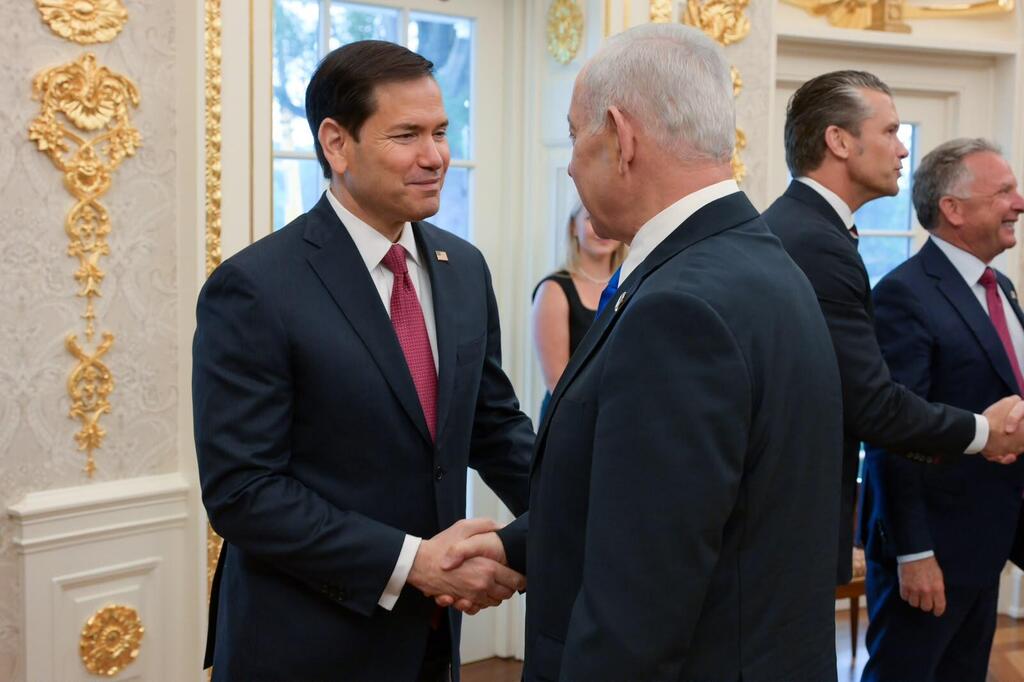
Netanyahu and Rubio
(Photo: Maayan Toaf, GPO)
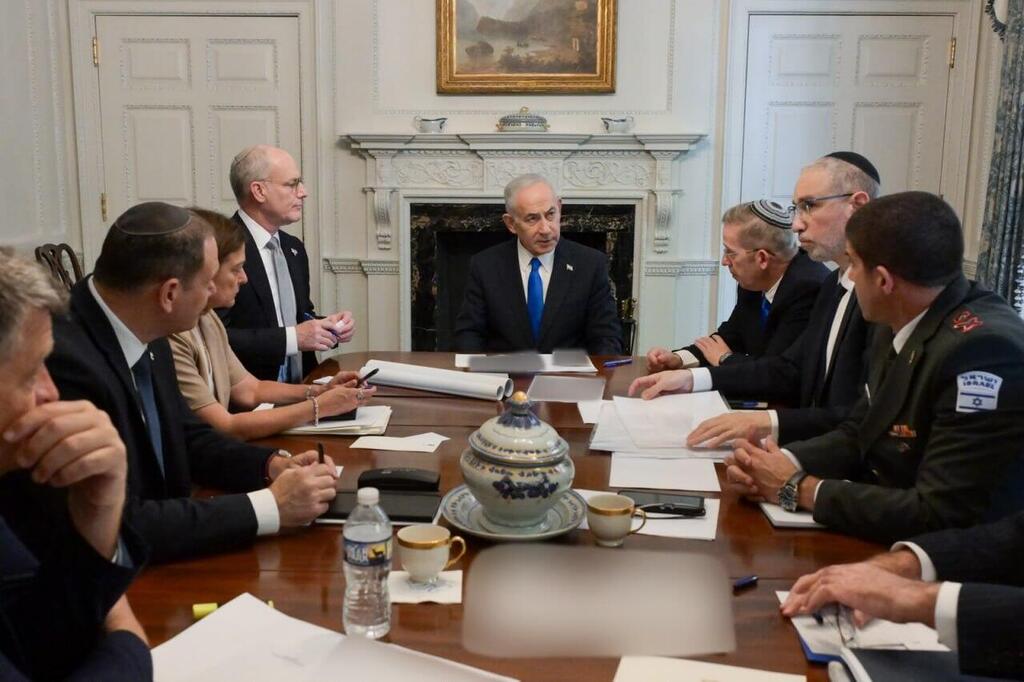
Prime Minister Benjamin Netanyahu and his team prepare for the meeting with President Trump at the White House
(Photo: Maayan Toaf, GPO)
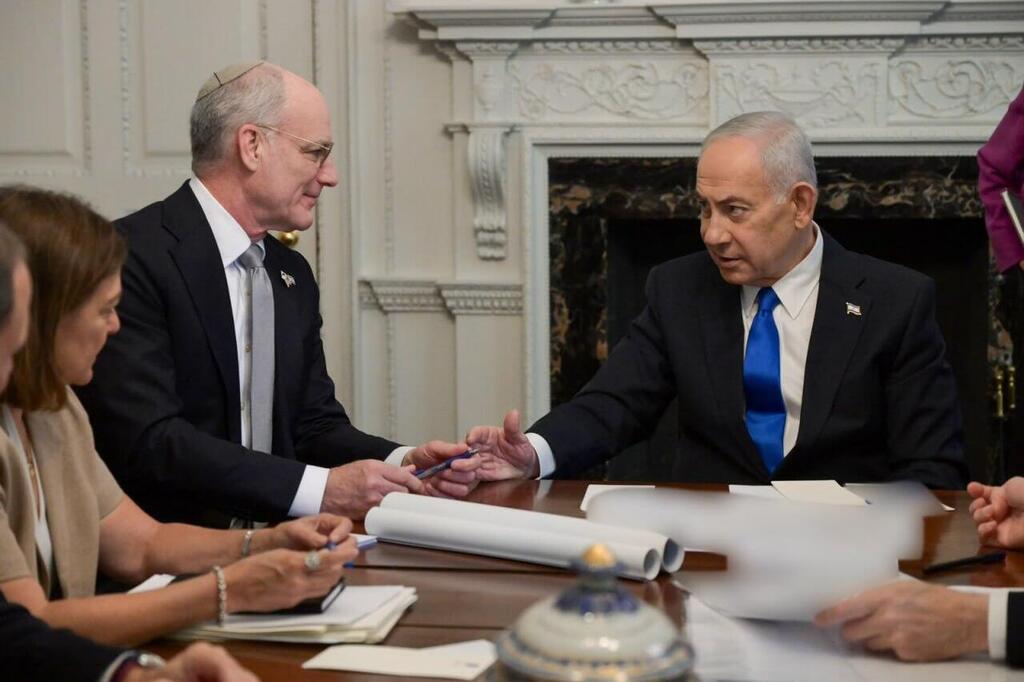
(Photo: Maayan Toaf, GPO)
Netanyahu arrived in Washington with trust in him among senior U.S. administration officials at a low point.
Israeli officials who have spoken with senior members of the administration said the prime minister is viewed as unreliable. The Americans have also argued that almost no Middle Eastern leader currently believes Netanyahu, making it harder to advance diplomatic agreements. This is Netanyahu’s seventh visit to Washington since Trump returned to the White House last year. No other world leader has met the president as frequently during his current term.
The distrust in Washington is not directed only at Netanyahu personally. According to the officials, the administration has also developed fundamental suspicions about the information and assessments Israel presents. “The loss of trust in Israel is very great,” Israeli officials said they were told in conversations with senior American officials.
Trump did not immediately agree to Netanyahu’s request for the meeting. He added the prime minister to his schedule only after Israel accepted an American demand and approved the entry of the International Stabilization Force into the Gaza Strip. Israel’s security Cabinet approved the move before Netanyahu’s trip as part of Trump’s 20-point plan for Gaza.
Trump today: ‘Pickaxe Mountain? Not a big problem. I don’t need Bibi to tell me’
(Video: Fox News)


From Washington’s perspective, implementation of the Gaza plan had stalled, and the White House expected Netanyahu to provide Trump with a tangible achievement before the meeting.
Netanyahu understood that without approving the stabilization force, he might not be received at the White House. Israel’s decision allowed Trump to present progress on his plan, and in return the door to the Oval Office was opened.
Although Gaza and Lebanon are expected to be discussed, Iran will be Netanyahu’s central focus. Trump is eager to reach an agreement with Tehran, but the Iranians have so far refused to accept key American demands, particularly restrictions on the nuclear program and the full reopening of the Strait of Hormuz.
Instability within the Iranian regime and internal divisions have made it difficult for U.S. officials to assess how negotiations will develop. Iran is seen as being at a crossroads, with the chances of an agreement and renewed fighting viewed as nearly equal.
U.S. intelligence estimates there is roughly a 50% chance that Iran will choose to cooperate with Washington and follow a path resembling developments in Venezuela. There is also a similar chance that Tehran will reject the demands and trigger a collapse of the process. That is why the administration has decided, at least for now, to halt further military escalation.
The Americans have received indications that Iran may genuinely be prepared to move toward an agreement, and Trump wants to give diplomacy another chance before deciding whether to resume strikes. The president said Monday that he and Netanyahu had some disagreements over Iran, although he insisted their positions remained close.
Senior administration officials were highly impressed by the intelligence Israel collected on developments inside Iran but criticized the way Jerusalem interpreted it. They described the intelligence itself as “amazing,” but said Israel tends to treat it as proof that another escalation is inevitable because Jerusalem remains determined to bring down the regime and eliminate the nuclear program.
The American argument is that Israel “sees what it wants to see” and therefore gives insufficient weight to the possibility that Iran may genuinely be prepared to compromise. Officials also believe Israel is not assessing the intelligence objectively.
Netanyahu to present Pickaxe Mountain intelligence
Netanyahu is expected to present Trump with updated intelligence on Iran’s efforts to recover from the strikes and rebuild its missile, drone and nuclear capabilities.
At the center of the presentation will be the fortified underground facility at Pickaxe Mountain, near Natanz, where Israeli assessments say Iran has transferred centrifuges and nuclear equipment.
Israel also fears Tehran is moving additional elements of the nuclear program and its remaining stockpile of enriched uranium deep inside the mountain. Netanyahu will present those concerns to Trump.
In Washington, the prime minister is viewed as seeking another escalation against Iran, even if he avoids saying so explicitly because he does not want to appear to be pushing for war.
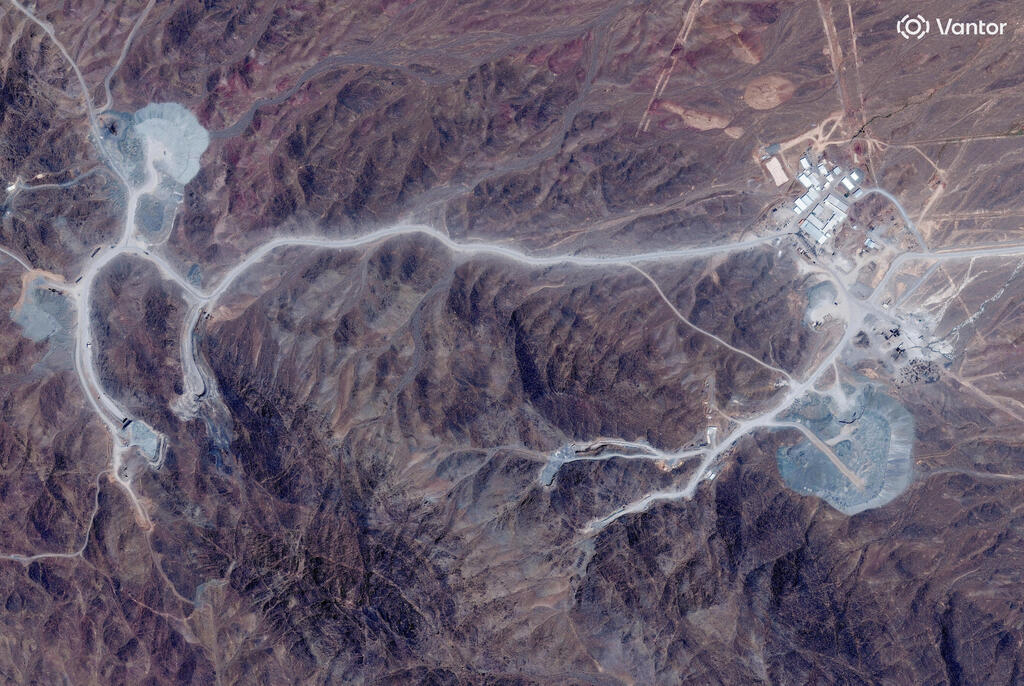
Pickaxe Mountain
(Photo: Vantor/Handout via REUTERS )
Ahead of the meeting, Trump told Fox News that Pickaxe Mountain was “not a big problem.” He said the United States could quickly destroy Iran’s bridges and power plants but emphasized that he wanted to avoid doing so.
Asked whether Netanyahu had spoken with him about Iranian activity at Pickaxe Mountain, Trump responded with a jab at the prime minister. “I don’t need Bibi to tell me that. Bibi’s telling me that because he wants me to stay involved,” Trump said.
“We have the best cameras in the world. We know exactly what’s going on there. I heard Bibi said that, and I said, why don’t you tell me? Why do you have to announce it to the world? I know exactly what’s going on there.”
Despite the tension and lack of trust, an Israeli official familiar with the matter said the meeting itself could be decisive. “The truth, in the end, is between Trump’s ears,” the official said.
According to the official, much will depend on how Netanyahu presents the intelligence and the messages he conveys during the private conversation. In the past, Netanyahu has entered meetings with Trump when the president held one position and emerged after changing his mind.
That happened in February, when Netanyahu persuaded Trump to approve Operation Roaring Lion, even though senior administration officials initially believed the Israeli plan was not serious or feasible.
Another Israeli official familiar with the issue said: “My personal view is that escalation is inevitable, whether now or later. An agreement at this stage would only give the Iranians a tailwind to continue their programs, rebuild their strength and ultimately lead us to strike because of their continued focus on the nuclear project.”
Trump: Iran wants to talk
Israeli officials believe that even if Trump succeeds in reaching an agreement, Iran will not honor it for long. The concern is that lifting sanctions and unfreezing funds would pour billions of dollars into the regime’s coffers, allowing it to rebuild its nuclear program, missile forces and regional proxies.
Jerusalem would prefer no agreement under the current conditions, but officials understand that if Trump chooses the diplomatic path, Israel will not be able to stop him completely. In that case, Netanyahu will seek to secure a series of red lines aimed at limiting Iran’s ability to rebuild, rearm and move closer to a nuclear weapon. Those are the conditions he is expected to discuss with Trump.
Netanyahu’s schedule said the meeting would begin at 11 a.m. Washington time, or 6 p.m. in Israel. About three hours later, he is scheduled to attend the funeral of Republican Sen. Lindsey Graham, one of Israel’s strongest supporters in Washington.
Netanyahu’s Wednesday schedule had not been disclosed, although he was expected to hold additional meetings. He is due to depart for Israel overnight Wednesday and land on Thursday.
In an unusual move, Netanyahu departed aboard Wing of Zion in secrecy from Nevatim Airbase rather than Ben Gurion Airport. The plane flew over Italy and France despite the arrest warrant against him. The route was coordinated with the countries involved, which assured Israel they would allow safe passage, and was chosen for security reasons.
Netanyahu traveled without reporters, as he has done on previous occasions. No press conference or statement is currently expected after his meeting with Trump, although the schedule could still change. The format recalls their closed-door meeting in February, after which Israel and the United States went to war with Iran.
First published: 18:13, 07.28.26