


Attorney General Gali Baharav-Miara warned on Wednesday that the government is increasingly using parliamentary committees to interfere in ongoing criminal investigations, a practice she said threatens the independence of law enforcement and intimidates public servants.
Baharav-Miara sent a letter to the Knesset’s legal adviser, Sagit Afik, accusing the government of exploiting certain Knesset committees to advance its interests in sensitive criminal cases. She also warned of what she described as a growing and “deeply troubling” pattern in which legal advisers to parliamentary committees are subjected to “violent and humiliating language” by lawmakers.
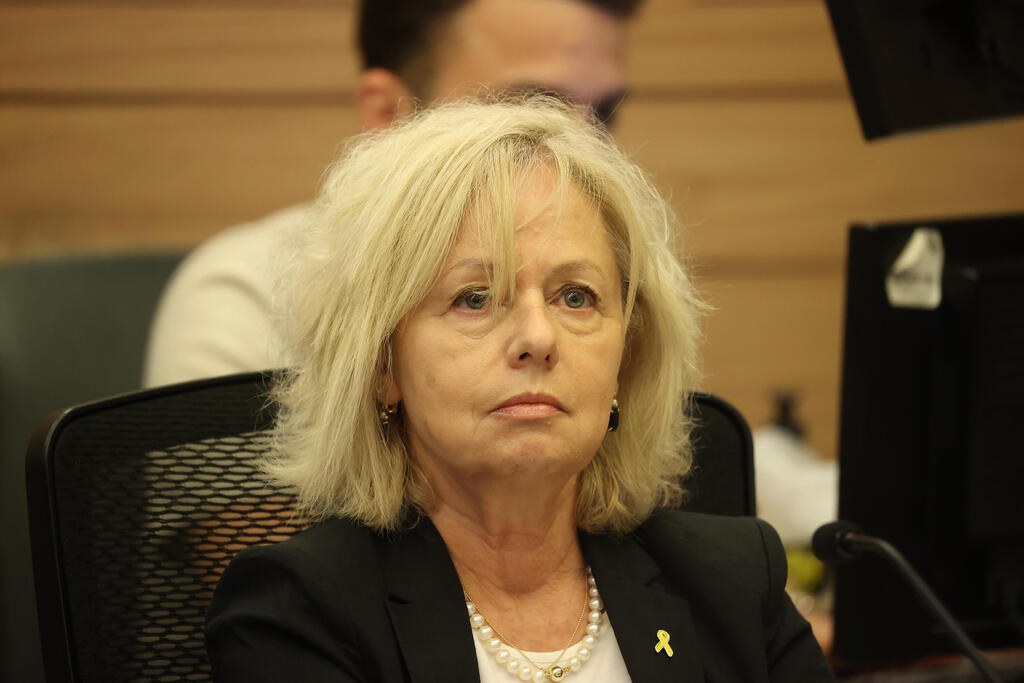
Attorney General Gali Baharav-Miara
(Photo: Amit Shabi)
On Thursday morning, Baharav-Miara sent a separate letter to senior officials in the State Attorney’s Office, the Attorney General’s Office and legal advisers in government ministries, stressing that the legal system would not be deterred from carrying out its duties. “We will not be deterred from performing our role,” she wrote, ynet has learned.
In her letter to Afik, Baharav-Miara praised the Knesset legal adviser for instructing committee chairs to refrain from holding discussions related to specific individuals, active investigations or cases pending before the courts. Afik had cited the inherent problems in such hearings, including the risk of improper interference in the professional judgment of law enforcement authorities.
Despite that guidance, Baharav-Miara said, the phenomenon has not only continued but has expanded. “Under the guise of exercising the Knesset’s oversight powers, law enforcement bodies are summoned to discussions dealing with concrete investigations and are even required to provide information and documents relating to criminal proceedings that are underway in real time,” she warned.
She called for an end to what she described as an improper practice, saying it amounted to a misuse of the Knesset’s oversight authority and ran counter to its role. Holding such hearings or demanding case-specific information, she said, “causes serious harm to the fundamental principle of the separation of powers.”
According to Baharav-Miara, the initiatives are intended to influence pending criminal proceedings, disrupt investigations and deter public employees from doing their jobs. “In this way, the independence of law enforcement authorities and of the public service as a whole is undermined — a cornerstone of a functioning democratic system,” she wrote.
A norm among lawmakers: 'demeaning and humiliating remarks'
“This phenomenon intersects with another serious problem, whose scope and severity are growing to deeply troubling proportions,” Baharav-Miara added in her letter to Afik. “For some time now, representatives of the public legal advisory system — particularly from the Legislation and Legal Counsel Division and the State Attorney’s Office — have repeatedly been subjected to blunt and unacceptable treatment by members of the Knesset. In many discussions, representatives of the Legislation and Legal Counsel Division and the State Attorney’s Office, at all levels, are targeted with demeaning and humiliating remarks, including the use of violent and threatening language.”
“This is not an isolated phenomenon,” she added. “It has become a norm, without any of the Knesset’s authorities taking action to stop it. At times, committee chairs themselves use their managerial powers to lead demeaning and aggressive discourse and to prevent representatives from expressing their professional positions.
“We will not accept this reality,” Baharav-Miara said. “Beyond the fact that it fails to respect the Knesset, this phenomenon creates a chilling effect on civil servants, deterring them from voicing professional opinions and leading to substantive flaws in Knesset deliberations and legislative processes.
"The relevant representatives of the Legislation and Legal Counsel Division and the State Attorney’s Office, like other civil servants, routinely appear before Knesset committees and do everything in their power to represent the executive branch and assist the Knesset in its work. The Knesset must ensure that discussions are substantive and that basic standards of conduct are upheld. Unfortunately, the current reality is far from that.”
She called on Afik “to act on this matter without delay, in order to eradicate these two improper phenomena and ensure the proper functioning of the authorities. We stand ready for any discussion you deem appropriate to hold on this issue.”
On Thursday morning, the attorney general brought the letter to the attention of the state attorney, the head of the Legislation and Legal Counsel Division, the deputy attorneys general, the deputy state attorneys and legal advisers in government ministries and auxiliary units. She wrote to them: “I wish to make it unequivocally clear: we will not be deterred from carrying out our duties. The public legal service will continue to perform its work faithfully — in a professional, independent and statesmanlike manner, without bias and with loyalty to the public and the rule of law.”
“We will continue to present our positions in an orderly, substantive and respectful manner, as expected of civil servants,” she added. “We do so out of our full commitment to assisting the government in advancing its policies within the bounds of the law and through proper process. In this way, fundamental principles of good governance, integrity, protection of human rights and the rule of law are preserved.”
According to Baharav-Miara, “we will continue to fulfill our duty to assist the Knesset in carrying out its functions. We will continue to participate in Knesset deliberations, accompany legislative work and support parliamentary oversight discussions, as customary and expected — in a statesmanlike spirit, with transparency, professional discourse and full cooperation, while strictly observing the limits of authority and the independence of professional judgment.
“Should instances of demeaning, violent or threatening discourse toward you or your staff be identified; and should Knesset committees continue to promote discussions related to active investigations or pending legal proceedings — I ask that you bring any such incident or phenomenon to our attention immediately. We will act using the tools at our disposal vis-à-vis Knesset bodies and the relevant authorities to ensure a professional and respectful work environment and adherence to the rules of proper administration.”