


Turkish President Recep Tayyip Erdogan on Tuesday condemned Israel's decision to formally recognize the Armenian genocide, accusing Israel of trying to deflect attention from the war in Gaza.
“There are many slander campaigns going on by this network of murderers who had the blood of 73,000 innocent Gazans in their hands,” Erdogan said after a Cabinet meeting in Ankara, referring to Israel.
Erdogan rejects Israel's recognition of Armenian genocide


“If we take a look at our history, you cannot see any genocide or any colonialism,” he added. “In our great history, there is only a place for mercy and justice.”
Erdogan's remarks were his first public response since Israel's Cabinet unanimously approved the recognition on Sunday. The move, proposed by Foreign Minister Gideon Sa'ar, marks a major shift in Israeli policy and is expected to further deepen already strained relations between Israel and Turkey.
Presenting the proposal to the Cabinet, Saar said, “It is never too late to do the right thing.”
The government resolution states that, based on “a moral and historical obligation,” Israel recognizes the genocide committed against the Armenian people during the final years of the Ottoman Empire. It also condemns denial, minimization or distortion of the historical record surrounding the events.
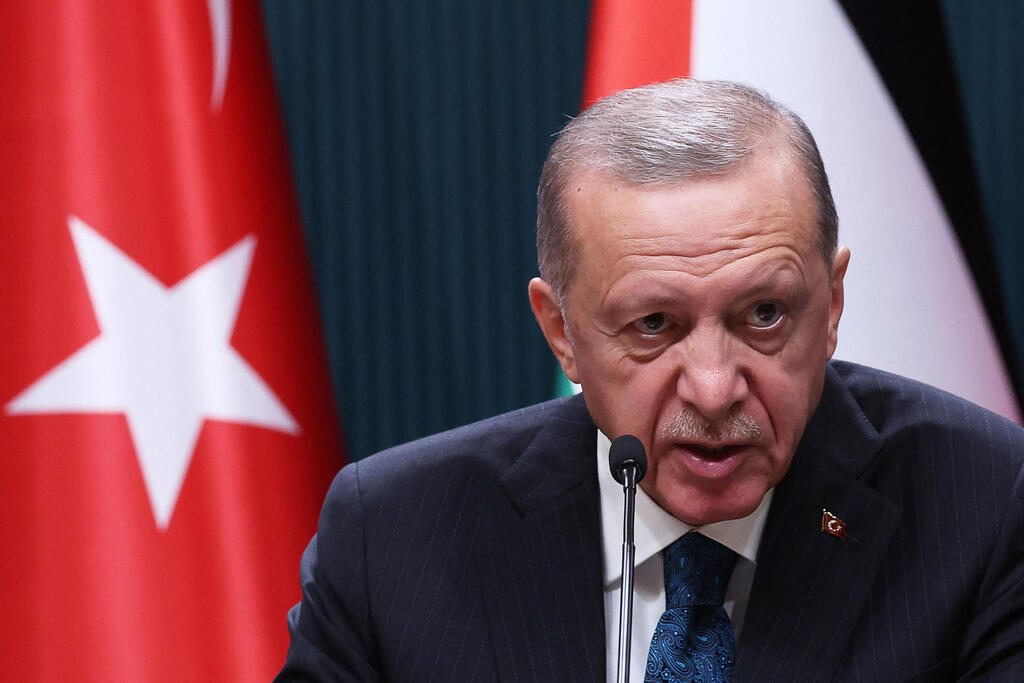
Turkish President Recep Tayyip Erdogan
(Photo: Adem ALTAN / AFP)
Armenia, however, responded cautiously to the decision.
Asked about the Israeli government's move, Armenian Prime Minister Nikol Pashinyan said his country saw no need to respond. He said Armenia has no intention of turning the genocide issue into a political tool and that avoiding its “political weaponization” serves Armenia's national interest.
The restrained reaction contrasted with the sharp criticism from Ankara and Baku. Turkey accused Israel of using the recognition to divert attention from the war in Gaza, while Azerbaijan urged Israel to reverse the decision, calling it a distortion of historical facts.
Historians estimate that as many as 1.5 million Armenians were killed by Ottoman Turks during World War I in what is widely regarded by scholars as the first genocide of the 20th century. Turkey rejects the genocide label, arguing that the death toll has been exaggerated and that those killed were victims of civil war and unrest rather than a systematic campaign of extermination. For decades, Ankara has opposed international recognition of the killings as genocide and has often responded with diplomatic measures against countries adopting such recognition.