


Japan’s Foreign Minister Toshimitsu Motegi is scheduled to arrive in Israel on Sunday for a key diplomatic visit, during which he will meet President Isaac Herzog and Foreign Minister Gideon Sa'ar. Motegi is expected to tour southern Israel, visit the Nova music festival massacre site, and stop at the US military headquarters in Kiryat Gat to review preparations for the transition to the second phase.
Motegi’s visit is set to mark a peak in the warming of Israel-Japan relations under Prime Minister Sanae Takaichi, who has continued the diplomatic legacy of the late Prime Minister Shinzo Abe. Last year, Japan refrained from joining other G7 countries such as Britain, France and Canada in recognizing a Palestinian state, despite heavy pressure from Arab states and Western partners, and has maintained what Israel views as a balanced and positive diplomatic approach.
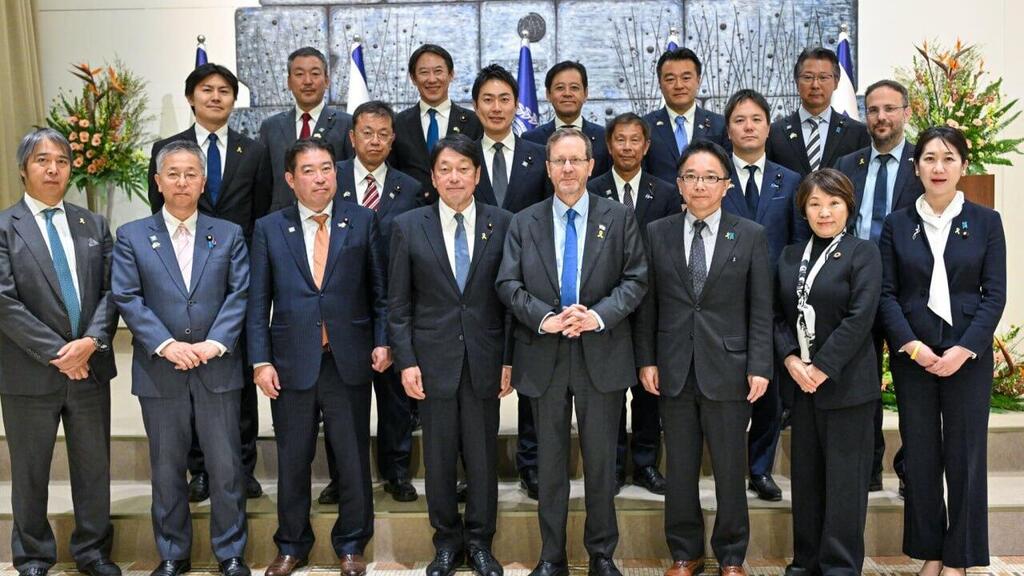
The Japanese government, formed in October, has signaled its intention to strengthen relations with Israel through a series of high-level visits.
Earlier this week, ahead of Motegi’s arrival, a cross-party delegation of 15 members of Japan’s parliament, the Diet, visited Israel. It was the largest delegation of Japanese lawmakers ever to visit the country, and for most participants, it was their first trip to Israel. The delegation was led and accompanied by Israel’s deputy ambassador to Japan, Assaf Shegev.
The lawmakers said the visit was intended to familiarize them with Israel, hear firsthand accounts of the October 7 massacre, and promote bilateral relations and cooperation between the two countries. During their stay, they met with President Herzog, Prime Minister Benjamin Netanyahu, Knesset Speaker Amir Ohana, Foreign Minister Saar and senior officials at the Foreign Ministry.
They also toured massacre sites, including the Nova music festival grounds, Kibbutz Kfar Aza and the burned operations room at the Nahal Oz base, and visited Yad Vashem.
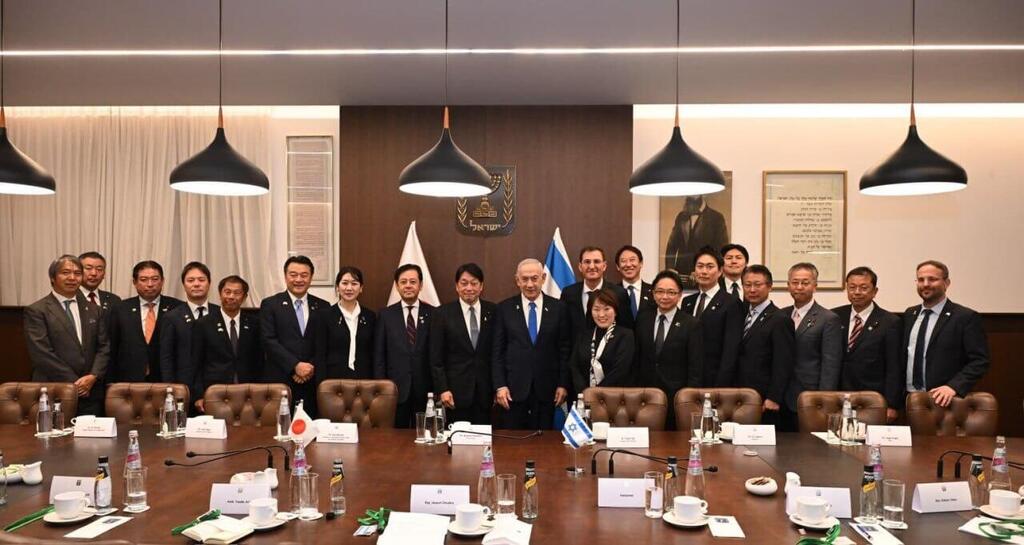
The delegation with Benjamin Netanyahu
(Photo: GPO)
The visit to the October 7 sites was one of the emotional high points of the trip, alongside meetings with massacre survivors and a screening of a graphic video documenting the atrocities. Foreign Ministry officials told the delegation they could opt out of viewing the footage, but all chose to watch it in full despite its graphic nature.
The experience appeared to leave a deep impression, particularly the direct encounters with survivors who shared personal testimonies. Members of the delegation were also visibly moved during a meeting with female soldiers from the Nahal Oz base, who described their experiences on the day of the attack. Some of the lawmakers embraced the soldiers.
Given Japan’s sensitivity to the humanitarian situation in the Gaza Strip, Israeli officials viewed the delegation’s visit as an opportunity to show lawmakers the mechanisms for delivering humanitarian aid. Delegation members asked detailed questions about how the October 7 massacre occurred, Israel’s response, and the country’s vision for the future. For many, it was their first exposure to Israel’s perspective beyond media coverage.
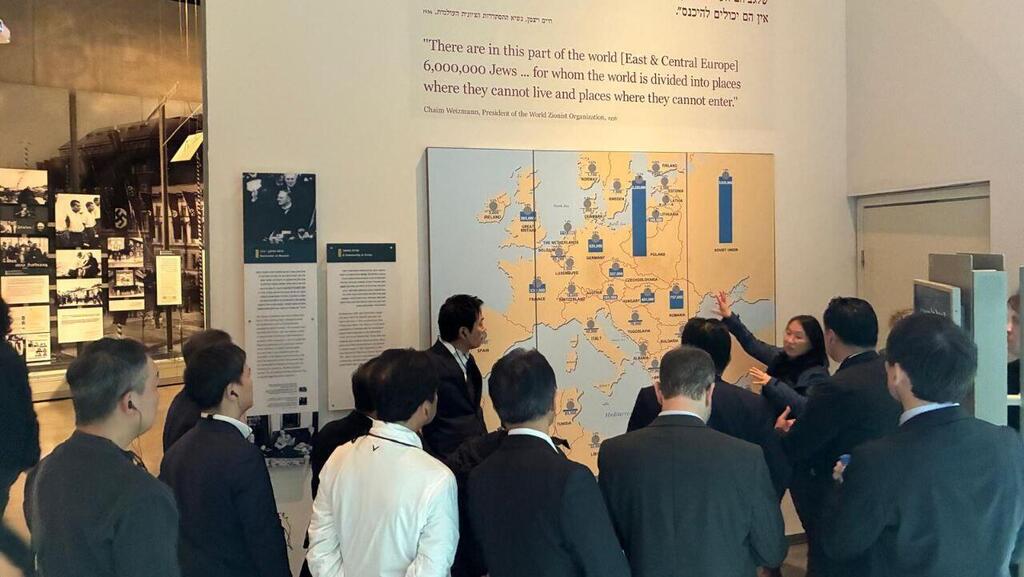
Visiting Yad Vashem
(Photo: GPO)
The delegation included veteran lawmakers alongside newly elected members, among them senior figures in Japanese politics, including former ministers of defense, education and a former deputy transport minister. Particular emphasis was placed on the delegation’s cross-party composition, which included representatives from the ruling Liberal Democratic Party, coalition partner Ishin, the Reiwa party and independent lawmakers.
The visit reinforced the delegation’s understanding of Israel’s complex security and humanitarian challenges, as well as the importance of deepening cooperation between the two countries based on shared values and mutual opportunities.
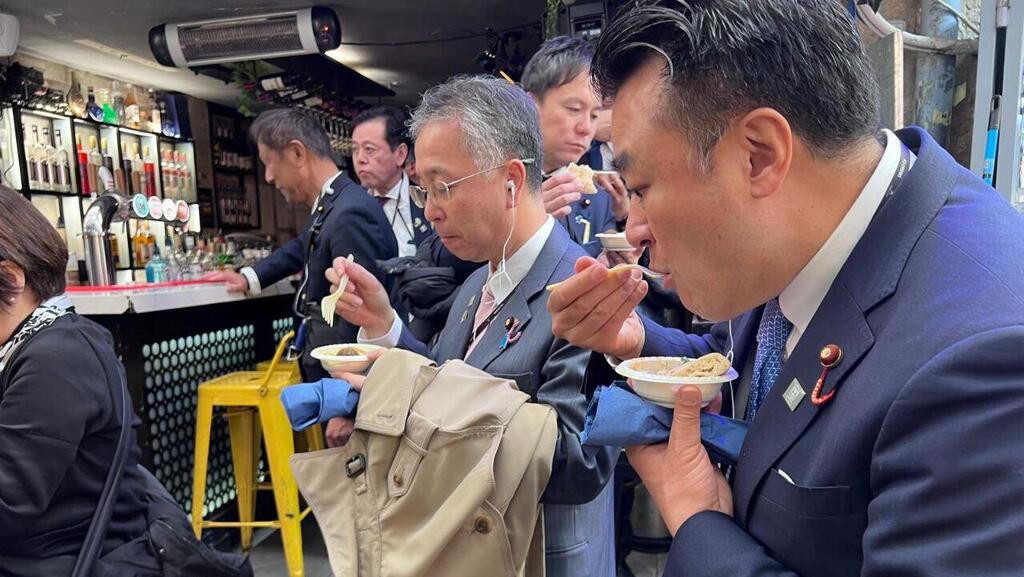
Outside official meetings, lawmakers toured Mahane Yehuda Market, Jerusalem’s Old City and the Jaffa flea market. Passersby who recognized them as visitors from Japan greeted them warmly, with some exchanging words in Japanese. Delegation members sampled Israeli food, including falafel, and later visited the Western Wall, where some touched the stones and offered prayers.
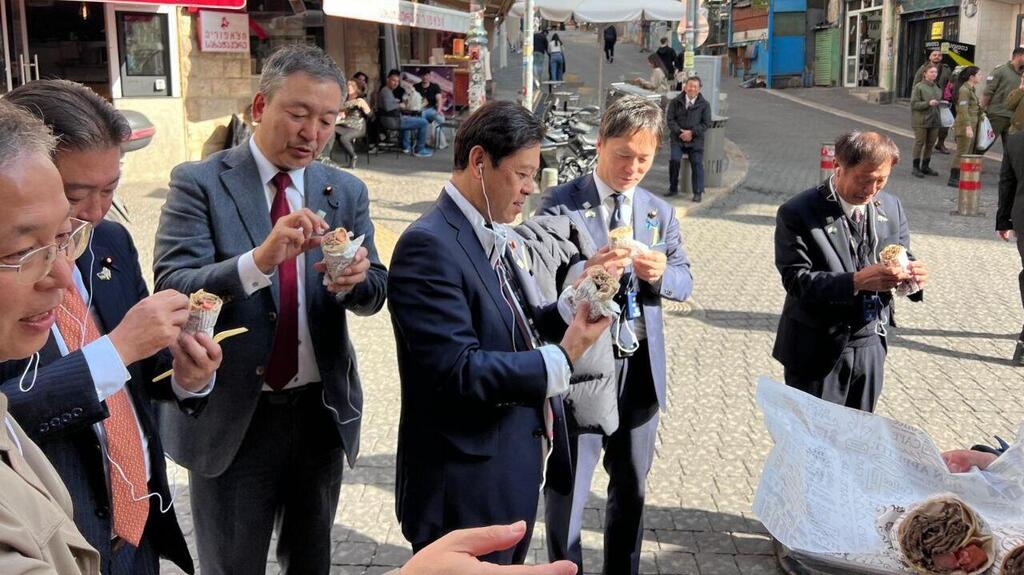
Eating falafel in Jerusalem
(Photo: GPO)
(Photo: GPO)
“The important visit of the parliamentary delegation is further evidence of the strong ties between Japan and Israel,” Israel’s ambassador to Japan, Gilad Cohen, said. “Early next week, Foreign Minister Motegi will visit Israel, a direct continuation of this week’s delegation visit. The sequence of visits reflects Japan’s strong interest in Israel and its recognition of Israel’s unique strengths.”
Cohen thanked Japan for supporting Israel’s right to self-defense, calling for the unconditional release of hostages throughout the war and imposing sanctions on senior leaders of the terrorist organization Hamas.
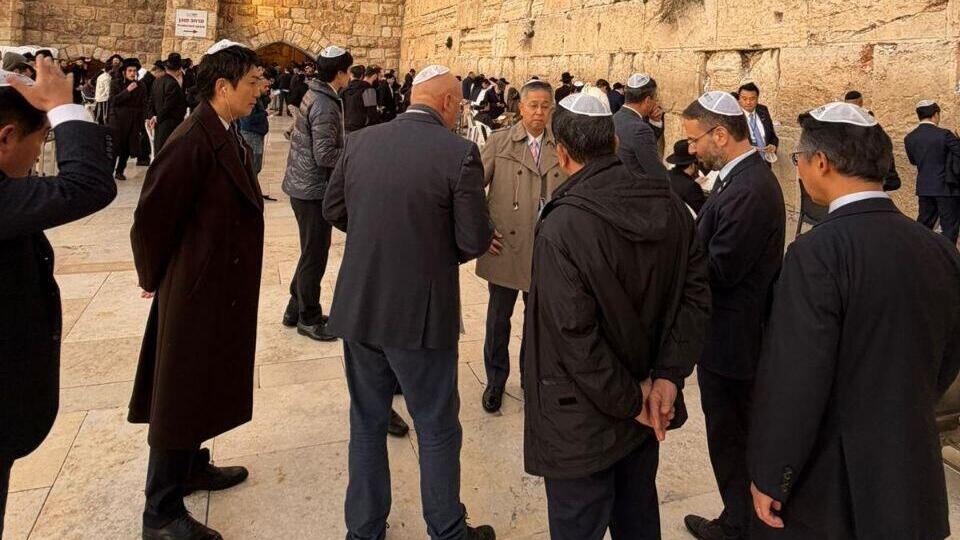
At the Western Wall
(Photo: GPO)
Last year, several senior Israeli officials visited Tokyo, including Foreign Minister Saar, Economy Minister Nir Barkat and Knesset Speaker Ohana, accompanied by lawmakers from both the coalition and the opposition. Israel also participated in the international Expo in Osaka, where approximately 1.8 million visitors toured the Israeli pavilion, reflecting broad public interest in Israel and its innovation sector.
Civilian ties between the two countries continue to deepen, including in tourism. Direct El Al flights between Israel and Japan are fully booked, reflecting growing demand and the expanding connection between the two societies.