


Israel may view the new U.S.-backed declaration at the United Nations as nonbinding, Hamas denounces it outright, and the Palestinian Authority is rushing to embrace it. Saudi Arabia, meanwhile, is demanding an American guarantee that negotiations toward a Palestinian state will begin immediately and conclude within five years.
But according to Dr. Harel Chorev, a senior researcher at the Dayan Center for Middle Eastern and African Studies, the Trump administration is “not truly committed to this, which is why it is unlikely to advance in practice during his term. However, once a Democratic administration comes in, this becomes a legal, declarative anchor it can use.”
US envoy speaks at the UN
(Video: Reuters)


“The current U.S. administration is not really committed to a Palestinian state, so I do not see it moving forward in any practical way,” Chorev says. “But when a Democratic administration takes office, it might use this as leverage over Israel.”
His remarks refer to the American-backed resolution that passed this week in the UN Security Council, endorsing President Donald Trump’s plan for ending the war in Gaza and promising “a path to a Palestinian state.” The resolution was supported by 13 countries with no opposing votes. Hamas condemned the decision, saying it “fails to meet the demands and rights of the Palestinian people.”
Gallery
(Photo: Shutterstock, Ludovic Marin/ AFP, Abir Sultan/ AFP, Andrew Harnik/Getty Images North America/ AFP)
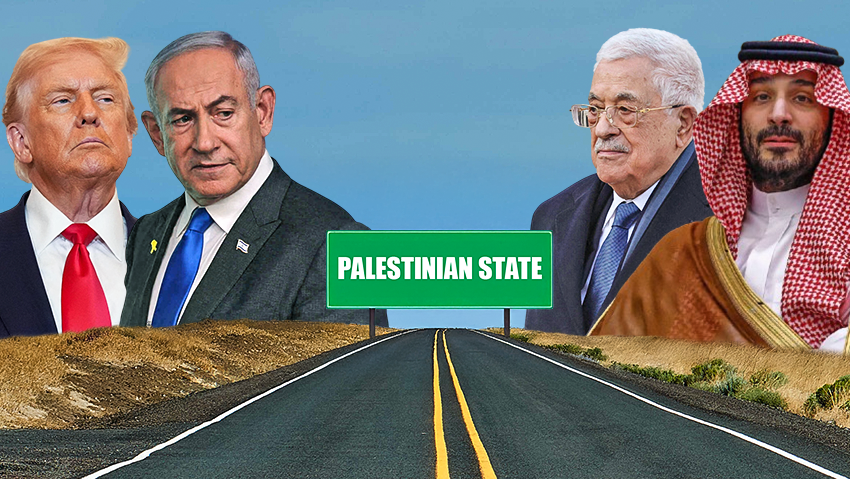
Prime Minister Benjamin Netanyahu welcomed the plan as “a path that will bring peace and prosperity” and would expand the Abraham Accords, adding that “Israel extends its hand for peace.” Saudi Crown Prince Mohammed bin Salman demanded an American guarantee for negotiations toward a Palestinian state to begin immediately and conclude within five years as part of any normalization framework with Israel.
So who gains most from the American-backed decision, why is Hamas opposed, how might it affect the Abraham Accords, how will the international community respond, and what does the “day after” look like? Here is the picture after a resolution that promises a “path to a Palestinian state.”
The difference between Hamas and the Palestinian Authority — and the biggest beneficiary
According to Chorev, the UN declaration endorses the two-state framework — consistent with the Palestinian Authority’s agenda but not with Hamas’s. “The biggest beneficiary of this declaration is the Palestinian Authority,” he says. “For Hamas, this is not only an operational statement against it — stripping it of control over Gaza and calling for the dismantling of its military capabilities — but it also shifts authority, at least declaratively, to international oversight. These are all things Hamas opposes.”
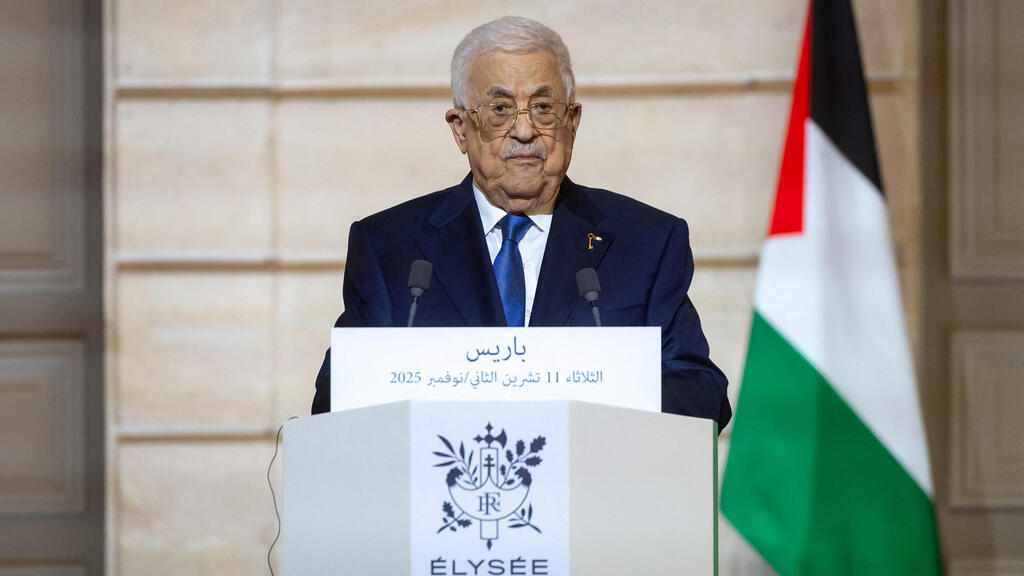
Palestinian Authority President Mahmoud Abbas
(Photo: Christophe Petit Tesson/ Reuters)
He adds that the declaration also contradicts Hamas’s ideological vision, which has always rejected a two-state solution. On a practical level, Chorev notes that “the Palestinian Authority will aim, as we already see, to flow with the declaration and treat it as strengthening its legitimacy. If there is one thing the PA needs, it is legitimacy — first and foremost among Palestinians, which it lacks, but also internationally, where it is seen as ineffective.”
Despite these limitations, Chorev says the mere fact that the Palestinian Authority is seen as the “rational alternative” to Hamas strengthens it. Still, in order to meet international requirements and move onto that “path” toward a Palestinian state, the PA must conduct reforms — “and it is not clear they are prepared, able or willing to undertake them.”
Two of the most significant reforms, he says, involve the education system and payments to families of convicted terrorists.
“In education, it is easier to show change, though historically even that has been difficult,” Chorev says. “For years, the international community supported Israel’s position that the PA’s education system does not promote peace or coexistence. It is a deeply problematic system with nothing that educates toward peace or recognition of Israel — quite the opposite.”
The more difficult issue, he says, is ending terrorism-related payments. “This is something of major importance. In the past two years, after understanding the Americans would no longer tolerate it, the PA announced it would stop payments to families of martyrs. But in practice, the payments did not stop. The PA simply rerouted the money through welfare mechanisms specifically created for this purpose.”
טראמפ ובן סלמאן
(Photo: Brendan Smialowski/ AFP)
Although Palestinian Authority President Mahmoud Abbas again claimed recently that the payments had ended — and forced the resignation of the minister responsible for them — Chorev is skeptical. “Palestinian leaders have said before, including Abbas himself, that even if the PA had only a single shekel left, it would go to families of martyrs,” he says. “This is a deeply rooted expectation in the Palestinian ethos. So one can imagine their behavior without strict oversight: they will find a way to maneuver around the international system.”
Saudi demands — and Abbas’ opportunity
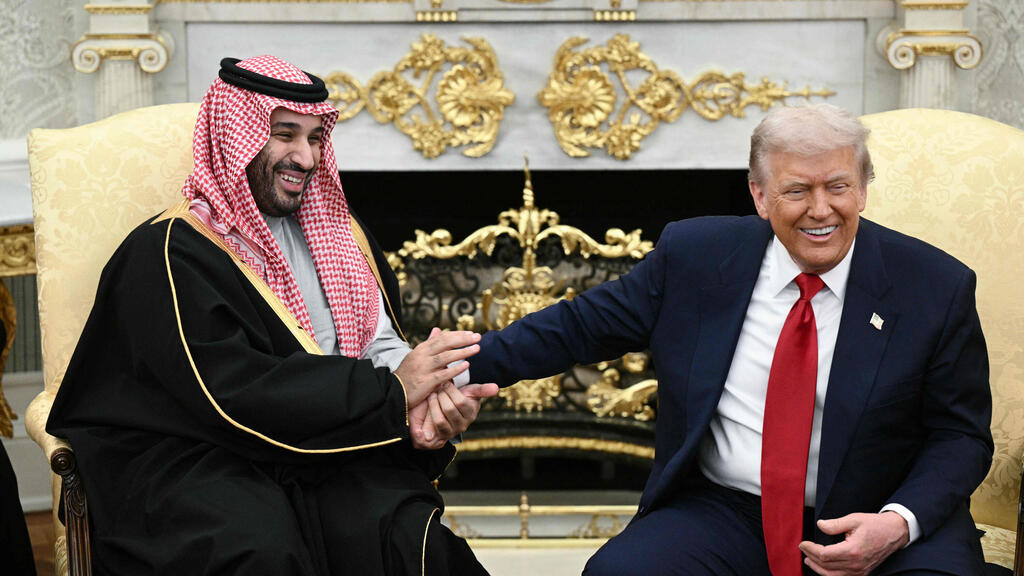
Crown Prince Mohammed bin Salman, who met Trump this week, expects the U.S. to guarantee that negotiations toward Palestinian statehood begin immediately and conclude within five years. Both leaders publicly spoke of a “clear path” to establishing a Palestinian state. Israeli officials interpreted the statement as a kind of “nonbinding commitment.” The crown prince also said Saudi Arabia wants to join the Abraham Accords but also wants to “ensure a path to a Palestinian state,” and supports a two-state solution and peace “for Israel and the Palestinians.”
But the international community now faces a dilemma, Chorev says. “They know the Palestinian Authority is problematic, but the prevailing assumption is that if not the PA, then someone else — and that alternative would be far worse.” This is also how Israel tends to operate, despite at times freezing tax revenues or applying pressure. “Ultimately, Israel returns the money because undermining the PA is dangerous. It is the lesser evil, and the PA knows this. As long as Abbas is alive, their policies are unlikely to change fundamentally. They will not transform into something else unless there is extremely strict oversight.”
Gaza
(Photo: Reuters/Dawoud Abu Alkas)
The war has created a real opportunity for the PA, and its leadership understands that, Chorev says. “They know they are the alternative and have taken a firm stance against Hamas. All the talk about reconciliation is nonsense. There will be no unity. Their interests collide and both sides know the other is a bitter rival. That is why the PA will not allow the international community to abandon the demand to strip Hamas of its weapons.”
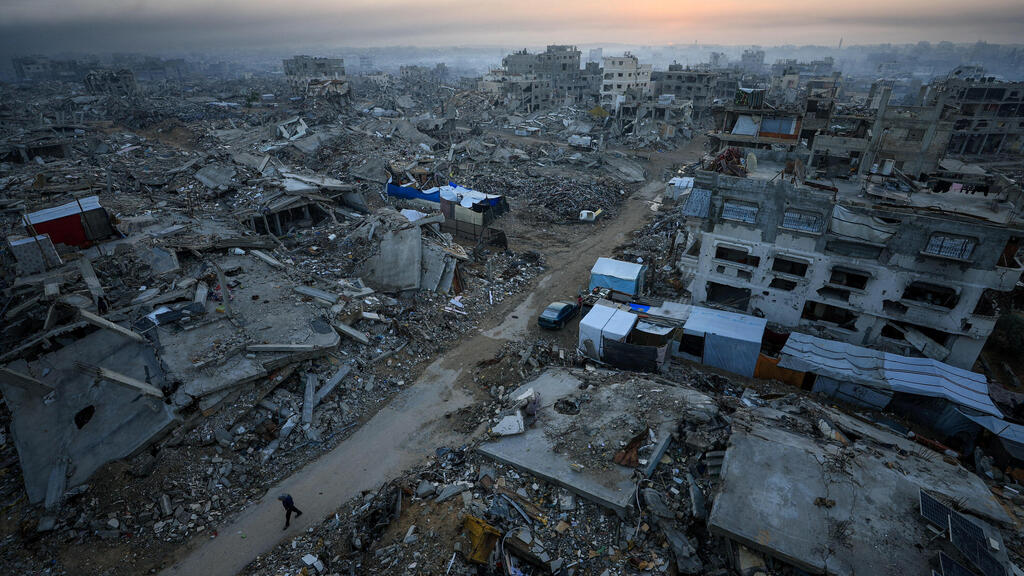
Still, Chorev stresses that the PA in Ramallah cannot govern Gaza. “They can use a framework with some Palestinian legitimacy — you can call it the Palestinian Authority — but it cannot be the Ramallah-based PA. For many reasons, it cannot run Gaza, certainly not provide security control, and it is not legitimate in the eyes of Gazans. Something new must be built there. It will take years, if it happens at all.”
The 'American Balfour Declaration'
According to Chorev, the phrasing of the American declaration on a “path” to a Palestinian state is designed to gain broad international backing and lay the foundation for “day after” mechanisms.
He explains that much effort is focused on constructing a legal model for managing Gaza. “These legal aspects are less familiar in Israel, but for the international community this is not simply about imposing power. They want to build an international mandate to manage a territory not under natural Palestinian sovereignty.”
The central goal for the Americans, Chorev says, is expanding the Abraham Accords — “and without this, they cannot move forward. This is a Saudi demand. The Saudis did not get enough in return, but their commitment to normalization as part of their strategy is already significant.”
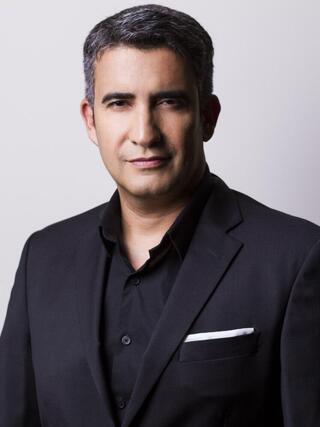 Dr. Harel Chorev Photo: Noa Salti
Although Mohammed bin Salman set a five-year timeline, Chorev argues the current U.S. administration “is not truly committed to a Palestinian state. It is not part of its ideological worldview. A Republican administration is not ideologically committed to a two-state solution, unlike Democratic administrations.”
Therefore, he says, “I do not see this administration making practical progress, especially since the Palestinians themselves will not deliver what is required. These are very long processes, not something coming soon.”
Still, he emphasizes that “this administration will not be in Washington forever. Once a Democratic administration takes office — especially a more progressive one — this declaration becomes a legal, declarative anchor. They can say it was Trump’s commitment, and we are bound by it. At that point, it could become much more significant for Israel.”