

In his first political speech since he was elected to head the Catholic Church, Pope Leo XIV on Sunday called for an "authentic and lasting peace" in Ukraine and a ceasefire in Gaza and release of all Israeli hostages. Leo also welcomed the recent ceasefire between India and Pakistan, and said he was praying to God to grant the world the "miracle of peace."
"No more war!" the pope said, repeating a frequent call of the late Pope Francis and noting the recent 80th anniversary of the end of the Second World War, which killed some 60 million people.
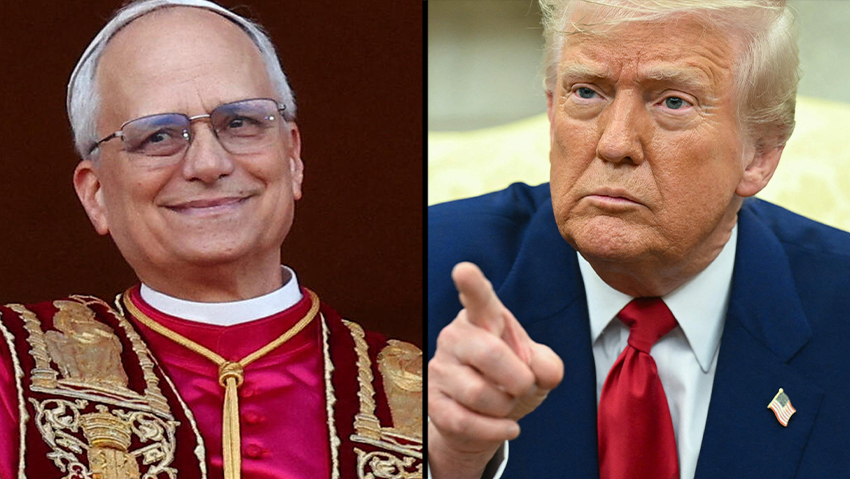
The Pope is the first US-born pontiff in history to lead the Catholic Church, which has 1.4 billion followers worldwide. However, many within and outside the Church see him as the most "un-American" choice for the role. Before his election, the new pope lived for many years in Peru, where he even became a naturalized citizen. He has also been a vocal critic of President Donald Trump’s stringent immigration policies, a stance that has drawn criticism from Trump supporters within the MAGA movement (short for the “Make America Great Again” slogan).
Among the first critics of the new pope was Steve Bannon, Trump’s longtime strategic advisor. In an interview with the BBC over the weekend, Bannon predicted future clashes between the newly elected Pope and Trump, who, for now, has only issued a formal congratulatory statement, emphasizing the "great honor" of having the first American pope elected. Bannon referred to recent reports about the new pope, whose original name is Robert Francis Prevost, including past social media posts from the last decade in which he expressed opposition to Trump’s immigration policies during his first presidency. Bannon said he was "shocked" that a pope who dared to publicly criticize "senior American politicians" was elected.
One such example was a tweet from February, posted under the pope’s original name, in which he shared an opinion piece titled "JD Vance Is Wrong: Jesus Does Not Ask Us to Rank Our Love for Others." The article was a response to comments made by Trump’s vice president, JD Vance, who defended a plan to deport large numbers of undocumented immigrants from the U.S. Vance had argued for a "Christian concept" in which a person prioritizes love for their family first, then their neighbors, community, fellow citizens and, lastly, "the rest of the world." Vance claimed that "the radical left" had reversed this natural hierarchy.
In the same BBC interview, Bannon predicted "friction" between Trump and Pope Leo XIV, suggesting that such a confrontation could ignite a deep divide within the American Catholic community, which constitutes about 20% of the U.S. population and has produced only two presidents to date: John F. Kennedy and Joe Biden. Vice President JD Vance is also Catholic.
"Remember, President Trump was not afraid to challenge Pope Francis," Bannon said, referencing the late pope’s harsh criticism of Trump’s immigration policies. "So, if this pope tries – and he will try – to interfere with Trump’s plans for mass deportations, I’ll be ready for the fight."
Although most MAGA supporters are not Catholic, they hold significant influence in the White House, and their criticism of the new pope could foreshadow a future confrontation between him and Trump. Conservative journalist Ben Harnwell, an ally of Bannon, argued that "this guy [Leo XIV] has been completely embraced by liberals and progressives." Harnwell added that the new pope "shares the DNA of Pope Francis."
Another prominent MAGA political activist, Jack Posobiec, claimed that the election of Cardinal Prevost as pope was a "message to President Trump." Laura Loomer, a far-right figure influential in MAGA circles, launched even harsher criticisms, calling Leo XIV "anti-Trump, anti-MAGA, a supporter of open borders, and a full Marxist like Pope Francis."
Vance, who was born Protestant and converted to Catholicism in 2019, was more cautious in his remarks. Speaking on Friday during an interview with conservative host Hugh Hewitt, Vance said: "I try not to play the game of politicizing the pope. I’m sure he’ll say many things I agree with, and I’m sure he’ll say things I disagree with, but I will continue to pray for him and for the Church regardless, and that’s how I’ll approach it."
Pope Leo XIV, formerly Cardinal Robert Prevost, was elected Thursday on the second day of the secret conclave of cardinals in the Vatican, about three and a half weeks after the death of Pope Francis. The 69-year-old Prevost, elevated to the rank of cardinal just two years ago by Francis and appointed to a senior Vatican post, was widely viewed as one of Francis’ potential successors. Born in Chicago, Prevost served as a priest for many years in Peru, where he also became a citizen. His election has been met with enthusiasm not only in the United States but also in Peru.
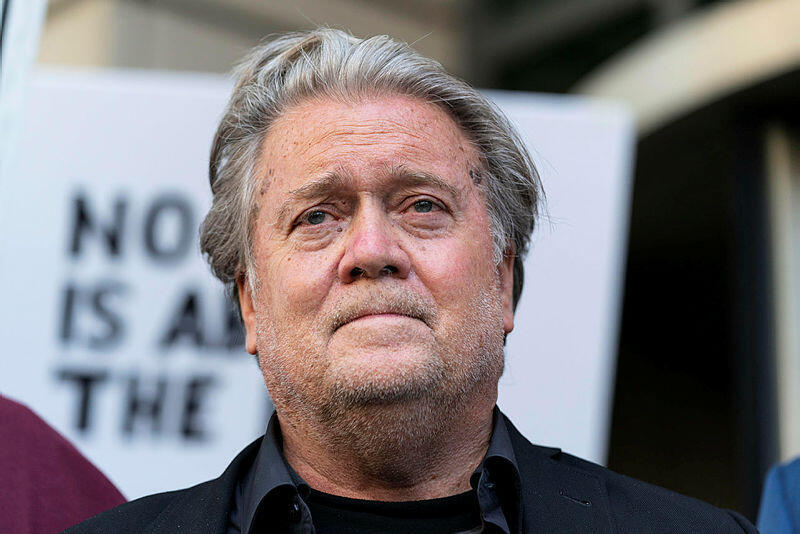
Steve Bannon
(Photo: AP)
The election of the first-ever American pope is seen as groundbreaking. For decades, there was an unspoken taboo against selecting an American for the papacy to avoid giving the United States – already a dominant political power – a disproportionate influence in the religious world. The voting process was conducted in secrecy, with all 133 cardinals sworn to absolute confidentiality, meaning the details of the discussions leading to the election are unlikely to surface anytime soon.
Despite the oath of secrecy, reports from the weekend indicated Prevost was elected relatively quickly, after just four rounds of voting. By comparison, Pope Francis was elected in 2013 after five rounds. Cardinal Désiré Tsarahazana of Madagascar revealed that, in the final round, Prevost received "more than" 100 votes, significantly surpassing the required two-thirds majority of 89 votes.
At this stage, it is unclear how Pope Leo XIV will lead the Church. Observers are debating whether he will continue the liberal reforms initiated by Francis, such as a more open approach toward the LGBTQ+ community. It is widely believed that on this issue, where Leo XIV has expressed more conservative views, he will adopt a cautious and traditional stance. However, during a meeting with cardinals at the Vatican on Saturday, he signaled that he would not entirely abandon Francis’ inclusive approach. Leo XIV reiterated a statement made by Francis upon his election in 2013, urging the Church to show "love" to all "the weak and the marginalized" and to engage in "courageous" dialogue with the modern world.
Get the Ynetnews app on your smartphone: Google Play: https://bit.ly/4eJ37pE | Apple App Store: https://bit.ly/3ZL7iNv
During the same meeting, the new pope explained why he chose the name Leo XIV, citing concerns over the implications of the artificial intelligence revolution. He referenced the industrial revolution of the 19th century and its impact on workers' lives, noting that the last pope to bear the name Leo – Leo XIII, who reigned from 1878 to 1903 – worked to protect laborers during that transformative era. Leo XIII is remembered for his criticism of unregulated capitalism and for publishing the historic 1891 encyclical Rerum Novarum ("Of New Things"), which addressed the Church’s stance on the working class.
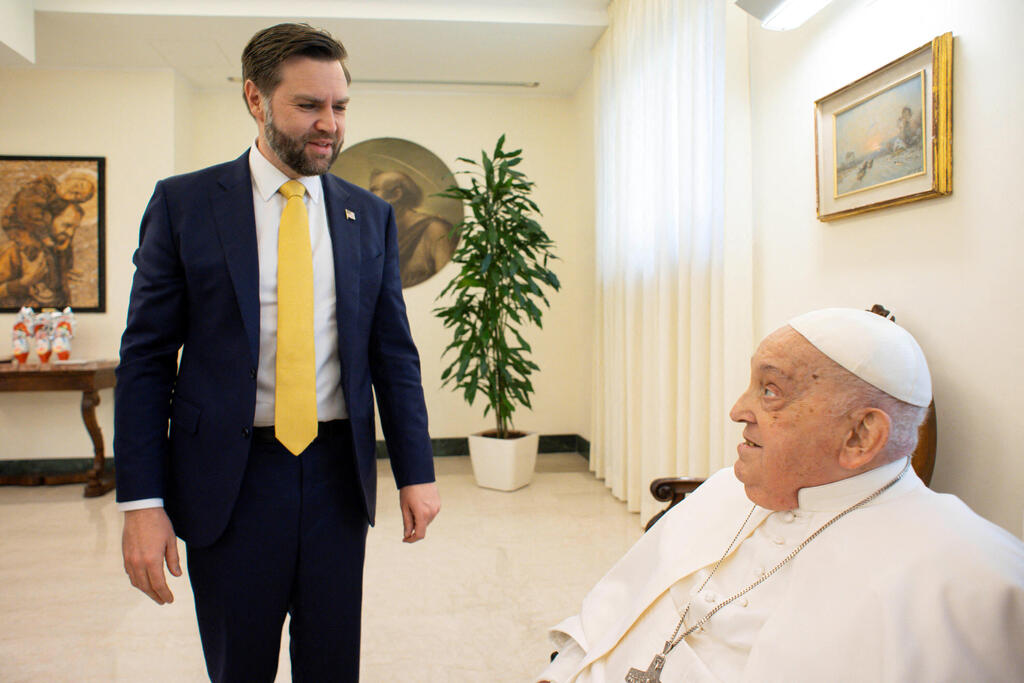
VP Vance at the Vatican a day before pope Francis died
(Vatican Media/Handout via Reuters)
In his first speech, delivered in Italian, Pope Leo XIV emphasized the challenges posed by today’s revolutionary changes. "In our time, the Church offers everyone the treasure of its social teachings in response to another industrial revolution and the developments in artificial intelligence, which present new challenges to the need to protect human dignity, justice and labor," he said.
His brother, John Prevost, speaking to The New York Times, highlighted the pope’s deep concern for migrants. "I know he is very unhappy with what’s happening with immigration," he said, likely referring to Trump’s recent policies. "I know that for sure. How far he’ll go is anyone’s guess, but he won’t sit idly by. He’s not someone who stays silent."