

The phrase “turning their guns” has become increasingly common in Israel over the past week, describing a nightmare scenario in which weapons held legally by Palestinian Authority security forces in the West Bank are turned against Israeli communities or IDF troops.
Prime Minister Benjamin Netanyahu raised the possibility during a recent discussion at the IDF Central Command, unexpectedly questioning Chief of Staff Lt. Gen. Eyal Zamir about what would happen in such a scenario.
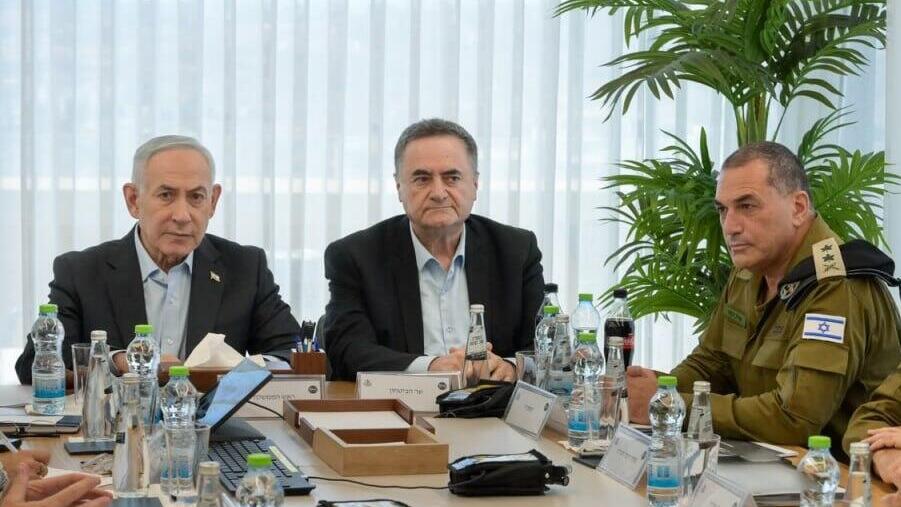
The discussion had been convened to review rising violence by extremist settlers, the damage caused by those incidents and the military resources being diverted to deal with them. Netanyahu then raised the prospect of Palestinian security forces turning their weapons on Israel, a scenario he has also discussed publicly in the past.
The subject has repeatedly surfaced in Cabinet discussions, including the latest meeting, and is particularly emphasized by ministers from the Religious Zionism bloc.
The IDF says the scenario is familiar, has been practiced and is included in its contingency planning. At the same time, military officials say they are not aware of any intelligence indicating that the Palestinian Authority is currently preparing such a move.
What does ‘turning their guns’ mean?
The term refers to a situation in which weapons held by the Palestinian security services, which possess thousands of firearms legally in the West Bank with Israeli approval, are used against Israeli communities or IDF troops.
Netanyahu referred to the possibility this week, but it was not the first time. In February, he said Israel “always talks about turning the guns, from here and from there,” referring to both the West Bank and Israeli Arab communities. He also raised the issue in December 2023.
The concern has resurfaced as the military grapples with two trends moving in opposite directions.
According to figures presented to Netanyahu during the Central Command discussion, Palestinian terrorism has declined significantly, while nationalist crime by extremist Jewish settlers has increased.
Central Command chief Maj. Gen. Avi Bluth warned that such violence was “like a match that could ignite everything in an instant.”
He also said the IDF’s attention was being continuously diverted toward dealing with nationalist crime rather than preventing Palestinian terrorism.
It was during that discussion that Netanyahu challenged Zamir over the possibility of Palestinian security forces turning their guns on Israel. Zamir acknowledged that he had not prepared specifically for the question, but told ministers the IDF had prepared for the scenario and that the West Bank Division had drilled for it. “If it happens, we know how to deal with it,” he said.
Strategic Affairs Minister Orit Strock has also repeatedly raised the issue. She belongs to Finance Minister Bezalel Smotrich’s Religious Zionism party, which has advocated dismantling the Palestinian Authority, in part on the basis of fears surrounding such a scenario.
No intelligence showing an imminent move
The IDF says it has no intelligence indicating that the Palestinian Authority is on the verge of dramatically turning its weapons against Israel. Still, as Zamir told ministers, the military says it is unwilling to take chances and is preparing for extreme possibilities.
Several days ago, Zamir announced that a divisional headquarters had been placed on alert because of concern about escalation in the West Bank. The announcement was unusual because the IDF’s West Bank Division is already responsible for most of the territory, with the Jordan Valley operating under a separate command structure.
The IDF has also adopted a more aggressive posture in the West Bank in recent months. One example came last weekend, when the Israeli Air Force carried out an airstrike in Jenin, the first such attack in the area in many months.
Footage: Airstrike in Jenin last week
(Video: IDF)


From the military’s perspective, the broader scenario is well known and has been drilled several times, particularly since the October 7 Hamas attack.
Fears of infiltrations into Israeli communities and settlements sharpened after the attack. The IDF strengthened defenses, pushed potential infiltration threats farther away and increased force deployments.
Among other measures, Israeli forces took control of refugee camps in the northern West Bank and expanded the security perimeter along key roads.
The military is also increasing preparations for possible escalation involving extremist Jewish violence, particularly against the backdrop of the election campaign and the Jewish holiday period.
Despite preparing for worst-case scenarios, senior officers are trying to keep the West Bank calm and prevent events from spiraling into the very escalation they are preparing against.
‘You cannot rule it out’
Cabinet ministers told ynet that, in the shadow of October 7, they believe such a scenario cannot simply be dismissed. “It is raised mainly by the ministers,” one Cabinet minister said. “Today no one can be complacent and say, ‘Fine, it won’t happen and it can’t happen.’ So even when the arguments are raised, the military does not reject them. The military does not rule it out.”
The minister said security around Israeli communities in the West Bank had been significantly strengthened since October 7.
“After October 7, they increased security by expanding the number of members in community rapid-response teams, improving the quality of those teams and upgrading fences, communications systems and security equipment,” he said. “They increased them significantly.”
Asked whether he could sleep soundly at night given the possibility of Palestinian forces turning their weapons on Israel, the minister said complete confidence was impossible. “You cannot say you can be 100% calm,” he said. “You know the West Bank. There are small communities next to large Muslim towns.”
He pointed to the failures of October 7, when Hamas broke through sophisticated defenses surrounding Gaza. “If it happened when we had a separation fence, a wall, a ‘see-and-shoot’ system and radars, and despite all that it happened, you cannot say that such an event and all the danger that comes with it can be ruled out.”
Palestinians: Israel wants to drag us into confrontation
On the Palestinian side, officials argue that Israeli rhetoric about weapons held by Palestinian security forces is intended to create a pretext for military confrontation, weaken the Palestinian Authority and serve domestic political interests.
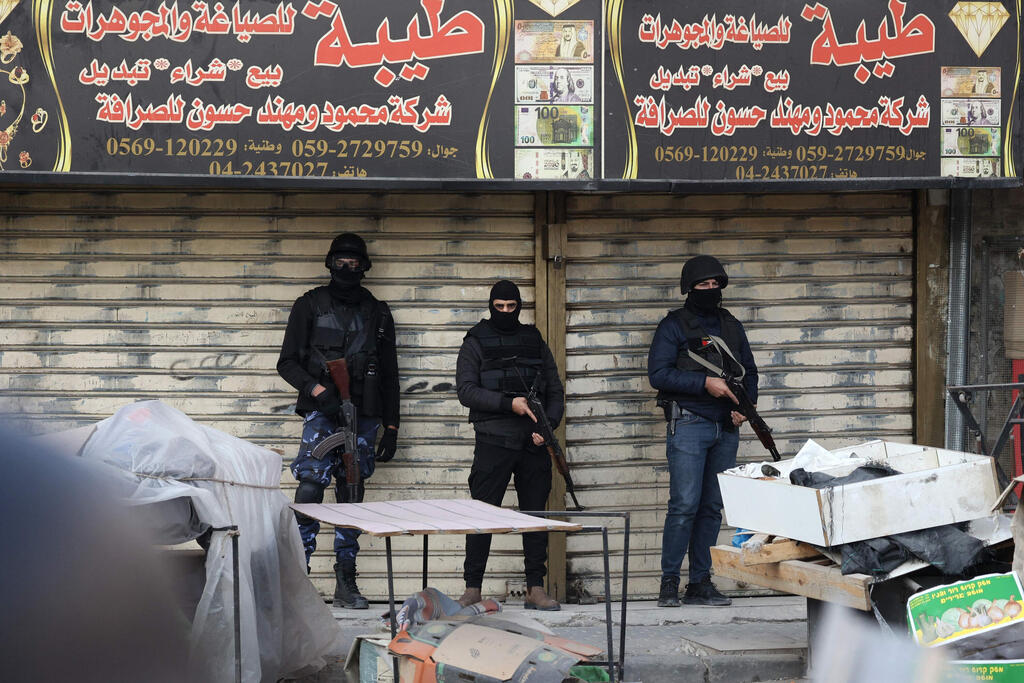
Palestinian security forces in Jenin
(Photo: JAAFAR ASHTIYEH / AFP)
Abdullah Kamil, governor of the Tulkarm district and a former senior Palestinian security official, rejected claims that the Palestinian Authority possesses offensive or smuggled weapons.
“The weapons held by the Palestinian Authority are light police weapons,” he told ynet. “The most we have are Kalashnikovs.”
He said the weapons were transferred under existing agreements and with international backing, solely for policing and internal security. Kamil accused Netanyahu of trying “to drag the Palestinians into confrontation.”
“He simply does not want a Palestinian Authority,” he said.
Officials currently serving in the Palestinian security forces similarly said the weapons involved are basic arms used by Palestinian police. They said the scenario raised in Israel had not been presented to them or discussed through the ongoing coordination channels between the two sides.
Other Palestinian officials said the focus on the security forces’ weapons was part of a broader campaign against the very existence of the Palestinian Authority, alongside economic pressure being applied to it.
They argued that portraying the Palestinian security services as a security threat helps Netanyahu and the Israeli right mobilize political support.
Kamil said raising the weapons issue was an effort to weaken the Palestinian Authority’s institutions and security services.
Palestinian officials fear that the rhetoric could eventually become policy and trigger confrontation on the ground. They argue that weakening the Palestinian security forces could instead create a security vacuum, increase instability and ultimately harm Israeli interests as well.