

Israel’s war against Hamas in Gaza is unlikely to end before October 7, 2025—and could stretch even longer—despite intensified military operations and a possible full-scale occupation of the coastal enclave. That’s the assessment of Newsmax senior correspondent John Huddy, who says the challenges are far deeper than territorial gains.
Speaking on the ILTV News Podcast this week, Huddy warned that “there are so many complications” to fighting in Gaza and that Hamas, despite Israel’s relentless efforts, remains “so ingrained, so entrenched in Gaza.”
Huddy, who has spent more than a decade covering wars—including two previous Israel-Gaza operations—said he has watched Hamas become “more dangerous, more lethal, more vicious.”

As far back as 2021, during the previous Hamas-Israel confrontation, Huddy noted it was clear the terror group had upgraded its military capabilities, firing rockets farther and with greater accuracy. With Qatari funding, Hamas has been building tunnels and training fighters for nearly 20 years, solidifying its grip over the Gaza Strip.
“I don't think it's going to be as easy as sending in five divisions to go in and light up Gaza City, get people out of there and the central camps. I think this is going to be a lot more,” Huddy said.
Watch these previous ILTV News Podcasts:
Asked whether Israel has achieved its military goals so far, Huddy was skeptical. He estimated that some 20,000 Hamas fighters remain in Gaza, alongside Palestinian Islamic Jihad and other smaller armed factions.
But defeating the group, he stressed, isn’t only about eliminating fighters.
“How do you destroy the radical Islamist philosophy and mentality that led to the formation of this terrorist group and organization and military?” Huddy asked.
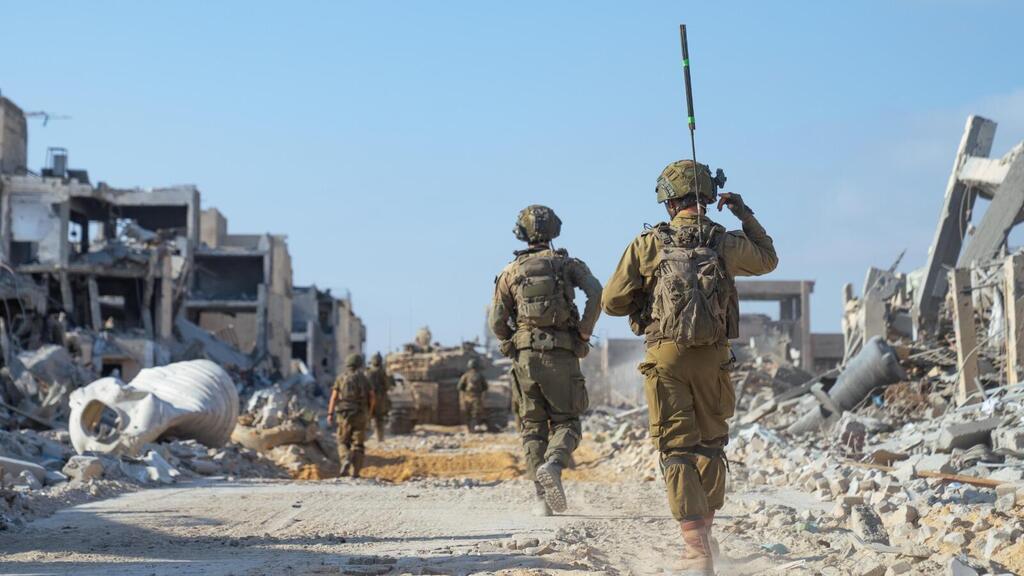
IDF operations in the Gaza Strip
(Photo: IDF Spokesperson)
When people say “Gaza is Hamas and Hamas is Gaza,” Huddy explained, they mean the group has controlled the government, military, schools, and aid distribution for so long that the population knows little else. He recalled visiting Gaza in 2015, after Operation Protective Edge, and seeing billboards of young children holding rifles—evidence that radicalization was already deeply embedded a decade ago.
“I know the IDF in Israel is trying, as the prime minister said, not to annex Gaza, but to free it from Hamas,” Huddy said. “But you’re not only talking about Hamas, you’re talking about other terrorist factions, and what concerns me is possibly the power vacuum that's left open. What happens after Hamas goes away? Who controls it?”
Huddy also pointed to what he called “the eighth front”—the information war. Here too, he said, Israel isn’t doing enough. In a recent meeting with the IDF, he urged them to bring more journalists into Gaza. While reporters would certainly witness destruction, they would also gain a clearer picture of the threats Israel faces.
“Don't believe the false narratives,” Huddy told his American audience. “They’re being promulgated by a lot of the international press, because there always is that critical, that biased opinion towards Israel. Do your own research.”
Watch the full podcast:
PODCAST JON

