

Lebanon’s government and the Trump administration have pressed Israel to scale back its strikes on Beirut ahead of planned U.S.-mediated talks in Washington, and the focus of Israel’s ground campaign has now shifted south to Bint Jbeil, the largest Shiite town near the Israeli border and a place with deep symbolic importance for Hezbollah.
According to reports from Lebanese and regional media, Israeli forces have been tightening their encirclement of Bint Jbeil for several days, advancing from border areas near Yaroun, Maroun al-Ras and Aitaroun and moving to cut the town off from the south, east and north.
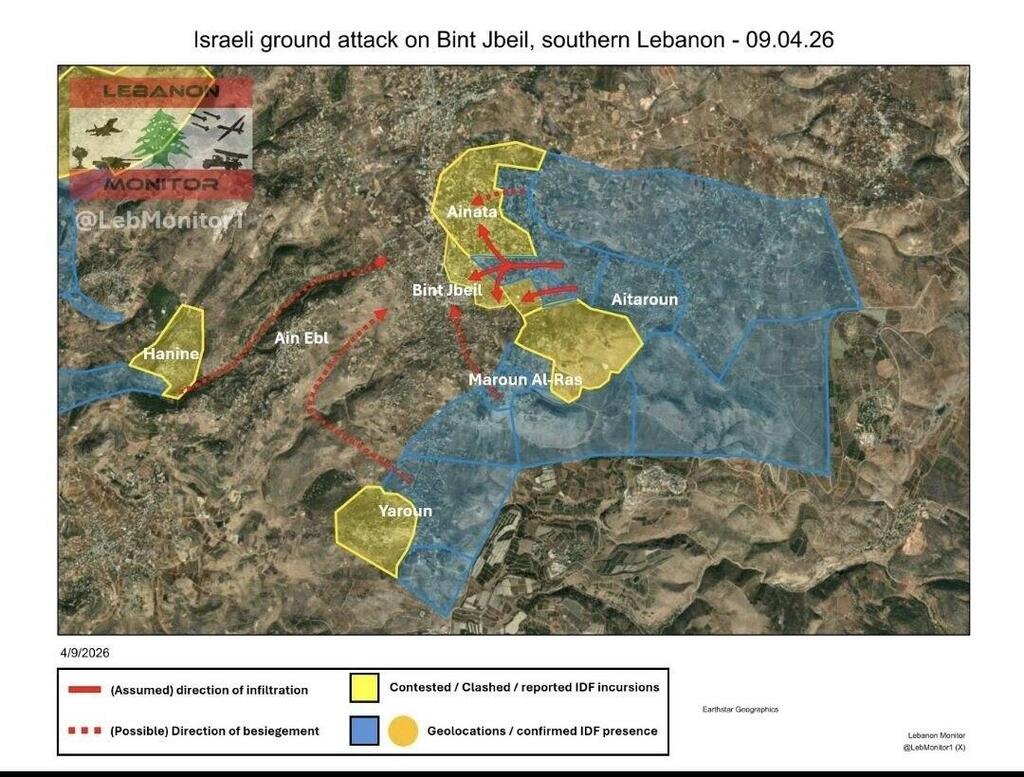
Additional operations have been reported in a separate sector around the villages of Rashaf, Beit Lif and al-Qawzah, where Israeli forces were also said to be demolishing structures in Hanine as part of a broader push toward Ain Ebel in an effort to complete the siege from the west.
Israeli analysts have said the operation carries major psychological and symbolic weight because Bint Jbeil lies only about 4 kilometers, or 2.5 miles, from the Israeli border and has long been one of Hezbollah’s most important strongholds in southern Lebanon. The town occupies a central place in Hezbollah’s narrative of resistance, and Israeli officials believe the group’s stepped-up rocket fire in recent days is tied to the pressure created by the encirclement.
The diplomatic backdrop is growing more complicated. Axios reported overnight that the Lebanese government and the Trump administration had asked Israel to “pause” its attacks on Hezbollah before direct talks between the Israeli and Lebanese ambassadors begin Tuesday in Washington.
Israel and Lebanon are expected to hold U.S.-mediated talks that each side is framing differently: Israel says it wants to advance peace discussions and address Hezbollah’s disarmament, while Lebanon says any broader talks must begin with a ceasefire.
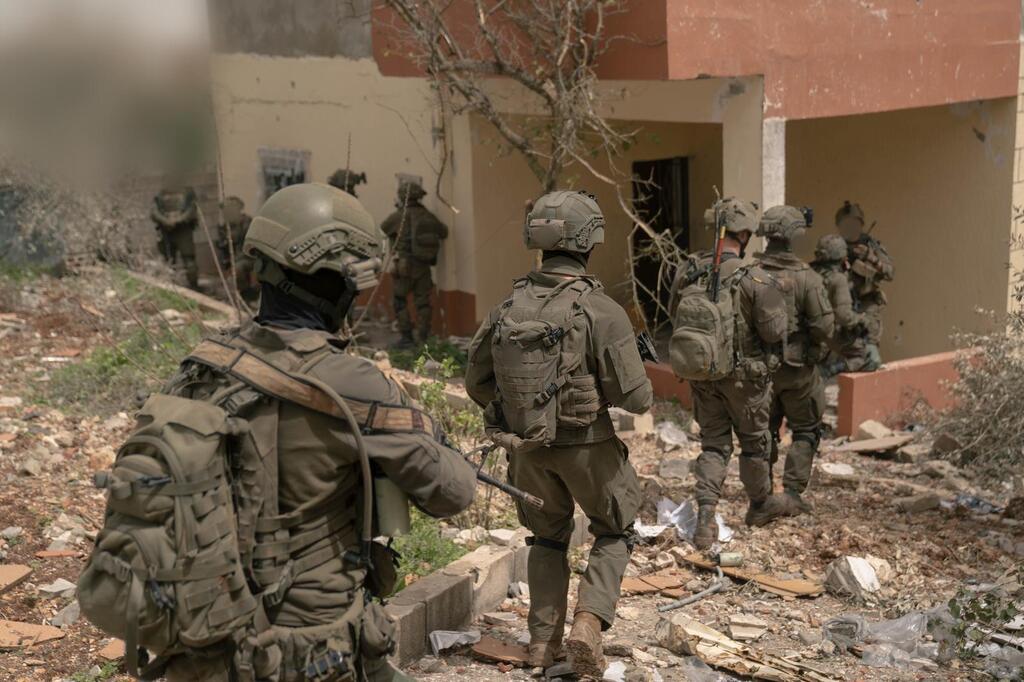
IDF troops operating in southern Lebanon
(Photo: IDF)
Israeli Ambassador to the United States Yechiel Leiter said after a call with Lebanese Ambassador Nada Hamadeh Moawad that Israel had agreed to a follow-up meeting to advance a peace agreement with Lebanon, but not to discuss a ceasefire with Hezbollah. Lebanon’s presidency, by contrast, said the next meeting would include discussion of a ceasefire, underscoring the gap between the two sides before the talks even begin.
Despite the diplomatic push, fighting on the ground has continued. Israeli strikes killed members of Lebanon’s State Security forces in southern Lebanon, and Hezbollah responded with heavy fire, as both sides kept up attacks ahead of the Washington meetings.
In Israel’s view, the campaign around Bint Jbeil is part of an effort to remove the direct Hezbollah threat to communities along the northern border. But the move also comes as Iran has been pressing for a ceasefire in Lebanon as part of the broader regional diplomacy now unfolding alongside U.S.-Iran talks in Pakistan. Those talks were opening in Islamabad under the shadow of disputes over Lebanon, sanctions and the terms of the fragile ceasefire with Iran.