


An IDF engineering vehicle was struck overnight by an explosive drone launched by Hezbollah near the Ali Taher ridge in southern Lebanon, the military said Wednesday, describing the attack as a blatant violation of the ceasefire agreement. No casualties were reported.
The vehicle was hit while troops were conducting a patrol in the area, where forces from the IDF’s 36th Division are operating within the Israeli-controlled security zone. Following an examination of the incident, the IDF determined that Hezbollah had launched an explosive drone toward the vehicle.
Destruction of a Hezbollah underground command post
(Video: IDF)


“This constitutes a blatant violation of the ceasefire agreement in Lebanon by the Hezbollah terrorist organization,” the military said. “The forces continue to operate in the ridge area and will not allow terrorists to advance or carry out terror attacks.” The IDF did not say how it intended to respond.
Hezbollah has repeatedly launched drones over southern Lebanon in recent days and weeks, according to the military. Most have been surveillance drones used to photograph and gather intelligence on Israeli forces, which are familiar with the activity and have adjusted their operations accordingly.
Hezbollah has also been attempting to recover weapons from the area and refresh its forces in preparation for a possible resumption of fighting. The latest incident appears to mark the first use of an explosive drone by Hezbollah against an Israeli vehicle since the current ceasefire began, according to the initial Israeli assessment.
Separately, the IDF said troops from the 601st Combat Engineering Battalion and Yahalom, the military’s elite combat engineering unit, destroyed an underground Hezbollah command post in the village of Hadatha.
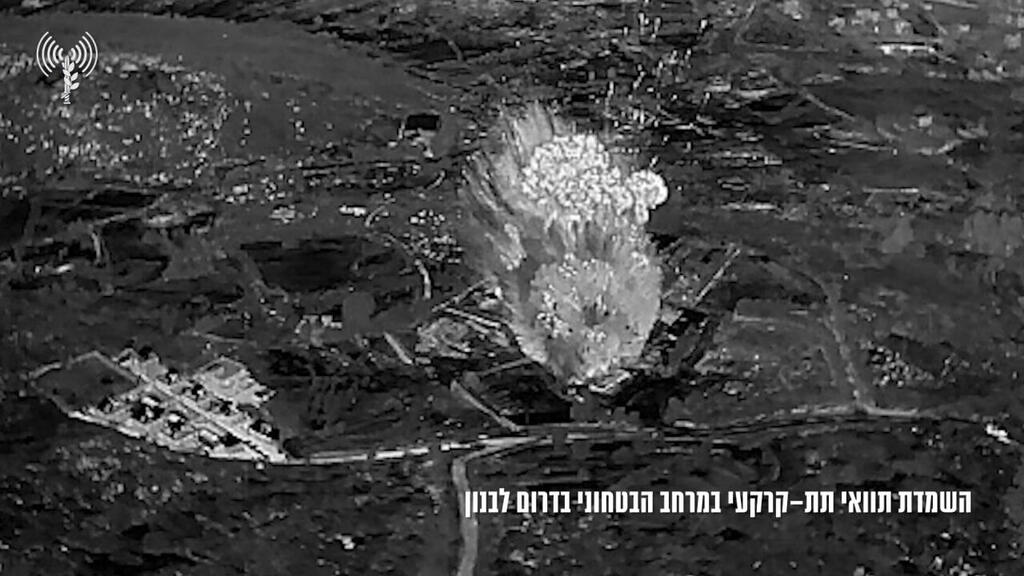
The detonation of Hezbollah’s tunnel
(Photo: IDF)
The operation was conducted under the command of the 401st Armored Brigade and the 91st Division in the security zone controlled by Israeli forces. According to the military, the underground route extended for about 55 meters and contained three rooms used by Hezbollah personnel. It had been constructed beneath a building-materials factory and was located about 300 meters from a UNIFIL building.
Troops also located an underground shaft in the area containing dozens of weapons. “The IDF will continue to act to remove any threat to its forces and will not allow the Hezbollah terrorist organization to harm the citizens of the State of Israel,” the military said.
The IDF has previously reported locating extensive Hezbollah infrastructure and more than 150 weapons in Hadatha, which it described as a hub of the organization’s activity.
Although the Lebanese military is expected to disarm Hezbollah, the organization has shown signs of rebuilding its presence in southern Lebanon. In recent days, Hezbollah reportedly attempted to open a new branch of Al-Qard Al-Hassan, the financial institution widely described as the organization’s banking arm, in the Tyre area. The institution was repeatedly targeted by Israel during the war.
According to Lebanese reports, some residents of southern Lebanon opposed the branch’s opening out of concern that Hezbollah’s presence could make the area a target. Lebanese media last week quoted political activist Hareth Mroue as saying that there had been a significant change in attitudes within the Shiite community.
“It is no longer accepted that the entire community will stand behind every Hezbollah decision as it did in the past,” he said. “Hezbollah made wrong decisions that brought the community into a cycle of death.”
“The Shiites need an alternative project to the project of killing that Iran has brought with it over the past 47 years,” he added. Media outlets supportive of Hezbollah argued that Al-Qard Al-Hassan performs an important social and economic role and is directly connected to the organization’s social base.
Lebanese President Joseph Aoun met U.S. President Donald Trump at the White House last week in a historic visit. Before the summit, the IDF said a Lebanese military force accompanied by an engineering vehicle had crossed about 150 meters into the Israeli-controlled security zone and removed barriers near Zawtar al-Sharqiyah, contrary to existing understandings. Israeli troops fired warning shots into the air.
Asked about the incident, Trump said he had heard about it only shortly before the news conference and that the administration would examine it. Saudi channel Al-Hadath later cited a U.S. source as saying Aoun had presented Trump with a formal plan to disarm Hezbollah and strengthen the Lebanese military’s authority.
According to the report, the plan would place all weapons in Lebanon under state control, clear pilot areas of Hezbollah personnel and military infrastructure, and call on Washington to help build a Lebanese army capable of assuming full responsibility independently.
The latest drone strike, however, underscores the gap between the proposed disarmament process and the reality on the ground, where Hezbollah retains weapons, surveillance capabilities and the ability to attack Israeli forces.