

The IDF on Monday revealed what it said was an internal Hamas document outlining a plan to plant explosives near camps housing displaced Palestinians in the Gaza Strip, with the aim of creating panic among civilians to help Hamas terrorists escape advancing Israeli forces.
According to the military, the document, written in April 2024 by Hamas' engineering department and disclosed for the first time, proposed placing explosive devices around displacement camps and detonating them as Israeli troops approached. The resulting chaos would serve as a distraction, allowing Hamas leaders and terrorists hiding nearby to flee.
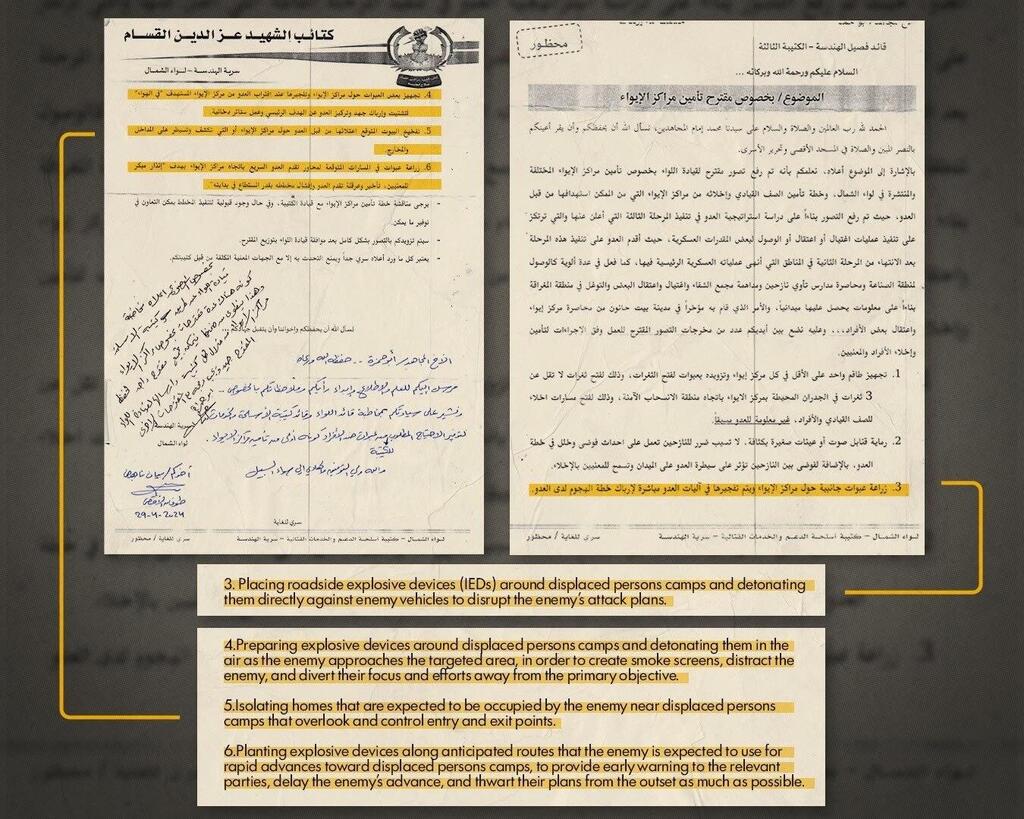
Internal Hamas document outlining a plan to plant explosives near camps housing displaced Palestinians in the Gaza Strip
(Photo: IDF)
The proposal also called for planting explosives along routes used by Gaza residents to delay the advance of Israeli troops, the IDF said. Another suggested tactic involved firing stun grenades into displacement camps to frighten civilians and create additional confusion while Hamas terrorists escaped.
According to the IDF, the document demonstrates that Hamas was prepared to knowingly endanger displaced Palestinian civilians to protect its leadership and fighters during Israeli military operations.
The military said the proposed tactics reflected Hamas' willingness to exploit the civilian population for operational purposes, despite the risk of direct harm to those sheltering in the camps.
The IDF did not specify whether the plans outlined in the document were approved or ultimately carried out.