


Hamas is preparing to launch a renewed international campaign highlighting hunger in the Gaza Strip, seeking to increase diplomatic pressure on Israel and derail efforts to disarm the terrorist organization under President Donald Trump's Gaza plan, according to Israeli security officials. The reported initiative comes as Hamas faces a severe financial crisis and imposes heavy taxes on merchants receiving humanitarian aid, contributing to rising prices and shortages in local markets, Israeli officials say.
According to Israeli security assessments, the organization needs approximately 90 million shekels every month to pay its estimated 30,000 personnel across Gaza, including administrative employees, lower-ranking operatives and members of its military wing. With average monthly salaries estimated at 3,000 shekels per person, Hamas is reportedly struggling to maintain its payroll and prevent its organizational structure from collapsing.
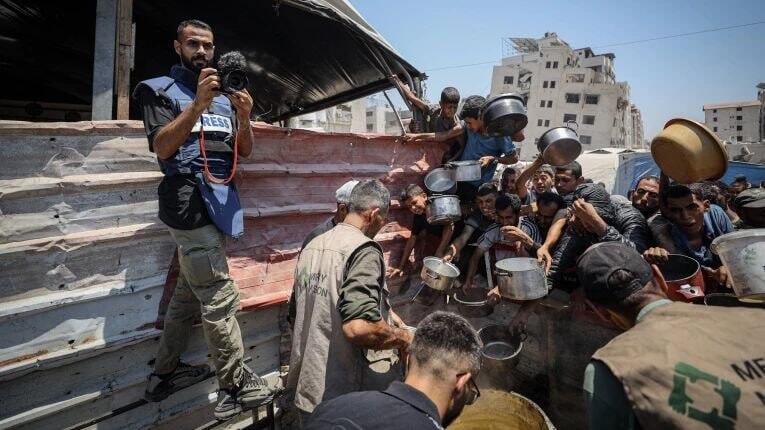
Images published by Germany's Bild newspaper showing Hamas efforts to stage photographs depicting starvation in Gaza
(Photo: Anadolu Agency/IMAGO, via Bild)
To raise revenue, Hamas has allegedly imposed steep taxes on Gaza merchants, including those receiving goods from outside the territory through humanitarian aid shipments. Israeli security officials say traders are required to pay thousands of shekels per truck, with charges reaching as much as 10,000 shekels. In addition, Hamas reportedly demands a cash payment equivalent to the sales value of 30% of each truck's cargo.
With approximately 300 trucks entering Gaza daily, the potential revenue from the per-truck charges alone could reach 3 million shekels a day if every shipment were charged the maximum amount. However, Israeli officials say the financial burden has become so severe that some merchants have stopped collecting shipments rather than pay Hamas, effectively abandoning goods intended for local markets.
The resulting disruption has contributed to rising prices and shortages in Gaza, according to the Israeli assessments. Security officials believe Hamas is now seeking to exploit those conditions by reviving the international publicity campaign surrounding hunger in the territory that gained prominence during the summer of 2025.
The planned campaign is intended to generate international pressure on Israel and encourage foreign governments to demand a halt to the Trump administration's Gaza plan, particularly provisions requiring the demilitarization of the territory and the disarmament of Hamas, according to Israeli officials.
Israeli security sources dispute claims that Gaza is currently experiencing starvation, maintaining that approximately 250 aid trucks a day would be sufficient to meet the population's needs if deliveries were properly monitored and prevented from reaching Hamas. That assessment reflects the Israeli security establishment's position and does not constitute an independent determination of humanitarian conditions in the territory.
Hamas, meanwhile, accuses Israel of obstructing merchants and commercial supply routes, placing responsibility for shortages and high prices on Israeli restrictions. Israeli officials contend that Hamas's own taxation policies are contributing to the disruption and believe the group intends to use the resulting economic hardship to win international support against Israel.
The renewed struggle over humanitarian aid therefore comes at a particularly sensitive moment for Hamas, as it seeks both to maintain its financial and organizational structures and to resist growing pressure to surrender its weapons under the US-backed plan.