

A 37% cut to government funding for LGBTQ services, proposed legislation restricting recognition of transgender people and discussions of sexual orientation in schools, and inflammatory remarks by coalition lawmakers are among the findings of a new report examining the outgoing Israeli government's record on LGBTQ rights.
Published Thursday ahead of Israel's October 27 election, the report by the Aguda, the Association for LGBTQ Equality in Israel, reviews legislation, budget decisions, government policies and statements by elected officials since Prime Minister Benjamin Netanyahu's government took office in December 2022. It describes repeated attempts to restrict LGBTQ rights alongside public campaigns that successfully blocked some of the proposed measures.
The organization warns that even legislative initiatives that failed to advance could serve as the foundation for renewed efforts in the next Knesset, Israel's parliament. At the same time, the report acknowledges several legislative achievements that expanded legal protections for LGBTQ Israelis during the government's term.
The first proposed change emerged before the government was even sworn in. Coalition agreements included a commitment to amend Israel's anti-discrimination law to allow business owners to refuse services on religious grounds. A bill introduced by lawmakers Ohad Tal and Moshe Solomon sought to enshrine such exemptions in legislation.
The proposal triggered widespread public opposition, prompting Netanyahu to pledge that LGBTQ rights would not be harmed. The legislation was subsequently shelved.
According to the report, however, additional proposals affecting the community followed. One bill, introduced by lawmakers Avi Maoz and Limor Son Har-Melech, sought to require that sex markers on official government documents be determined exclusively by biological criteria. The organization warned that the measure could prevent transgender people from changing their registered sex to reflect their gender identity.
Another proposal by Maoz sought to prohibit discussions of sexual orientation and gender identity in schools from first through eighth grade. From ninth grade onward, such discussions would be permitted only with the school principal's approval, parental notification, consent from 75% of parents and the individual student's agreement.
Son Har-Melech also introduced legislation intended to expand the authority of the state religious education council. According to the Aguda's analysis, the measure could allow the council to circumvent protections against discrimination based on sexual orientation and gender identity in religious schools.
A policy document published by the Yachin Center, which participated in developing the proposal, stated that "the right to educate for a life of Torah and commandments takes precedence over any other right."
The report notes that the proposal did not advance beyond its initial submission to the Knesset, but warns that it could provide a basis for future legislation.
LGBTQ funding slashed by 37%
Beyond the legislative proposals, one of the report's central findings concerns government funding for LGBTQ programs and services.
In 2024, the budget of the LGBTQ Advancement Division within the Ministry of Social Equality fell from a planned annual allocation of 38 million shekels to approximately 24 million shekels, a reduction of roughly 37%.

Knesset member Limor Son Har-Melech, who introduced legislation criticized in the report
(Photo: Alex Kolomoisky)
Funding allocated through a government program supporting local authorities, designed to finance LGBTQ activities and services across Israel, was also reduced, from 21 million shekels to just 10 million shekels.
According to the report, budget uncertainty intensified in 2025. Although a 24 million-shekel allocation for the division was presented during state budget discussions, the Ministry of Social Equality subsequently informed LGBTQ organizations that it had no available budgetary source to finance their projects.
In a letter sent to the Knesset Committee on the Status of Women and Gender Equality, the ministry stated that "this amount was never promised."
The consequences extended beyond the budget figures. In July 2025, the ministry terminated its agreement with the Aguda, under which dedicated services had been provided to LGBTQ people in Arab communities, adults aged 50 and older, and LGBTQ individuals with disabilities.
The report also found that new agreements sent to local authorities in September included further reductions, with activity budgets in major municipalities, including Haifa and Beersheba, cut by more than 90%.
The Aguda warns that these decisions threaten the continuity of essential services, particularly for LGBTQ people living outside Israel's major metropolitan areas or requiring specialized assistance that may not be available elsewhere.
Laws that passed and equality measures that failed
The report also examines legislation that was not explicitly directed at the LGBTQ community but could, according to the organization, have broader consequences for its rights.
These measures include a law expanding the government's ability to depart from the attorney general's legal opinions and legislation allowing religious courts to arbitrate civil disputes with the consent of the parties involved.
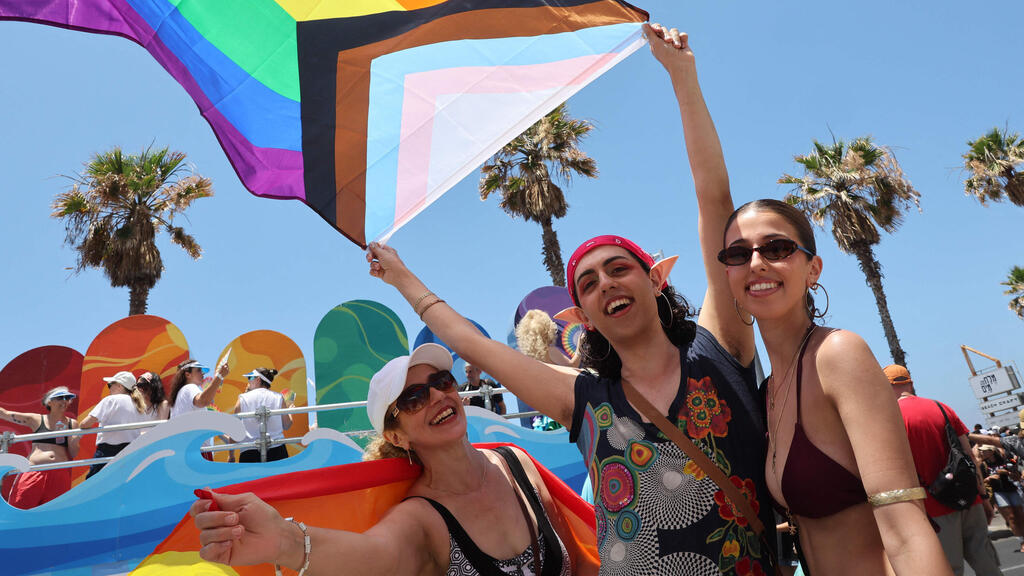
Tel Aviv Pride Parade, 2026. Funding for dedicated LGBTQ services was cut significantly during the outgoing government's term, according to the report
(Photo: Jack Guez/ AFP)
The organization argues that such changes are particularly significant because many LGBTQ rights in Israel are not explicitly guaranteed by legislation. Instead, they have developed through court rulings, legal interpretations and administrative policies, making them potentially more vulnerable to changes in the legal system.
The report also addresses an amendment expanding the possibility of gender-segregated academic education to postgraduate degrees, without establishing specific arrangements for transgender and nonbinary students or faculty members.
Meanwhile, several proposals intended to strengthen equality protections failed to pass. These included legislation to prohibit conversion therapy for minors, ban discrimination in housing, establish civil marriage and recognize victims of hate crimes for compensation purposes.
A bill prohibiting housing discrimination was rejected in a vote of 53 lawmakers against and 33 in favor. Another proposal establishing compensation for hate crime victims was defeated by 56 votes to 40.
Despite these setbacks, the report identifies three legislative amendments that expanded LGBTQ rights during the government's term.
Two involved recognition of same-sex partners under laws governing benefits and rights for the families of fallen IDF soldiers and those of hostages and missing persons. The changes followed the death of Maj. Sagi Golan and a public campaign led by his partner, Omer Ohana, for equal recognition of bereaved same-sex partners.
A third amendment added sexual orientation and gender identity to the grounds of prohibited discrimination under Israel's Student Rights Law.
Comparisons to ISIS, Hezbollah and Hamas
A separate section of the report examines statements made by government ministers and coalition lawmakers about the LGBTQ community.
Among the examples cited are remarks by lawmaker Yitzhak Pindrus, who described the LGBTQ community as "the most dangerous thing to the State of Israel," compared it to ISIS, Hezbollah and Hamas, and called for action to "prevent this movement altogether."
The report also refers to a recorded statement by Finance Minister Bezalel Smotrich, who said that his supporters "don't care about gay people" and suggested that measures against the LGBTQ community would therefore not harm him politically.

Finance Minister Bezalel Smotrich, whose remarks about the LGBTQ community are cited in the report
(Photo: Ryan Preuss)
Justice Minister Yariv Levin, meanwhile, described a proposal to prohibit discrimination based on sexual orientation and gender identity as "unnecessary and even harmful." The coalition subsequently rejected the proposal.
The report also documents statements by coalition lawmakers who expressed support for LGBTQ rights and opposed discrimination and violence against community members.
According to the organization, only three members of the 120-seat 25th Knesset openly identified as LGBTQ, while Netanyahu's 37th government included no openly LGBTQ ministers.
Nimrod Gornstein, chairman of the Aguda, said the findings reflected a pattern that began even before the government took office.
"Even before the government was sworn in, we saw an attempt to legitimize discrimination against LGBTQ people," he said. "Throughout its term, the community was repeatedly forced to confront attempts to restrict its rights, undermine its recognition and erode the services it receives from the state."
Gornstein said the inflammatory statements made by certain lawmakers reflected the broader political climate surrounding the community, but emphasized that public opposition and LGBTQ organizations had succeeded in blocking many of the initiatives.
"The extreme statements made by Knesset members about the LGBTQ community are an extreme expression of the climate that has developed," he said. "At the same time, the Israeli public and community organizations managed to stop a significant portion of these measures."
He added that the organization would work with any future government willing to advance equality, while continuing to challenge policies it believes threaten LGBTQ rights.
"The Aguda will continue working with any government that acts to promote equality, but will not hesitate to fight when the community's rights are under attack," Gornstein said.
He concluded by linking the report's findings to the upcoming election. "This report documents the choices politicians made regarding the LGBTQ community. In the coming election, the public will make its choice."
The Aguda warns that although several restrictive proposals failed during the outgoing government's term, they could return to the legislative agenda in the next Knesset, leaving the future of LGBTQ protections and government-funded services unresolved.
The Ministry of Social Equality did not respond to a request for comment.