

U.S. President Donald Trump said Wednesday night that he had canceled scheduled U.S. strikes and bombings against Iran, citing what he described as a breakthrough in high-level negotiations with Tehran and several regional governments. But Iran’s semi-official Fars news agency later cast doubt on the claim, reporting that Tehran had not approved any text for an initial memorandum of understanding with the United States.
Fars cited an informed source close to Iran’s negotiating team as saying Thursday that Iran had not approved any text for an initial MoU with Washington, Reuters reported.
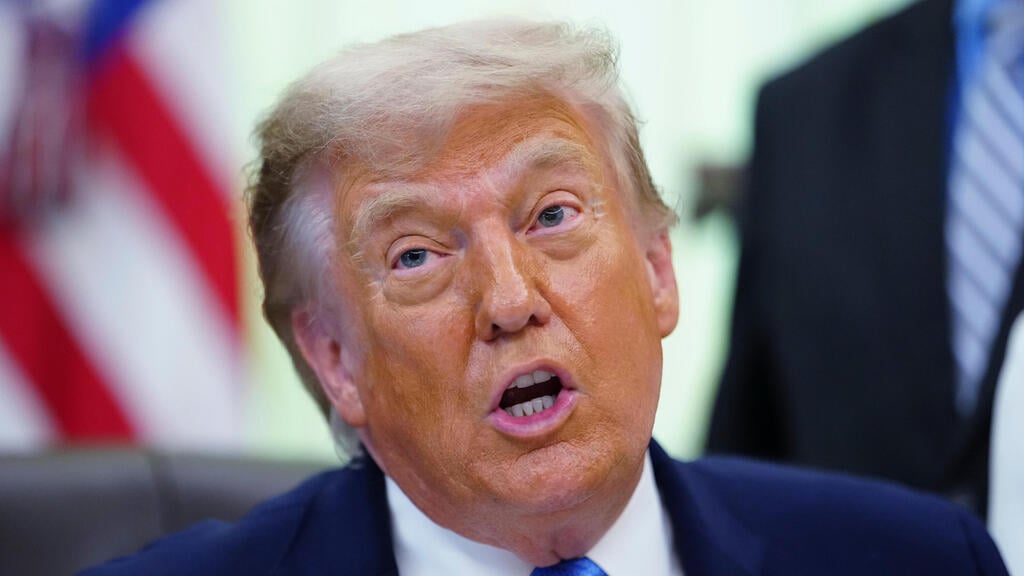
US President Donald Trump
(Photo: AP Photo/Julia Demaree Nikhinson)
The report came after Trump wrote on Truth Social that discussions with the Islamic Republic had been brought to “the highest level of Iranian leadership” and approved. He said that, as president, he had “cancelled the scheduled strikes and bombings against Iran this evening.”
Trump added that the “discussions and final points” had been approved “in both concept and great detail” by all parties involved, naming the United States, Israel, Saudi Arabia, the UAE, Qatar, Turkey, Pakistan, Bahrain, Kuwait, Jordan, Egypt and others.
“The Naval Blockade will remain in full force and effect until this Transaction is finalized,” Trump wrote, adding that the time and place of the signing would be announced shortly.
The Fars report appeared to temper Trump’s announcement, suggesting that while talks may be underway, Tehran has not formally approved an initial written framework with Washington. It was not immediately clear whether the report referred to the same document or set of understandings Trump described in his post.
Trump’s announcement marked a sharp turn after he had publicly threatened earlier to strike Iran “very hard” and raised the possibility of seizing Kharg Island, Iran’s key oil export hub in the Persian Gulf.
Kharg Island has been viewed by U.S. officials as one of the most sensitive possible targets in the conflict because of its importance to Iran’s oil exports. Earlier, Pentagon officials and senior U.S. administration officials were said to have warned that seizing Kharg or destroying its energy infrastructure would be highly risky and could require significant ground forces.
The operation had been viewed as a possible “endgame” measure that could severely damage Iran’s economy and war capabilities, but also carry the risk of heavy casualties and wider regional escalation. U.S. forces have previously carried out airstrikes on military facilities on Kharg while avoiding damage to the island’s critical energy infrastructure.
Trump’s Truth Social post suggested that Washington may be stepping back, at least for now, from immediate military escalation. But the president made clear that the U.S. naval blockade of Iran would remain in place until the emerging agreement is finalized.
The apparent diplomatic turn comes as regional dynamics continue to shift. Bloomberg reported earlier that senior security officials from the UAE and Iran had met for the first time since the war began, in what sources familiar with the discussions described as “a sharp turn for both sides.”
The UAE, one of Washington’s and Israel’s closest regional allies, has suffered repeated Iranian missile and drone attacks during the war, with damage to oil and gas facilities, ports and hotels. But Abu Dhabi has also sought to reduce further damage to its economy and security, while recognizing that the Iranian regime is likely to remain in power.
For Tehran, maintaining ties with the UAE is also important. Before the war, the UAE was one of Iran’s largest trading partners and a key route for oil exports. The ongoing closure of the Strait of Hormuz, fragile ceasefires and slow progress in U.S.-Iran talks have pushed several Gulf states toward efforts to contain the confrontation through diplomacy.
If followed by a formal signing, Trump’s announcement could represent the most significant diplomatic development since the conflict began. But the Fars report signals that major gaps may remain, and Trump’s insistence that the naval blockade stay in force suggests Washington intends to keep pressure on Tehran until any agreement is completed.
First published: 20:36, 06.11.26