

Israel will officially switch from daylight saving time to standard time overnight between Saturday, October 24, and Sunday, October 25, 2026. At 2 a.m., clocks will move back one hour to 1 a.m., giving residents an extra hour of sleep. The change marks the end of daylight saving time, with Israel remaining on standard time until March 26, 2027.
Here's everything you need to know about the upcoming clock change.
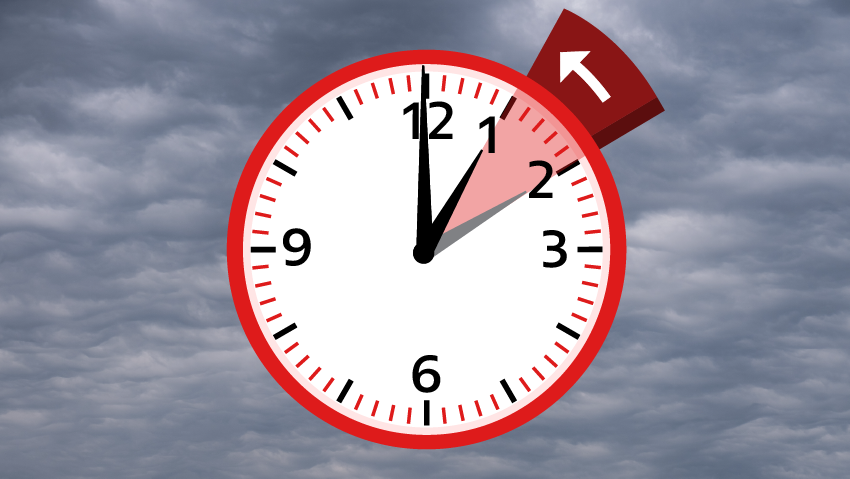
Israel switches to standard time this weekend
(Photo: shutterstock)
When does standard time begin in Israel?
Standard time takes effect early Sunday, October 25. At 2 a.m., clocks will be turned back one hour to 1 a.m., meaning the hour between 1 a.m. and 2 a.m. will occur twice. Israel will remain on standard time until Friday, March 26, 2027, when clocks will move forward again.
Will we gain or lose an hour of sleep?
Because the clocks move backward, we gain an extra hour. For anyone able to sleep in on Sunday morning, that means an additional hour of rest.
Will my smartphone and alarm clock update automatically?
Most modern smartphones automatically adjust to seasonal time changes, meaning users generally do not need to do anything. Alarm clocks set through the phone's operating system should also follow the updated local time.
Anyone unsure whether their device will make the change should check the date and time settings and ensure automatic time and time-zone adjustment are enabled. If the device does not update correctly, users can manually select Israel's time zone, generally listed as Jerusalem, and verify that the correct local time is displayed.
Traditional alarm clocks, wall clocks and other devices without automatic synchronization will need to be adjusted manually.
Why does Israel switch to standard time?
Israel's seasonal clock changes are governed by the Time Determination Law, which was amended in 2013. Under the legislation, daylight saving time ends each year on the final Sunday in October, when clocks move back one hour.
The immediate effect is that sunrise and sunset occur approximately one hour earlier according to the clock. Mornings become brighter earlier, while darkness falls sooner in the afternoon and evening.
How does the switch to standard time affect our bodies?
The transition from daylight saving time to standard time can influence sleep patterns, energy levels and mood, partly because of changes in exposure to natural daylight.
Melatonin, often called the sleep hormone, helps regulate the body's internal clock and sleep-wake cycle. Its production is closely linked to light and darkness, meaning seasonal changes in daylight exposure can affect how alert or sleepy people feel.
Serotonin, a neurotransmitter involved in mood regulation, has also been linked to sunlight exposure. Reduced daylight during the colder months may contribute to lower mood and fatigue in some people, although responses to seasonal changes vary considerably.
How does the clock change affect daily life?
Seasonal time adjustments are intended to better align human activity with available daylight.
During daylight saving time, people benefit from an additional hour of evening light, allowing more outdoor activities after work or school. Standard time, by contrast, shifts that daylight toward the morning, so people are more likely to begin their day after sunrise.
The trade-off is that evenings become darker earlier, affecting everything from commuting and outdoor activities to family routines.
Why not keep daylight saving time all year?
The question has sparked repeated debate in Israel and around the world. Supporters of permanent daylight saving time argue that longer, brighter evenings would benefit families, businesses and recreational activities.
Critics of the seasonal switch also argue that earlier sunsets can reduce the time parents spend outdoors with their children, increase exposure to darkness during evening commutes and create additional economic costs.
However, permanent daylight saving time would also mean later sunrises during the colder months, potentially requiring more people, including schoolchildren, to begin their day in darkness.
Despite repeated proposals to change the system, Israel has maintained its existing arrangement.
What happens in other countries?
Many countries around the world no longer change their clocks seasonally, including most countries in Asia, Africa and South America.
In the United States, proposals to end the twice-yearly clock changes have gained support, although much of the country continues to observe daylight saving time.
The European Parliament voted in 2019 to support ending seasonal clock changes, potentially allowing individual countries to adopt permanent standard time or daylight saving time. However, the proposal has not been fully implemented, and most European countries continue to adjust their clocks twice a year.
When will daylight saving time return in 2027?
Israel will return to daylight saving time early Friday, March 26, 2027. At 2 a.m., clocks will move forward one hour to 3 a.m., meaning residents will lose an hour of sleep but regain longer daylight hours in the evening.