

Settlement leaders in the West Bank, led by ministers Bezalel Smotrich and Orit Strock of the Religious Zionism party, are currently mapping out their vision for 2026. Their central goal is to bring entire families into areas of the West Bank approved by the cabinet for settlement, much of it land that until now has remained completely vacant.
In the coming weeks and months, settlement officials expect to see increased migration to these areas, expanded infrastructure work and construction on the ground. The move, they hope, will in practice collapse the idea of a Palestinian state and render the question of sovereignty irrelevant.
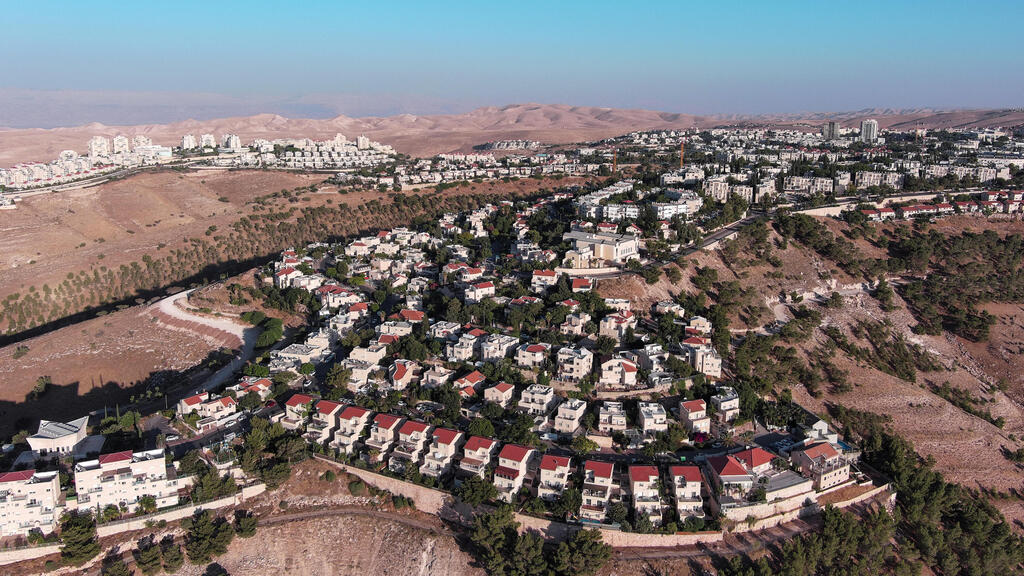
Families are expected to arrive first at farm outposts in temporary housing arrangements, gradually building communities until permanent homes, educational institutions and internal road networks are established.
“If 2025 was the year of a revolution in decisions and a shift in policy, 2026 will be the year of the ground,” a senior settlement official said. “You will see feet on the land.”
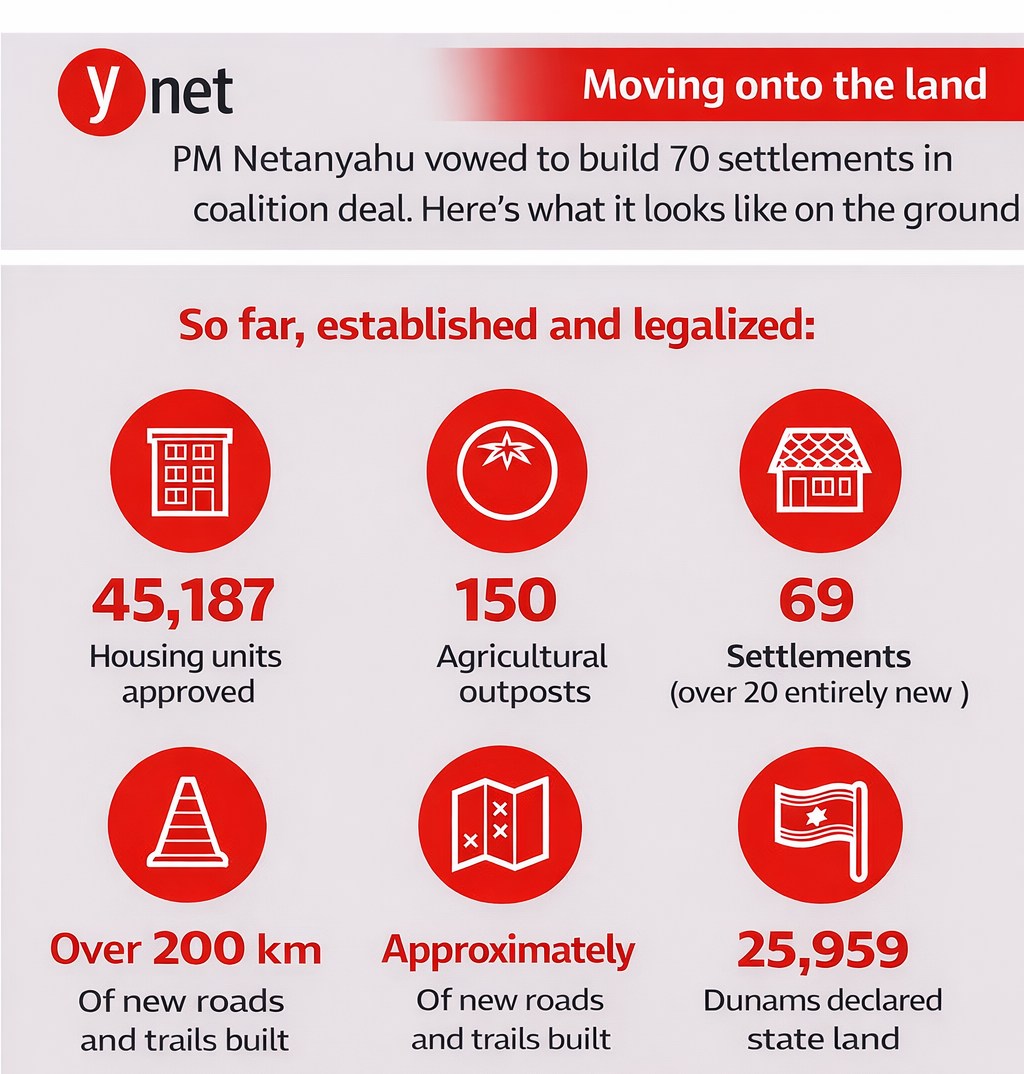
As part of coalition agreements, Prime Minister Benjamin Netanyahu committed to Smotrich and the Religious Zionism party to the establishment of 70 settlements. Many were already present on the ground and were retroactively legalized, but some are entirely new. So far, the government has approved the establishment or retroactive authorization of 69 settlements, more than 20 of them newly created.
Settlers describe recent developments in the northern West Bank as a revolution and the effective erasure of the 2005 disengagement law. From their perspective, not only has the law been nullified, but the current reality is even better than it was before the withdrawal.
Among the settlements slated for repopulation is Sa-Nur, which ynet revealed has already received approval to be resettled during the upcoming Purim holiday. The army is preparing access routes and relocating command posts to facilitate the move.
Settlement leaders also plan to establish a Jewish presence on Mount Ebal in the near future. These efforts extend beyond the northern West Bank. In the Jordan Valley, a planned community known as “City of Palms,” intended for a Haredi population, is advancing, alongside additional settlements designed to encircle the Palestinian city of Jericho.
Along Israel’s eastern border, officials in Strock’s ministry are leading what settlement figures describe as a major shift, citing security needs and a revised Israeli security doctrine following the October 7 terror attack.
Security considerations are being translated into physical expansion. Along the border and in enclaves, educational institutions are planned, including pre-military academies, Hesder yeshivas and agricultural outposts, some of which already operate near the frontier.
Students are expected to undergo training and, according to operational scenarios, provide armed protection for border communities. Among the projects under consideration is a Haredi Hesder yeshiva near the village of Auja.
These developments did not occur in a vacuum. They are the result of significant legislative and administrative changes advanced by the government and cabinet. Among them was a June 2023 decision eliminating the requirement for approval by the defense minister and prime minister at each stage of advancing housing units in the West Bank.
In addition, the civilian arm of the Civil Administration has undergone de facto civilianization, including the appointment of a civilian deputy, the transfer of dozens of legal authorities to civilian advisers and decision-making power over evacuations and construction approvals. The process is overseen by the Settlement Administration, a body established by Smotrich to implement the broader policy shift.
‘Sovereignty exists on the ground’
When the pieces are assembled, a strategic picture emerges that, critics argue, is suffocating Palestinian villages and severely undermining the prospect of a Palestinian state, while advancing de facto Israeli sovereignty.
Settlement sources say there was a missed opportunity to formally apply sovereignty in September of last year, when French President Emmanuel Macron promoted recognition of a Palestinian state. At the time, senior settlement figures say Israel came close to declaring sovereignty, a move they claim was halted only after comments by former President Donald Trump, who sought cooperation from Gulf Arab leaders to finalize arrangements related to Gaza.
“But sovereignty exists on the ground. It will come,” a settlement official said.
The establishment of new settlements follows detailed territorial analysis aimed at severing Palestinian territorial continuity. The northern West Bank is cited as the clearest example, with the renewed legalization of Homesh, Sa-Nur, Ganim and Kadim disrupting contiguity between Palestinian cities.
That model has since been replicated in the Jordan Valley. Jericho, which under the Fayyad Plan was envisioned as a key pillar of a future Palestinian state, is now being encircled by settlements including Kedem, Arava, Allenby, Yitav, western City of Palms, Beit Hogla and Nof Gilad, alongside Israeli agricultural outposts.
Within months, once several of these settlements are populated, settlement leaders say Jericho will stand isolated. A similar strategy is being implemented in the southern Hebron Hills, where a chain of agricultural outposts has been established from Carmel to Otniel, separating the Yatta and Samu areas from communities in the Negev.
A comparable ring of settlements is also taking shape around Route 443 and western Binyamin.
Taken together, settlement leaders argue that 2026 will be the year that determines the situation on the ground and, in their view, dismantles the vision of a Palestinian state.
The left-wing group Peace Now strongly condemned the developments.
“The data leaves no room for doubt. This is what annexation looks like,” the organization said in a statement. “Contrary to the will of the public and to clear statements by President Trump, the government is dragging Israel toward disaster, with enormous security and economic costs. This must be stopped.”