

Iranian officials acknowledged Monday that brief, informal encounters with U.S. representatives, including handshakes, could take place during ongoing negotiations, even as Tehran reiterated it will not relinquish uranium enrichment under any circumstances.
A closed session of Iran’s parliament convened in the morning with the participation of Foreign Minister Abbas Araghchi and Iranian Armed Forces Chief of Staff Maj. Gen. Abdolrahim Mousavi. The discussion focused on negotiations with the United States, against the backdrop of an expanding American military buildup in the region.
Gallery
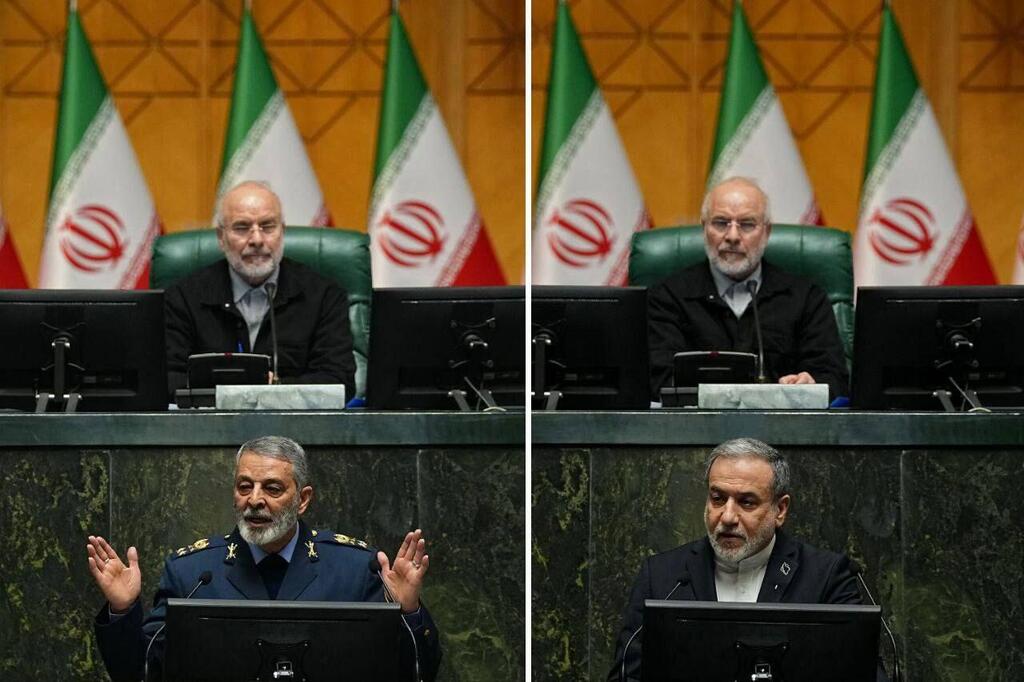
Iranian Armed Forces Chief of Staff Maj. Gen. Abdolrahim Mousavi and Foreign Minister Abbas Araghchi
According to Iranian reports, lawmakers were told the talks would be conducted indirectly, but could include short, informal meetings lasting several minutes between negotiating teams. These encounters could involve handshakes and coordination on red lines.
Iran’s Fars news agency reported that the joint appearance of Araghchi and Mousavi was intended to demonstrate that diplomacy and military preparedness are fully coordinated and represent two sides of the same strategy. During the session, participants were told Iran would not accept zero uranium enrichment under any scenario, calling enrichment “a right tied to the lives of future generations.”
Militant rhetoric continued to emerge from Tehran. Defense Ministry spokesman Reza Talaei said Iran is fully prepared to respond to any miscalculation by its enemies, claiming they had failed to undermine Iran’s Islamic identity, national strength or public security. He added that new defense equipment had been introduced, though details were withheld for security reasons.
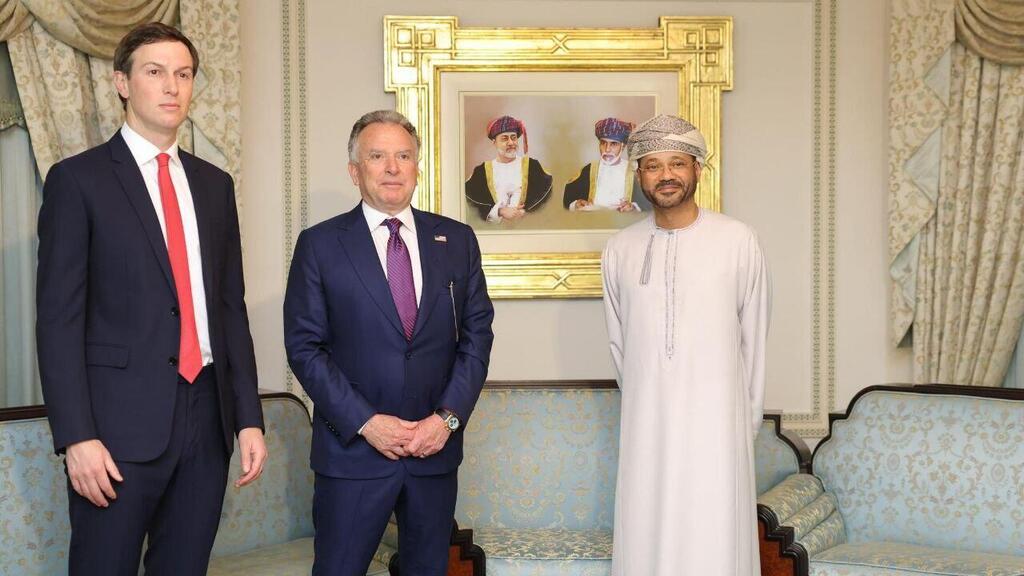
Jared Kushner and Steve Witkoff
(Photo: Oman Foreign Ministry)
Despite President Donald Trump’s assertion that Iran “very much wants a deal,” a new threatening billboard was erected Sunday in Tehran’s Palestine Square, featuring a map of central Israel and the phrase “Rain of missiles.” Araghchi also said Iran would not abandon its nuclear program, even if that meant war.
Talks between Iran and the United States were held last week in Oman under Omani mediation. While the discussions were largely indirect, Trump envoys Steve Witkoff and Jared Kushner were seen shaking hands with Araghchi and his aides. The talks focused mainly on setting conditions for negotiations and produced no breakthrough.
Washington agreed to another meeting but made clear it expects Tehran to present a substantive proposal rather than delay tactics.
Yedioth Ahronoth analyst Ron Ben-Yishai said a U.S.-Iran agreement could constrain Israel’s ability to act independently against Iran’s nuclear and missile threats, or place Prime Minister Benjamin Netanyahu in direct confrontation with Trump. He said Netanyahu is seeking to persuade Trump to narrow the scope of possible concessions in advance.
Ben-Yishai added that Iran is rapidly rebuilding its ballistic missile and drone capabilities, viewing missiles as its primary deterrent as long as it lacks nuclear weapons. Iran’s vast industrial infrastructure, spread across its large territory, has enabled it to resume production, manufacturing hundreds of ballistic missiles each month.
Israeli officials remain concerned that the Trump administration does not view Iran’s ballistic missile program as a red line. Netanyahu is expected to warn Trump that the missiles pose an existential threat to Israel and argue that Iran’s current weakness presents a historic opportunity to dismantle the axis of hostility.
Netanyahu is also expected to convey Israel’s readiness to assist the United States in any military action it chooses, presenting Israeli capabilities as a force multiplier. His upcoming meeting with Trump is seen as a counterweight to pressure from Qatar, Turkey, Iran and figures within the MAGA movement opposed to further US involvement in foreign conflicts.