

Israel has warned the United States that intelligence indicates Iran is considering using chemical weapons against its regional adversaries, a claim that has sparked sharply divided reactions among American officials, The New York Times reported Tuesday. While some officials expressed alarm, others reportedly viewed the intelligence with deep skepticism, questioning whether the warnings were intended to encourage renewed U.S. military action against Tehran.
According to the report, some officials in Washington believe Prime Minister Benjamin Netanyahu is attempting to persuade the Trump administration to resume major combat operations against Iran. Others consider the threat credible, particularly following recent intelligence warnings about possible Iranian attacks on American interests.
Gallery
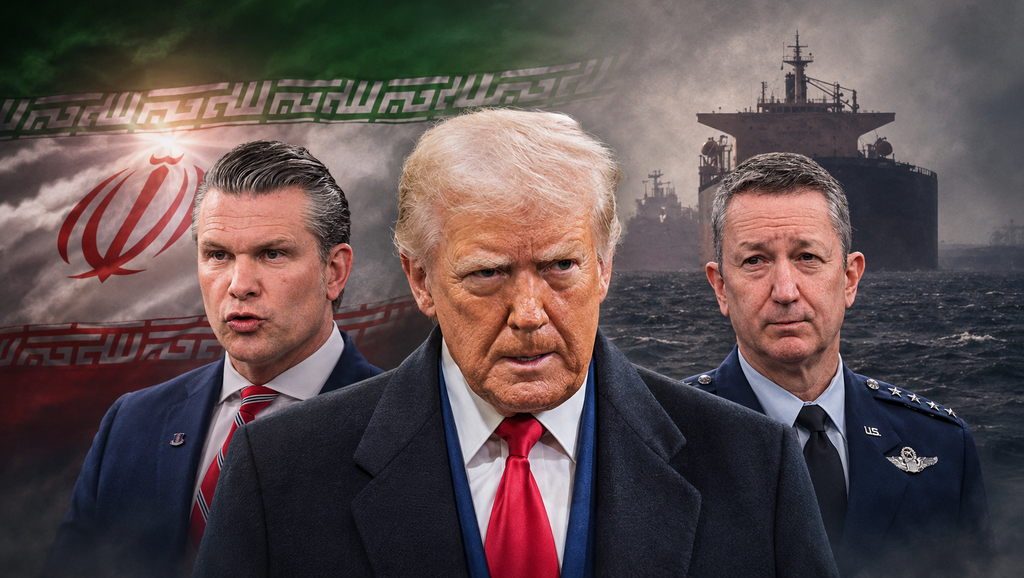
Donald Trump, Pete Hegseth, Dan Caine
(Photo: Anna Moneymaker/AFP, shutterstock, REUTERS/Stringer, AP Photo/Manuel Balce Ceneta )
Israel also has shared its assessments with officials in Gulf countries, several of whom questioned their credibility. According to a regional official cited by the Times, Israeli representatives presented their conclusions without supplying supporting evidence, leaving some Gulf governments unconvinced that Tehran was seriously preparing a chemical attack.
The newspaper also pointed to Netanyahu's precarious political position following last week's Israeli elections, which left him without a clear path to forming a government. Some analysts suggested that a security emergency could provide leverage to persuade opposition leaders to join his coalition.
Over the past two weeks, Israeli intelligence officials have reportedly described the chemical weapons threat as more urgent than Iran's nuclear ambitions. They believe Tehran is accelerating efforts to develop capabilities to deploy chemical agents through ballistic missiles or smuggle them into another country for an attack. Delivery by drone is also considered possible. However, experts noted that effectively dispersing chemical agents from a missile presents significant technical challenges.
Despite the warnings, Israel's Home Front Command has not undertaken unusual preparations for chemical warfare. Although emergency drills are taking place this week, chemical weapons scenarios have not been a major focus, and no widespread guidance has been issued to military personnel or civilians. The IDF declined to comment on the report.

Centrifuges in Natanz: Israel presented the threat of chemical weapons as more urgent than Iran's nuclear ambitions.
(Photo: AP)
American intelligence agencies have monitored Iran's chemical weapons activities for decades. A 2024 U.S. intelligence assessment warned that Tehran was likely continuing research into chemical and biological agents for offensive purposes. Dana Stroul, a former senior Pentagon official responsible for Middle East policy, said Iran had accumulated chemical weapons components over more than two decades without deploying them, although an existential threat could potentially change that calculation.
The White House declined to comment on the intelligence, while an American official said President Donald Trump would protect the United States and its allies against potential threats. The CIA also declined to comment, and Iran's UN mission did not respond to a request for comment.
Netanyahu's office said Israel was closely monitoring threats from Iran and remained prepared to respond to any danger posed by the Iranian regime.