

Two F-35I fighter jets first landed at Nevatim Airbase in December 2016. They were named “Adir” and numbered 901 and 902. Jet 902 was assigned to D., then a pilot in the founding team of Israel’s F-35 program. Nine and a half years later, the aircraft and its pilot are still together, like a fifth child, as he puts it.
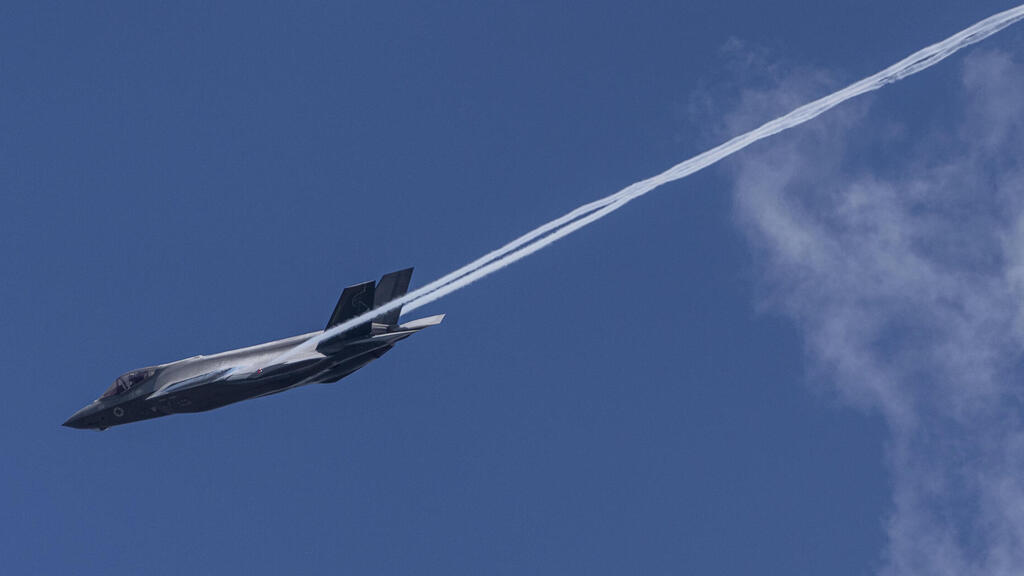
D., now a brigadier general, commands Nevatim Airbase, home to the aircraft that have become the spearhead of the Israel Air Force. On Saturday night, he and his jet took part in another bombing sortie over Iran. Additional missions were planned for later in the week.
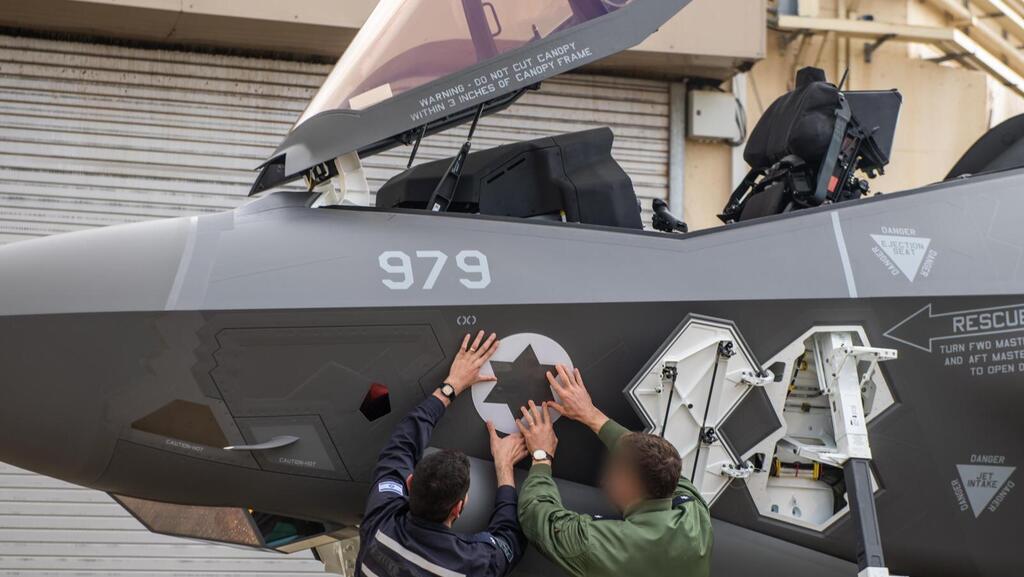
On Monday afternoon, the aircraft stood in its fortified shelter deep inside the base. A sign in front read: “Warning: Armed aircraft.”
“Since my wedding, I haven’t been photographed this much,” D. said with a disarming smile. “And always from behind.”
The smile, briefly, recalled Tom Cruise in “Top Gun.” But during the interview that followed in his office, there was little room for levity. This was the first interview of his life. The responsibility was evident. He spoke carefully, deliberately, measuring each word.
Reports of the strikes in Iran often sound effortless, almost cinematic, as if it were a one-sided war. Air Force jets destroy launchers, missile depots, nuclear facilities, auxiliary industries, Basij positions, military commanders and regime figures, then return safely to base.
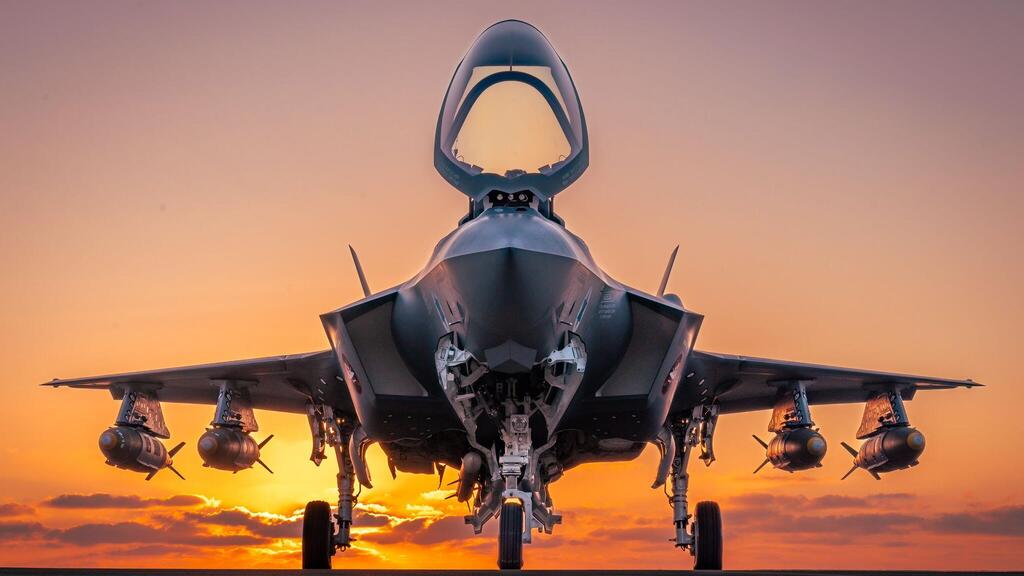
(Photo: IDF)
Against that image stand harsher realities: missiles and rockets still hitting civilian areas in Israel’s north, south and center; civilians killed; destruction left behind; fear, loss and fallen soldiers.
The war on the home front and in southern Lebanon is real. The war in the air can appear sterile, controlled, almost like a film. That impression is misleading.
Aircraft flying 2,000 kilometers east face two primary dangers: enemy fire and operational accidents. A third risk must be added, the possibility of mass civilian casualties on the ground. These are real threats. U.S. forces have encountered all of them. As of Tuesday afternoon, the Israeli Air Force had completed its missions without casualties, an achievement D. views as significant and underreported.
“We hoped their recovery would be slower,” he said. “After Operation ‘With a Lion,’ we knew we would have to return. The goal was to remove a threat. We removed it temporarily and began planning the next round.”
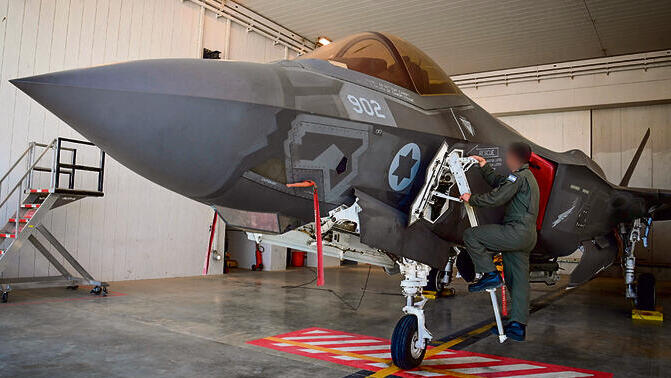
A Tom Cruise smile: Brig. Gen. D. and aircraft 902
(Photo: Herzel Yosef)
How do you explain the absence of incidents, I asked.
“Knock on wood,” he said. “We are in the middle of a war. This is not the time to sum things up. We strive for air superiority, but we do not have absolute superiority. They are constantly learning and improving. Despite their difficult situation, they continue to fire anti-aircraft systems.
“Even the lack of accidents is not trivial. It is not simple to keep hundreds of aircraft in the air, fly 2,000 kilometers and return safely.”
Is there a threat flying over countries such as Iraq and Jordan?
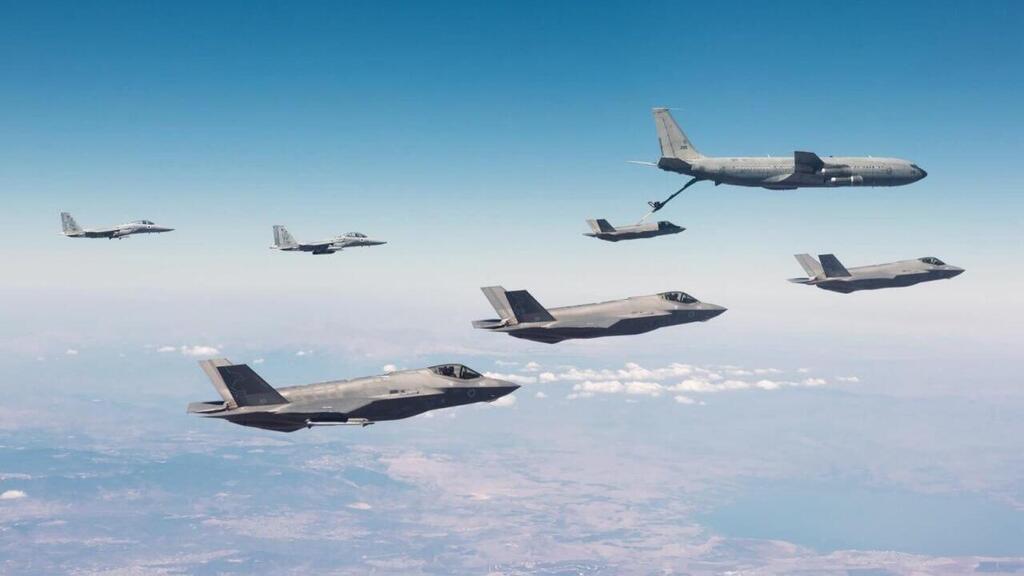
“Usually not,” he said. “Some areas concern us more than others. But when you fly such distances, there is always potential for malfunctions. Aerial refueling is complex. At night, it is even more complex.”
A pathfinder in the sky
How many of the thousands of munitions dropped during the war came from Nevatim?
“A very respectable amount,” he said. “We mainly strike in Iran, but also in Lebanon. And we don’t fly only to strike.”
What can the F-35 do that other fighter jets cannot?
“All the expectations we had from this aircraft have been met,” he said. “Even more. It delivers beyond what we expected compared to fourth-generation aircraft like the F-15 and F-16. It sees the battlefield better and knows how to share that information.”
How does that manifest?
“You could say it paves the way in the air for other aircraft. With the information it provides, they can strike in areas with higher threat levels.”
There has been debate in countries considering purchasing the F-35, including the United States and Israel, about its necessity, cost and reliability. Has the current war settled that debate?
“I think the decision to acquire it was very correct,” he said.
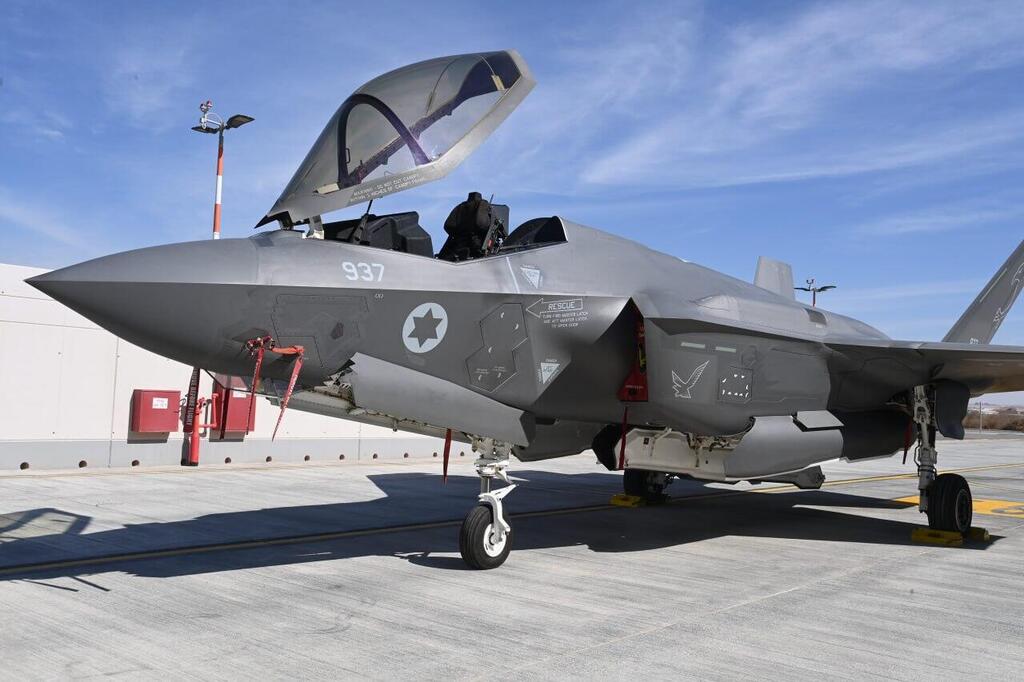
Nevatim Airbase
(Photo: Herzel Yosef)
Have you learned how to improve its performance?
“There are several ideas on the table,” he said. “We are working on them with the Americans.”
Reports have said U.S. aircraft are stationed at Israeli bases in the south. How does that cooperation work?
“Amazing,” he said. “At the strategic level, the cooperation gives Israel a clear advantage. Operationally as well. More aircraft, more munitions. Mass brings us closer to a decision. And capabilities, aerial refueling is one example. There are others. The plan is shared. Command and prioritization are shared. The division of labor is dynamic.”
What advantages do they bring, and what do we bring?
“They bring many capabilities we lack,” he said. “We know the Middle East well. Our F-35 was the first to gain operational combat experience in this theater. Every engagement advances learning. A few months ago, there was a conference at Ramstein Air Base in Germany for officers from countries that acquired the aircraft. They invited me to present what we have learned.”
If the Israeli Air Force were fully integrated into the U.S. military, would you notice a difference?
“We train together for years,” he said. “There are cultural differences.”
Are U.S. aircraft here maintained by Israelis or Americans?
“They brought their own teams,” he said. “We are happy to host them.”
Could Israel have waged the war against Iran alone?
“You know we prepared for an attack on Iran this summer without the Americans,” he said. “The idea was to begin with a blitz, fast, heavy mass, eliminating senior figures to create a sense of persecution and make it harder for the enemy to manage the campaign, while also hitting missile launch capabilities. That initial blitz would allow us to manage the war on our timeline. The plan was fully implemented.”
But there was no decisive victory, I said.
“We planned to damage the regime, the defense industry and the threat for years ahead,” he said. “After a month of fighting, we are exactly at that point. Unfortunately, there is damage to the home front. We are doing everything to reduce it. In any case, it is smaller than what we experienced in Operation ‘With a Lion.’”
(Photo: IDF)
What are the objectives now?
“To degrade their capabilities. Not only missiles and nuclear facilities, but the entire defense industry.”
Were you surprised by how quickly Iran restored its capabilities?
“Surprise is not the right word,” he said. “We hoped recovery would be slower. After the previous operation, we knew we would have to return. Iran is a large country. It has financial resources. The regime invests them in avenues that threaten Israel’s existence.”
Expectations soared after operations in both Iran and Lebanon.
“We did not want to see Hezbollah hitting northern communities,” he said. “But we were not surprised it joined the war.”
The Air Force contributed to the destruction in Gaza. Few homes remain habitable. Now there are voices calling for similar outcomes in southern Lebanon. How do you feel about your role?
“It’s all about cost,” he said. “If the cost is the lives of our soldiers, the Air Force will be there for them.”
Target banks and lessons
Looking at the targets in Iran, it is difficult to understand priorities, I said. Why reach nuclear facilities after a month? Why target Basij checkpoints? What is the value of eliminating individuals if successors may be more dangerous?
“We categorized targets in advance as essential, vital and important,” he said. “We strike minds, facilities and the surrounding industry.”
There have been claims that 90% of Iran’s system has been destroyed. Ninety percent of what?
“I am not familiar with that number,” he said. “Our goal is to degrade their capabilities for years. The critical time to realize gains is now. There are different types of deposits in the target bank. None are fully exhausted.”
(Photo: IDF)
Weather also plays a role, he added. “We fought in winter, a challenging period, and now in spring with unstable conditions. There are weather issues across the 2,000-kilometer route.”
Western militaries often focus too much on enemy casualty counts, I said, assuming losses will collapse the other side. Yet the enemy does not collapse.
“We learned that lesson the hard way on October 7,” he said. “Today we are a different army and a different country.
“Our sin on October 7, and when I say ‘our’ I include myself, was not focusing enough on the enemy’s capabilities. Intelligence focused more on what the enemy intended to do and less on what it could do.”
If Israel focused only on intentions and capabilities, it would live in perpetual war, I said.
“It’s never zero or one,” he replied. “To make the right decision at the right time, you need a strong military.”
Air forces do not win wars, I said.
“I am aware of that,” he replied.
Every flight to Iran takes many hours, including refueling. How do you manage?
“Don’t worry,” he said. “There are bags.”
After two and a half years of continuous war, do you see signs of fatigue?
“Everyone is in the war, not just pilots,” he said. “Maintenance crews, administrative staff. It is very challenging. I take my hat off to reservists who sacrifice their lives for the war. It is not simple for career soldiers either. As commanders, beyond operational missions, we are focused on endurance. It is not easy to find the right balance.”
As we spoke, a deafening roar filled the room.
“Ours or theirs?” I asked.
He smiled. “An F-35 taking off for a mission.”
What do you tell your wife and children when you return from a mission?
“When we connect with a partner’s refueling aircraft, the conversation is in English,” he said. “They have a unique communication code. It took us time to understand the slang. Each squadron has its own.”
What do you tell them about Iran?
“There is a lot of snow this time of year,” he said. “In the areas we operated, you see strikes, munitions and explosions. Beyond that, it is a beautiful country.”
Everyone calls you heroes now, I said. Not long ago, reserve pilots were called traitors.
After a pause, he said: “I agree. The term needs to be precise. We do what we trained to do. It’s our profession.”
And for that, they deserve full recognition.