


The United States has spent weeks working to secure approval for a UN Security Council resolution that would establish an international stabilization force in the Gaza Strip. A draft that surfaced highlights what Washington calls a reliable path to Palestinian self-determination and a future state, after the proposal was shaped with Arab countries based on President Donald Trump’s original plan. Late Thursday, however, Russia submitted its own resolution, threatening to delay the process because of its veto power.
Gallery
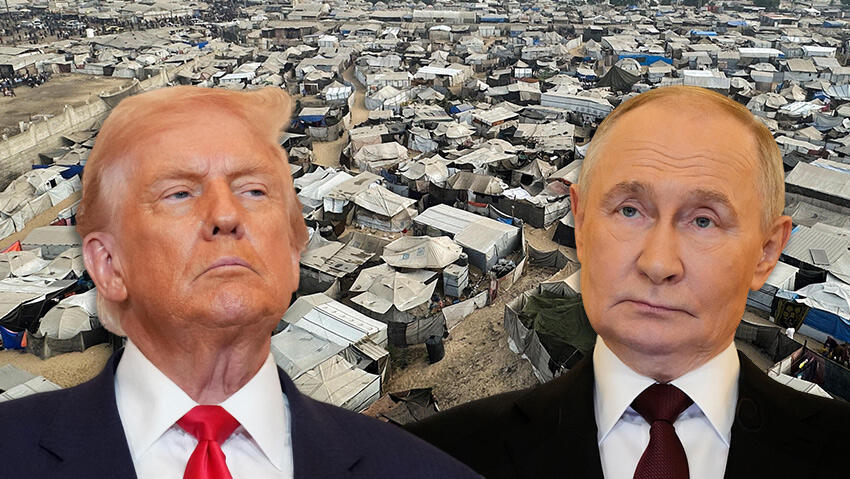
The Russian draft will at least delay the U.S. proposal. Putin and Trump
(Photo: Alexander Zemlianichenko/ AP, Andrew Harnik / Getty Images NA , Haseeb Alwazeer/ Reuters)
The American draft, built on Trump’s 20-point plan and his “declaration for lasting peace and prosperity,” signed at the Sharm el-Sheikh summit, states that “the United States will establish dialogue between Israel and the Palestinians to agree on a political horizon for prosperous coexistence.” Israeli officials say the new draft includes clauses that are “uncomfortable for Israel,” including language on a path to Palestinian statehood and a clause that denies Israel the ability to veto which countries may send troops to the stabilization force. Even so, the officials say the proposal maintains the framework of the ceasefire agreement approved in Jerusalem, although it is considered less favorable than the original.
Main changes in the US proposal
• A stronger demand for full implementation. A new sentence in the first section reinforces the call to implement the agreement fully, in all conditions: “… calls on all parties to implement it in full, including the ceasefire, in good faith and without delay.”
• Expanded language on Palestinian self-determination. The second section now says: “After the Palestinian Authority’s reform plan is carried out credibly and Gaza’s reconstruction progresses, conditions may be met for a reliable path to Palestinian self-determination and the establishment of a state.” This aligns closely with the plan presented by French President Emmanuel Macron for creating a Palestinian state contingent on reforms, after he and Mahmoud Abbas recently announced a joint committee to draft a constitution. The draft also adds that “the United States will conduct dialogue between Israel and the Palestinians to agree on a political horizon for peaceful and prosperous coexistence.”
• Terminology change on Gaza administration. The term “transitional government” in the original text has been replaced with “transitional directorate,” stating that the Peace Council announced by Trump under the “20 points” plan will serve as a transitional directorate in Gaza. The change brings the language in line with the wording of the 20-point document.
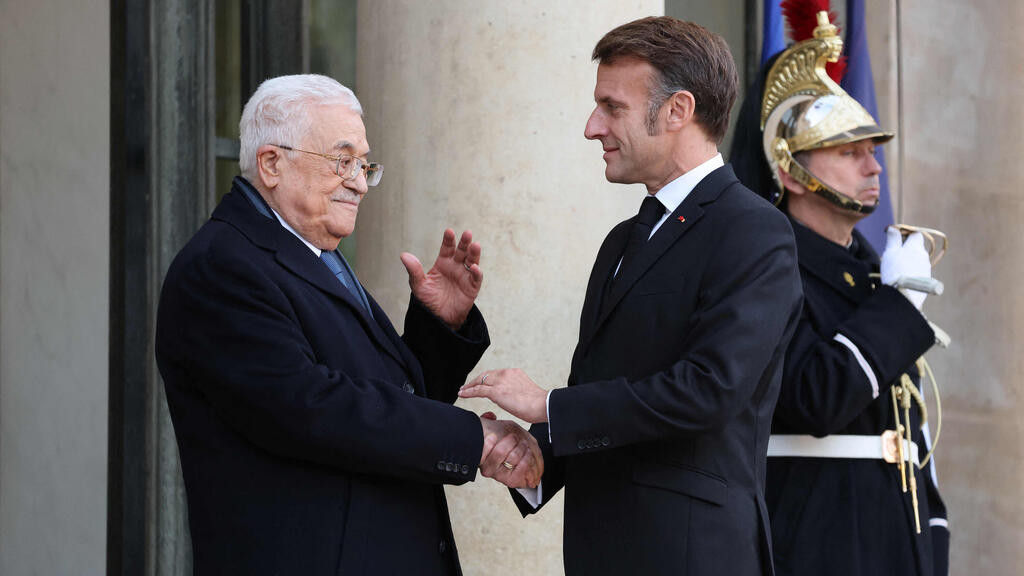
Macron and Abbas in France this week
(Photo: Ludovic Marin / AFP)
Russia’s counterproposal
During the night, Russia submitted its own draft, which Israeli officials describe as “bad.” Moscow effectively performed a diplomatic maneuver after Washington reached understandings with Arab states and aimed for a vote today. That will no longer happen because the Russian proposal will at least delay the process and is not expected to pass.
The Russian text omits Trump’s Peace Council entirely. It declares that “the situation in the occupied Palestinian territories poses a threat to regional peace,” repeats demands to uphold international law, calls on the UN secretary-general to explore options for an international force in Gaza, demands full and unhindered humanitarian access, rejects any demographic or territorial changes in Gaza and reiterates commitment to a two-state solution and to territorial continuity between Gaza and the West Bank under the Palestinian Authority.
Russia said it acted because it opposes the US draft and wants to “allow the Security Council to develop a balanced, accepted and unified approach to achieving a sustainable cessation of hostilities.”
A spokesperson for the US mission to the UN responded that “attempts to sow division now, when agreement on the resolution is in advanced negotiations, will have severe and tangible consequences for Palestinians in Gaza, and this is entirely avoidable. The cease-fire is fragile, and we call on the Security Council to unite and move forward to secure urgently needed peace.”
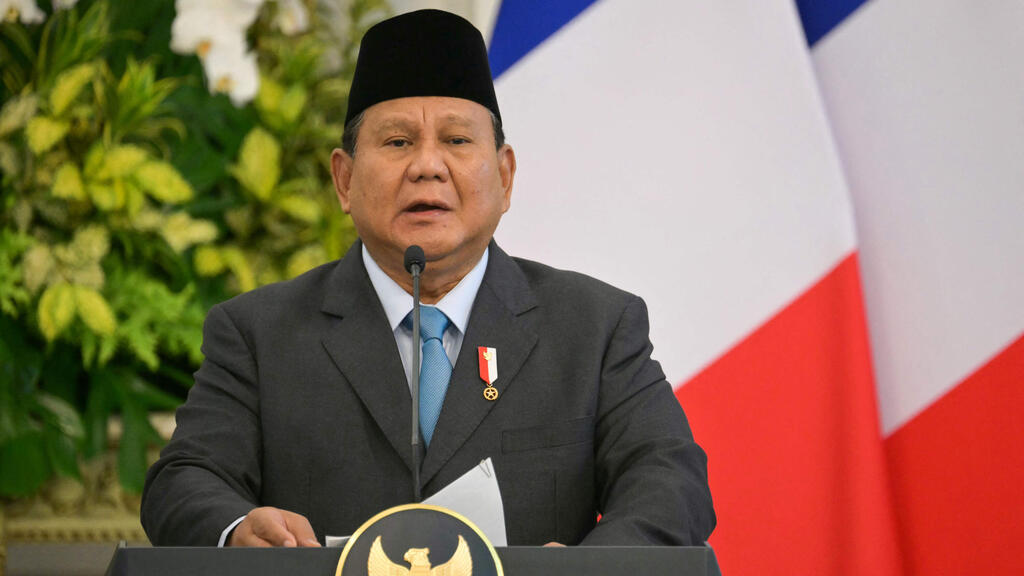
Not many countries are eager to join the international force. Indonesia’s president
(Photo: Bay Ismoyo / AFP)
Reluctance to join the stabilization force
More than a month after the ceasefire began, few countries have expressed willingness to send troops to the stabilization force. So far, only Indonesia and Azerbaijan are considering doing so, and Washington is pressuring other states to join. Many fear Hamas’ armed presence in Gaza and do not want to be seen as occupiers.
The United States is preparing to train foreign soldiers in countries neighboring Israel and is also drafting the force’s mandate, which is expected to include many provisions such as rules of engagement.
Uncertain timeline
A vote is currently scheduled for Monday, though a delay remains possible if consensus is not reached. American diplomats believe that in the end, all Security Council members will align with their draft, and Russia and China will abstain rather than use their veto power. The US estimates that it already has support from nine member states, the minimum required for passage.