

IDF Chief of Staff Lt. Gen. Eyal Zamir on Monday ordered a review of possible legal action and an investigation into the unauthorized disclosure of classified material used in the production of the film “NAZA,” which he accused of spreading “blood libels” and grave false allegations against Israeli soldiers and commanders.
The film features testimony from 24 male and female soldiers from the IDF’s Unit 8200 intelligence unit about military operations during the Gaza war. Some of those appearing in the film say they were involved in “war crimes and genocide” and discuss collateral-damage policies, bombardments and targeted killings.
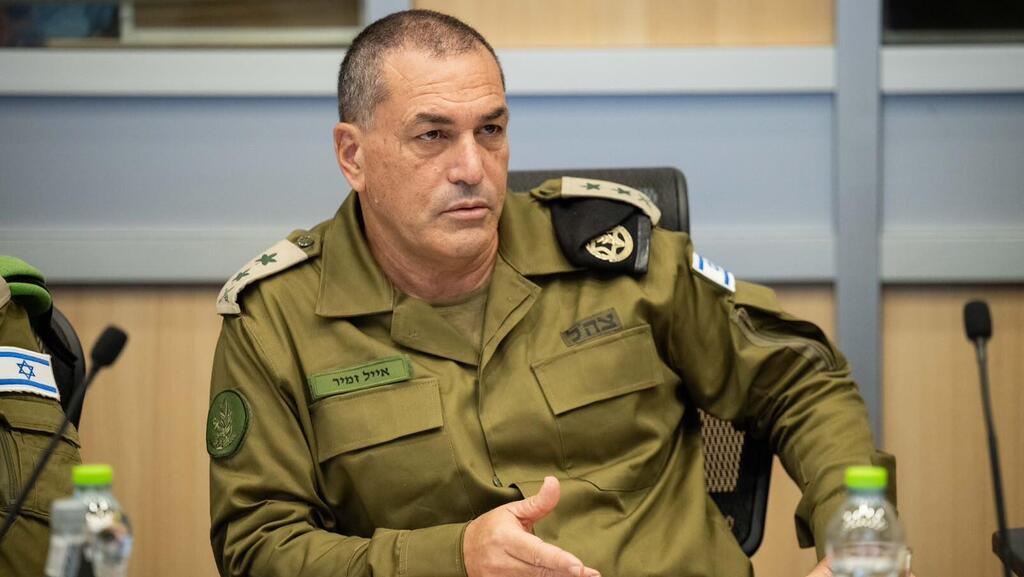
Zamir issued the directives following a senior-level consultation attended by Deputy Chief of Staff Maj. Gen. Tamir Yadai, Operations Directorate chief Maj. Gen. Itzik Cohen, Military Advocate General Maj. Gen. Itai Ofir, Israeli Air Force commander Maj. Gen. Omer Tishler, the commander of Unit 8200, Brig. Gen. A., IDF Spokesperson Brig. Gen. Effie Defrin and additional commanders.
At the conclusion of the meeting, Zamir ordered the establishment of a multi-agency, multidisciplinary team led by the head of the Planning Directorate to develop ways of confronting what the military describes as false allegations against the IDF and its soldiers, with assistance from experts in Israel and abroad. He also instructed the Military Advocate General to examine possible legal measures concerning the film and those involved in it.
The measures could extend to people interviewed in the film if they are found to have disclosed classified intelligence. If any of those involved are currently serving in the IDF or reserves, the military could examine whether action should be taken against them and what form it should take.
The IDF will separately examine information-security aspects of the production, including the possible involvement of individuals in the unauthorized disclosure of classified material used in making the film.
“Based on what has been published thus far, this is not a film offering criticism of the IDF, nor is it an attempt to establish the truth,” Zamir said. “It is based on blood libels, deliberate distortions of reality, and grave, false accusations against IDF soldiers and commanders.”
“This is an attack on the State of Israel, not only on the IDF. It adopts the narratives of those who hate Israel, it defames our soldiers and commanders, and seeks to portray the IDF as deliberately acting unlawfully. This is a dangerous attempt to deny us the legitimacy to defend ourselves against the worst of our enemies—and, in doing so, to place IDF soldiers and commanders at genuine risk.”
“We will not allow IDF soldiers to be made targets through lies and blood libels,” he added. “Such an attempt must be confronted decisively, using every tool at our disposal—legal, command, and public diplomacy.”
According to the IDF, Zamir said the military operates in accordance with international law, its ethical code and values and is at the forefront of efforts to mitigate harm to uninvolved civilians. He also called for a broad national and international public diplomacy campaign involving the Foreign Ministry, Justice Ministry, National Public Diplomacy Directorate and other government bodies.
Military officials said the film was causing significant damage to the IDF’s activities abroad, with particular concern surrounding Unit 8200. The intelligence unit maintains professional ties with foreign counterparts, while many of its veterans have international business connections with implications for both Israel’s economy and national security, officials said.
Before Zamir’s announcement, Defrin asked directors Yuval Abraham and Rachel Szor to allow the IDF to see the film in full so the military could respond to its allegations. He said the film had not yet been released in its entirety but that its promotional material contained what he described as “serious and false claims” about the IDF and its personnel.
“The claims presented in the promotional material are incorrect, and some are presented in a distorted, misleading manner detached from the reality on the ground,” Defrin said. He invited the filmmakers to provide the IDF with access to the full film so it could address each allegation “in a substantive, professional and fact-based manner.”
Film sparks controversy after Venice win
“NAZA” won a critics’ prize at the Venice Film Festival and drew an ovation reported to have lasted nearly 25 minutes, making it one of the festival’s most discussed films. Produced by Britain’s Guardian newspaper and filmed in part on Tel Aviv rooftops during the war, it presents testimony alleging deliberate policies of destruction and killing, including the use of artificial intelligence.
Its directors, Abraham and Szor, have rejected criticism from Israeli officials and argued that the film documents a system revealed through testimony from people who participated in it.
After receiving the award in Venice, Abraham criticized Israeli politicians and journalists who, he said, were attacking the film without having watched it. “So much is being done in order not to look at reality,” he said.
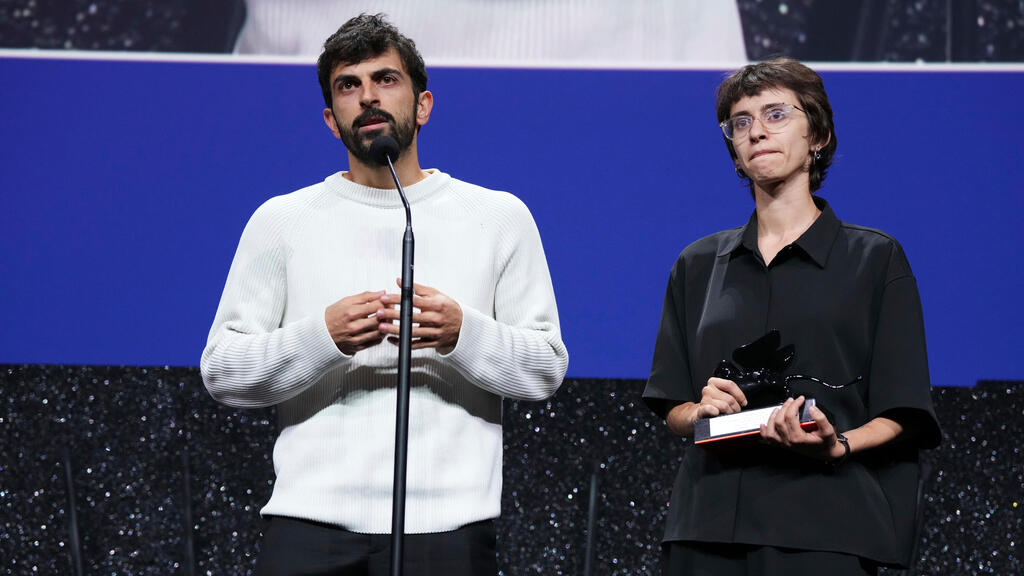
Yuval Abraham and Rachel Szor
(Photo: Scott A Garfitt/Invision/AP)
The film has generated strong condemnation in Israel. Culture Minister Miki Zohar accused its creators of treason and said he would seek to strip them of their citizenship, despite there being no legal precedent for such a move in these circumstances. The film was produced in Britain and received no funding from Israel’s Culture Ministry, Israeli film funds, broadcasters or other Israeli public sources.
Abraham and Szor previously worked together on “No Other Land,” alongside Palestinian filmmakers Basel Adra and Hamdan Ballal. The documentary, which followed Palestinian residents of Masafer Yatta in the southern West Bank as they fought demolitions and displacement, won the Academy Award for best documentary feature in March 2025.
Szor, 32, served as the principal cinematographer and one of the editors of “No Other Land,” working through roughly 2,000 hours of footage combining professional documentation with videos filmed over the years by local residents. Abraham, 31, is an Arabic-speaking journalist and activist who briefly served in IDF intelligence before leaving the military.
With “NAZA,” the two are appearing together more prominently in interviews and press events. Szor has said the film is less concerned with determining what personally motivated individual interviewees to speak than with examining how the system they describe operated.