


China has privately urged Iran to help rein in Yemen’s Houthis after Saudi Arabia appealed to Beijing for help as the Iran-backed group’s rapid advances raised new concerns over Saudi oil exports and shipping through the Red Sea, three Iranian sources familiar with the discussions told Reuters.
Riyadh approached China after Houthi forces advanced along Yemen’s Red Sea coast and around the strategic Bab el-Mandeb Strait, one of the world’s most important shipping chokepoints. The gains have left Saudi export routes increasingly exposed at a time when shipping through the Strait of Hormuz is already severely disrupted by the wider regional war.
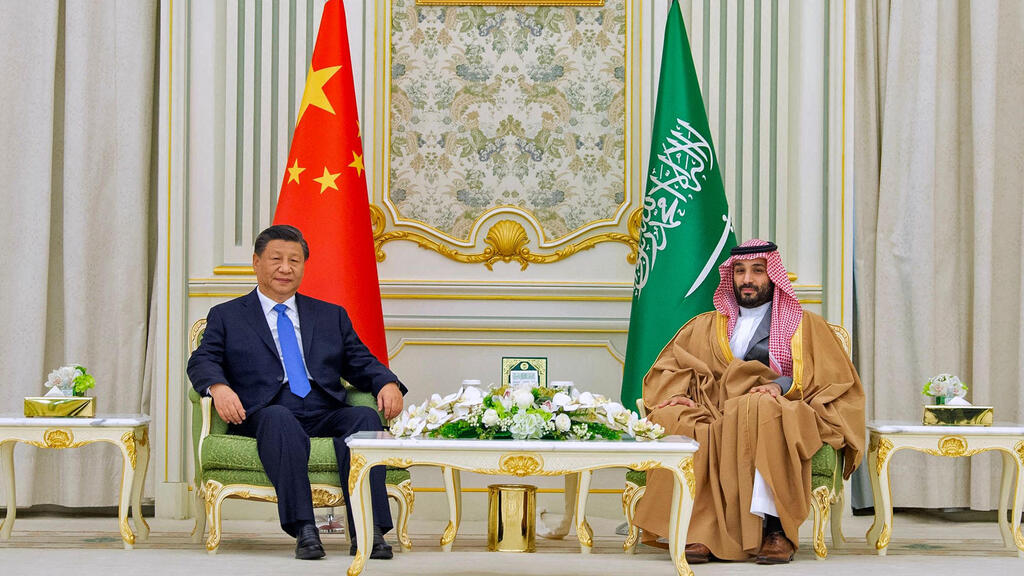
Chinese President Xi Jinping visits Saudi Arabia, hosted by Crown Prince Mohammed bin Salman
(Photo: AFP/ SAUDI ROYAL PALACE / BANDAR AL-JALOUD)
China has publicly called for restraint, dialogue and the restoration of safe navigation, but the private message to Tehran went further, the sources said. Beijing wants Iran to use its influence over the Houthis to prevent the fighting from spreading further across energy routes on which China depends.
The three Iranian sources, who spoke on condition of anonymity, did not say how the Chinese message was delivered or whether it was raised during Iranian Foreign Minister Abbas Araghchi’s visit to Beijing on Wednesday. Chinese Foreign Minister Wang Yi met Araghchi that day and publicly called for steps to restore safe international shipping and stabilize regional energy supplies.
Tehran responded that peace and stability in the region depend on ending what it described as the US-Israeli war against Iran, according to the sources. They said Beijing did not explicitly threaten economic pressure if Iran failed to act.
Asked by Reuters about the diplomatic effort, China’s Foreign Ministry said Beijing did not want regional tensions spilling further into Yemen and the Red Sea and warned that growing instability served no party’s interests. It called for countries’ sovereignty and security to be respected, for critical civilian infrastructure to be protected and for disputes to be resolved through dialogue and negotiations. Iran’s Foreign Ministry and the Saudi government’s media office did not immediately respond to Reuters requests for comment.
Oman ceasefire channel reportedly explored
In a parallel diplomatic effort, Hezbollah-affiliated Al Mayadeen reported, citing a senior source, that Saudi Arabia had asked Oman to approach the Houthis about a two-week ceasefire.
Houthis enter Al Mokha chanting ‘Death to America, death to Israel’


According to the report, talks during the proposed pause would focus on what the Houthis call the “humanitarian issue,” including their demand that Saudi Arabia lift its naval blockade of Yemen. The source claimed that an agreement on those issues could be announced during the truce. The report did not cite public confirmation from Saudi or Omani officials.
Oman has played a central mediation role in Yemen for years, maintaining channels with the Houthis while also working with Saudi Arabia and international mediators seeking to contain renewed fighting.
One killed by falling drone debris in Saudi Arabia
The diplomatic push came as attacks continued inside Saudi Arabia. Saudi Civil Defense said a Yemeni resident was killed Thursday when debris from an intercepted Houthi drone fell in Taif. A Saudi citizen and a Pakistani resident were injured, with the Pakistani national reported in critical condition. Buildings and vehicles were also damaged.
The incident followed several days of intensified missile and drone attacks. Saudi authorities said earlier this week that 13 civilians had been wounded in Houthi strikes on Khamis Mushait, Abha and Taif, while seven homes and two vehicles were damaged.
Saudi air defenses also said they intercepted a Houthi drone south of Mecca on Tuesday before it entered restricted airspace over the holy city. The Houthis denied targeting Mecca.
Why China has leverage
Saudi Arabia’s appeal to Beijing reflects China’s unusual position in the crisis. It has been Iran’s largest trading partner for more than a decade and remains the main buyer of Iranian crude, giving it economic influence over Tehran while maintaining close ties with Gulf Arab states.
Chinese purchases accounted for more than 80% of Iran’s seaborne oil exports in 2025, averaging about 1.4 million barrels a day, according to data from commodities analytics firm Kpler cited by Reuters. China also brokered the 2023 agreement that restored diplomatic relations between Iran and Saudi Arabia after years of hostility.
Beijing now faces a more immediate economic concern. Houthi advances around Bab el-Mandeb threaten a route linking the Red Sea to the Gulf of Aden and the Indian Ocean, while disruption at the Strait of Hormuz has already complicated the flow of Middle Eastern energy to Asian markets.
China has previously sought guarantees for its own shipping as tensions around Yemen intensified. Chinese state-controlled tanker operators have also avoided both Hormuz and Bab el-Mandeb during the current crisis, according to Reuters reporting last month.
Whether Tehran will act on Beijing’s request remains unclear. Reuters’ Iranian sources said China’s interests carry significant weight in Tehran but remain only one factor among competing military, political and economic considerations.