


Maj. Gen. Avi Bluth, head of the IDF Central Command, learned that Defense Minister Israel Katz intended to replace him while he was taking part in an operational discussion on counterterrorism policy in the West Bank.
At the time, Bluth, senior command officers and members of the IDF’s West Bank Division were reviewing plans aimed at dismantling terror organizations and presenting the central concept for continued military activity.
Gallery
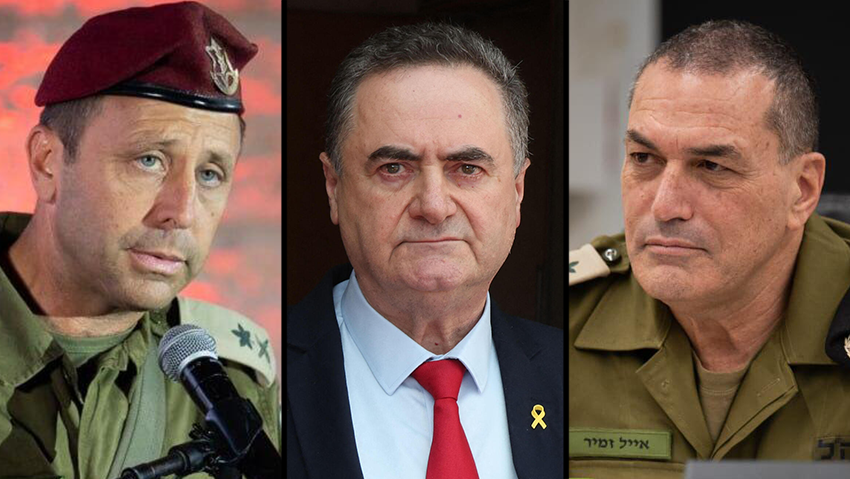
Maj. Gen. Avi Bluth, Defense Minister Israel Katz, IDF chief Eyal Zamir
(Photo: Menahem Kahana / AFP, IDF)
Inside Central Command headquarters, the announcement caused immediate shock.
Those present had not expected the public dispute between Katz and Bluth over an administrative detention order against Tal Yinon Dardik, who is suspected of abusing Palestinians, to culminate in the defense minister announcing the replacement of a senior IDF officer during a live television interview.
The authority to remove senior IDF officers rests with the chief of staff, and the military quickly distanced itself from Katz’s announcement.
Security officials told ynet that, as far as Bluth was concerned, nothing had changed.
“It is clear to the general that he remains in his position,” one security official said. “He also understands the atmosphere. We know where we live.”
“The command is continuing its work as usual, but there is no doubt that this has created shockwaves throughout the command. After all, this was a statement by the defense minister.”
Confusion inside the command
Officials in Central Command said they had expected further confrontation over Dardik’s arrest.
Katz had already criticized Bluth two weeks earlier, but the dispute appeared to be moving toward a resolution, or at least an effort to calm tensions.
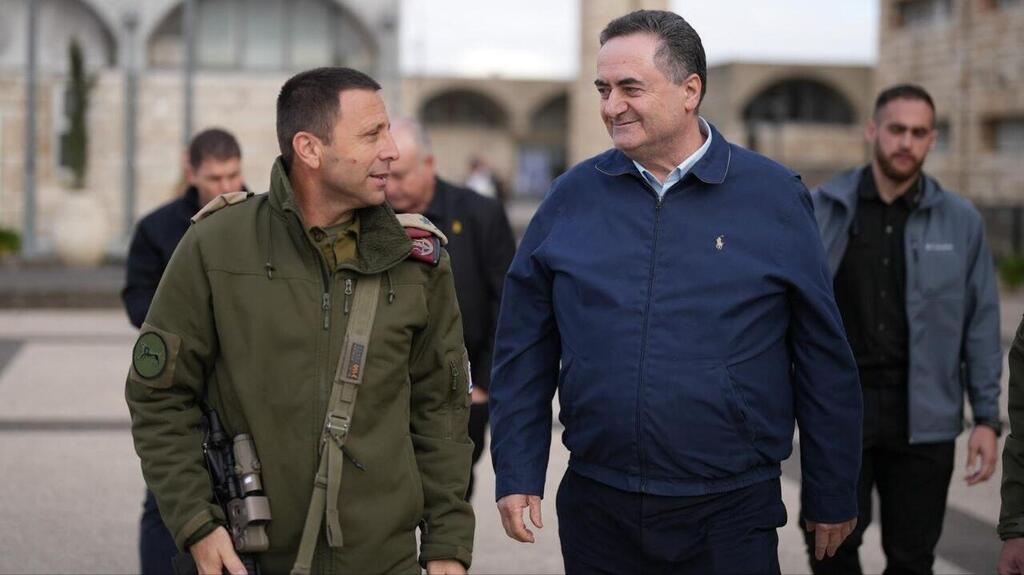
Bluth and Katz
(Photo: Elad Malka, Defense Ministry)
Instead, Katz’s televised announcement caught officers by surprise.
Reserve officers serving in the command also began asking what had happened.
“What is going on with Bluth?” one asked. “I don’t understand. Is he leaving?”
The announcement therefore created uncertainty not only at headquarters but among forces in the field.
Bluth last week challenged a decision related to the detention order issued against Dardik for allegedly violating restrictions imposed on him.
Such orders can restrict or deny certain rights when authorities believe an individual poses a danger to the public.
Katz claimed that Bluth had appealed his decision not to extend the order, but the timeline presented by military officials suggests otherwise.
According to the IDF, the appeal submitted to prosecutors concerned the alternative detention arrangement for Dardik and the validity of the administrative order, not whether it should be extended, an issue that had not yet been formally considered.
The military also said the appeal had been submitted before Katz announced that the order would not be extended.
In practice, Central Command and the IDF took no further action regarding Dardik’s detention after Katz’s announcement.
A politically charged confrontation
The dispute between Katz and Bluth has already triggered a wider political uproar.
Beyachad party chairman Naftali Bennett said overnight Sunday that “the government is against its soldiers,” while former IDF chief of staff Gadi Eisenkot wrote that the government was “unfit to safeguard the country’s security.”
Katz announced his intention during a live interview on Channel 14’s “The Patriots,” shortly before the Likud primaries.
He said Bluth would be replaced by Maj. Gen. Dado Bar Kalifa, head of the IDF Personnel Directorate, and claimed that the appointment had been made on the recommendation of the chief of staff.
The IDF Spokesperson’s Unit contradicted that assertion, saying Katz’s remarks had not been coordinated with the chief of staff.
Bluth took office in July 2024, while his predecessor served for three years, meaning the announcement came significantly earlier than expected.
“After finishing the job of dismantling the IDF from the outside and guaranteeing mass draft evasion, the October 7 government has decided to dismantle the IDF from within and guarantee complete chaos,” Bennett wrote.
“I say tonight to every citizen of Israel and to every IDF soldier and commander, in compulsory service and the reserves: Hold on tight. Reinforcements are on the way. Soon we will replace them and, together, we will repair the damage.”
Eisenkot also sharply criticized Katz.
“The spectacle that took place on ‘The Patriots’ was an unprecedented low in relations between the political and military leadership, and an improper and illegal act,” he said.
“The State of Israel is not private property, and the IDF is not a tool in the primary campaigns of politicians who have lost their way.”
Yoaz Hendel called Katz’s announcement “a disgraceful and irresponsible act that exceeds his authority.”
“The authority to appoint IDF major generals rests solely with the chief of staff,” Hendel said. “This is not how one treats a senior officer who has dedicated his life to Israel’s security.”
“Commanders are not tools in a political game, and the IDF is not a public relations stage for a primary campaign.”
Settler leaders defend Bluth
Katz’s announcement also drew angry reactions from settler leaders in the West Bank.
Shai Alon, head of the Beit El Local Council, called on Katz to reverse the decision.
“The defense minister’s announcement live on television, made unexpectedly and without coordination with the chief of staff, is a serious mistake that harms the settlement enterprise and the fight against terrorism,” Alon said.
“Especially at a time when Judea and Samaria faces major security challenges, Avi Bluth has demonstrated leadership, composure and full commitment to the security of Israeli civilians.”
He said dismissing a senior IDF commander during wartime showed a failure to understand the security reality.
Alon, who said he had known Bluth for years, described him as a principled and professional officer who had consistently supported security and settlement activity in the West Bank.
“Katz, if you are missing a few votes in the primaries, tell me and I will make them up for you,” Alon said. “I have approached the prime minister to remove this disgrace.”
Davidi Ben Zion, deputy head of the Samaria Regional Council, said no politician or previous commanding general had done as much for the settlement enterprise as Bluth.
“The settlement movement in Judea and Samaria must salute Maj. Gen. Bluth,” he said, citing his support for farms, new communities and security efforts.
Retired Brig. Gen. Ofer Winter, considered a possible right-wing political candidate, said the manner in which Bluth was removed had severely damaged public trust.
“The discussion here is about authority and responsibility,” Winter said.
“The Central Command chief is the legal sovereign’s representative in Judea and Samaria. Avi Bluth is one of the generals who has done more than almost anyone to advance sovereignty and defend the settlement enterprise.”
“A defense minister in the State of Israel does not fire a general on live television,” he added. “If you have criticism, summon him for clarification. This is not the way. This is not how public trust is built.”
A senior settler official, speaking anonymously, mocked those who had campaigned against Bluth.
“Congratulations to everyone who helped the defense minister, in a populist move, remove one of the best commanding generals to have served here in recent decades in matters of security and settlement,” the official said.
“You succeeded. We will still miss him.”
Coalition voices welcome the move
Others, particularly within the governing coalition, supported Katz’s decision.
Otzma Yehudit lawmaker Limor Son Har-Melech wrote on X that Bluth had failed in his role.
“Instead of focusing all his forces on fighting terrorism, he chose to turn the hilltop activists and pioneers into the enemy,” she wrote.
“Under his command, settlers were persecuted time and again while Arab terrorism continued to intensify.”
She also accused Bluth of acting independently and pursuing policies that contradicted those of the elected government.
“In a democratic country, a commanding general does not set policy. His job is to carry it out,” she said.
“Anyone who wants to determine the State of Israel’s security policy is welcome to take off his uniform and run for the Knesset. As long as he serves in the IDF, he is obligated to follow government policy, not his personal worldview.”