

Israeli billionaire Yakir Gabay was named overnight Saturday as one of the members of the “Gaza Executive Board,” a new international body tasked with helping to manage postwar Gaza, which will operate alongside the “Board of Peace” led by U.S. President Donald Trump.
Gabay, a businessman with extensive investments in high-tech, real estate and finance, resides in Cyprus and the United Kingdom.
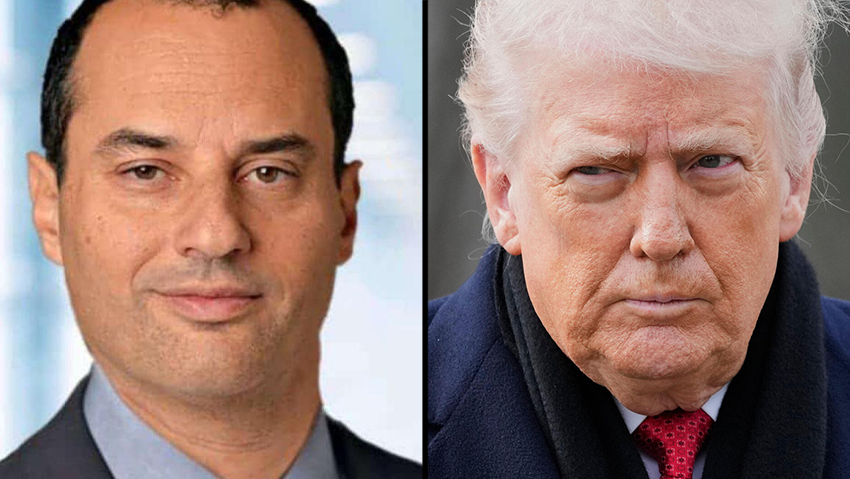
Gabay’s ties to the White House date back to the Biden administration and deepened under President Trump. In November 2023, just a month after the October 7 Hamas-led massacre, he joined several business leaders from the U.S., Europe and the Arab world in presenting a vision for postwar Gaza. The proposal slowly gained traction behind the scenes.
The breakthrough came when Trump unveiled his 20-point plan. Shortly after, the White House approached Gabay with an offer to join the Gaza Executive Board. While the invitation didn’t come as a surprise, Gabay was deeply moved. Though proud of his Israeli identity, he emphasized that his appointment reflects his role as an international businessman, not as a representative of Israel.
Gabay, 59, was born in Jerusalem to a family deeply rooted in Israel’s legal establishment. His father, Meir, served as director general of the Justice Ministry and later as civil service commissioner; his mother, Yemima, held senior roles in both the State Attorney’s Office and the Justice Ministry.
Gabay began his career in capital markets and, by the mid-1990s, was CEO of Bank Leumi’s investment banking arm. In 2004, he entered the Berlin real estate market, a venture that steadily expanded. His net worth is estimated at $4.1 billion.
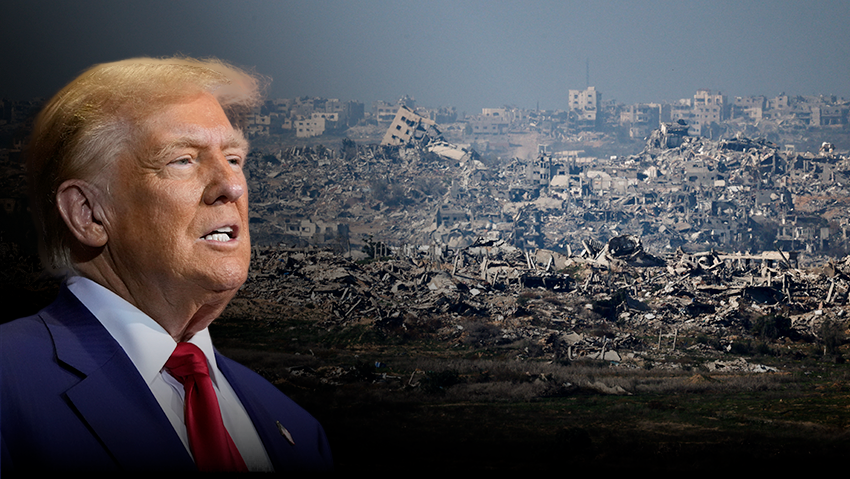
דונלד טראמפ
(צילום: AP Photo/Alex Brandon, REUTERS/Amir Cohen)
Like the other members of the executive board announced by Trump, Gabay will be required to visit the Gaza Strip and coordinate with a Palestinian technocratic council.
Trump also appointed Turkish Foreign Minister Hakan Fidan and senior Qatari official Ali Al-Thawadi to the Gaza Executive Board. Saudi Arabia will also be involved. While it will not have an official representative on the board, it is expected to play a role in Gaza’s reconstruction. A representative from the United Arab Emirates is also participating in the council.
“It is a great honor for me to be appointed by U.S. President Trump as a voluntary board member of the Board of Peace for Gaza," Gabay commented on the appointment.
"I thank President Trump, Steve Witkoff and Jared Kushner for the trust they have placed in me. I intend to work with my fellow board members to implement the U.S. president’s vision of development, construction, prosperity and a free economy in the Gaza Strip, and to expand the Abraham Accords to additional countries. The complete disarmament of Hamas is a precondition for implementing the development plan. We will continue our utmost efforts to bring Border Police officer Ran Gvili home for burial in Israel.”
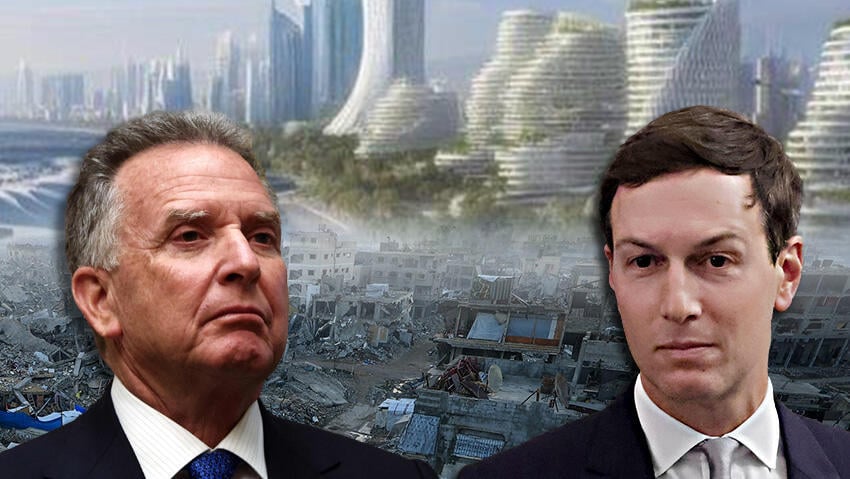
Steve Witkoff, Jared Kushner
(Photo: REUTERS/Dawoud Abu Alkas, REUTERS/Evelyn Hockstein, AP Photo/Terry Renna)
The Board of Peace will focus on broader peace initiatives beyond Gaza and is expected to be composed primarily of Americans. The Gaza Executive Board, while also U.S.-led, will include representatives from across the Middle East. A third body, made up of heads of state, is expected to be announced in the coming days.
Israel already preparing for military action against Hamas
Trump has invited dozens of world leaders to join the newly announced Board of Peace, including Turkish President Recep Tayyip Erdoğan, Egyptian President Abdel Fattah el-Sisi, Qatari Prime Minister Mohammed Al Thani, Indonesian President Prabowo Subianto, Argentine President Javier Milei and leaders from Italy, Germany, Australia, the United Kingdom, Canada and Morocco. As with the Gaza Executive Board, Trump showed little regard for Israel’s objections to the inclusion of Turkey and Qatar.
Under a clear understanding between Prime Minister Benjamin Netanyahu and Trump, if Hamas refuses to disarm, both Israel and the international stabilization force will be authorized to do so by force. With little faith that Hamas will disarm voluntarily—especially as the group is believed to still hold some 60,000 AK-47 rifles in Gaza—Israel is already preparing for military action. Any operation would be coordinated with the United States. Hamas will first be given a chance to disarm on its own.
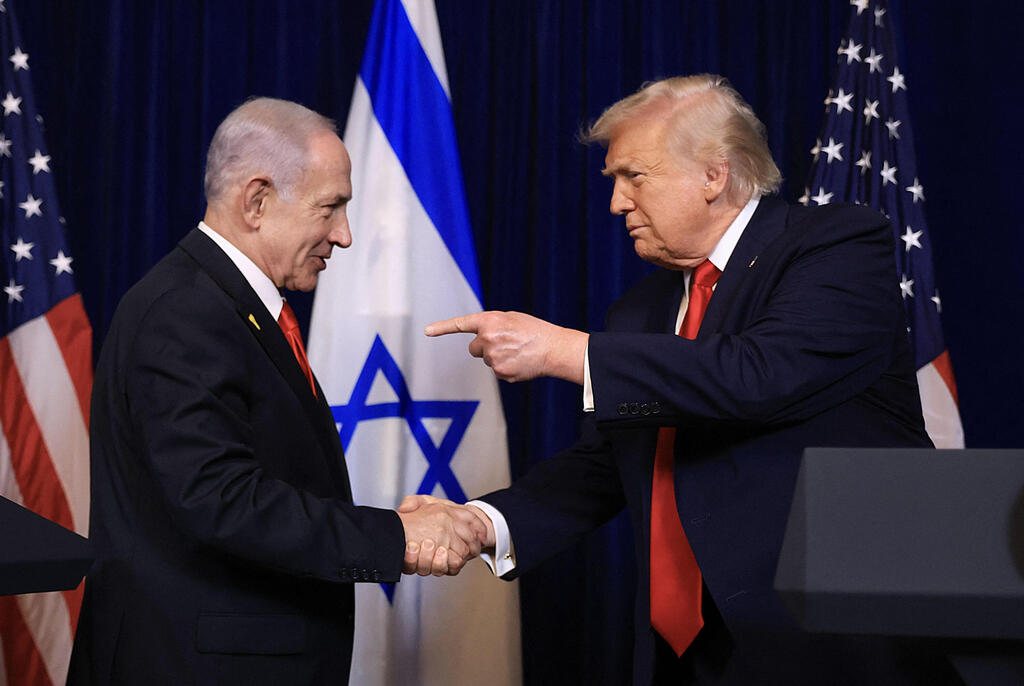
Benjamin Netanyahu and Trump
(Photo: JOE RAEDLE / GETTY IMAGES NORTH AMERICA / AFP)
In his invitation letter to world leaders, Trump wrote that the goal is “to restore credible governance and ensure sustainable peace in conflict zones,” adding that peace requires “pragmatic judgment, reasonable solutions and the courage to break from failed approaches and institutions.” A more effective body, he said, is needed to achieve that goal.
According to the letter, the Board of Peace will bring together a coalition of nations committed to cooperation. Each leader’s term will be limited to three years, unless their country contributes more than $1 billion to the council’s budget, in which case membership will be open-ended.
The budget will fund the board’s broader mission, which extends beyond Gaza to other conflict zones worldwide, positioning it as a kind of alternative to what Trump called the “failed” United Nations.
Sources familiar with the matter say Trump’s announcements are the result of intensive work at the White House over the past four months, led by a team working around the clock. Those sources also described the establishment of the Palestinian technocratic committee as a major achievement, noting that no country in the region, including Israel, vetoed its members. Trump’s son-in-law Jared Kushner, one of the architects of the initiative, had initially described the formation of the technocratic council as “an impossible task.”
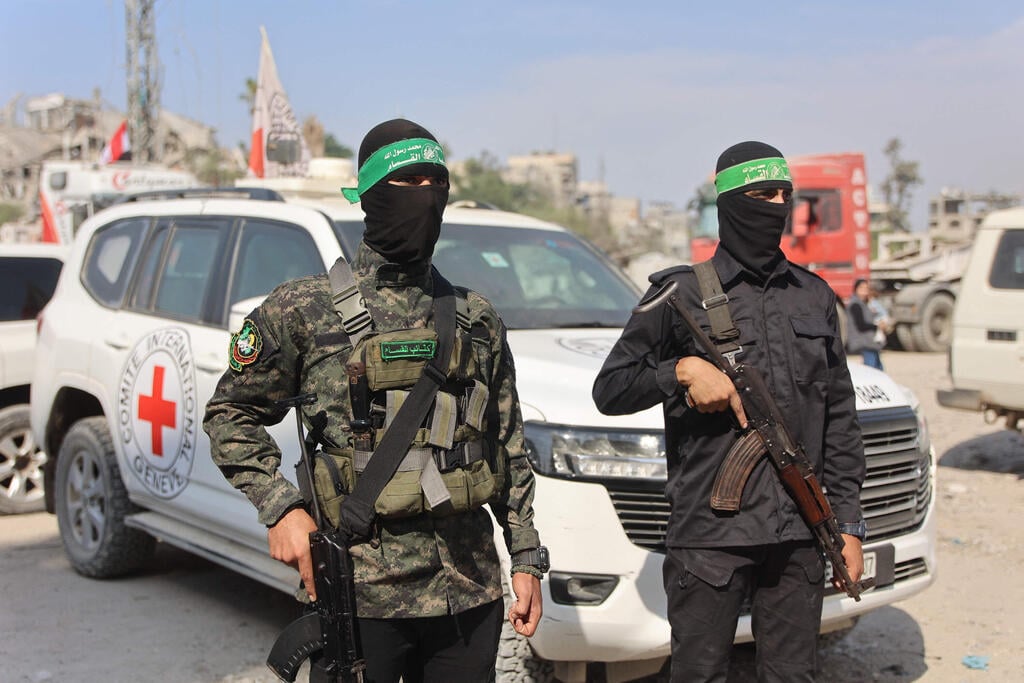
Hamas gunmen in Gaza
(Photo: Omar AL-QATTAA / AFP)
Meanwhile, the U.S. is working to establish the International Stabilization Force (ISF). The effort is being led by Gen. Brad Cooper, commander of U.S. Central Command (CENTCOM). The force itself will be commanded by Gen. Jasper Jeffers, who previously oversaw the ceasefire in Lebanon.
"Everything depends on Hamas disarming—willingly," said one official involved in the planning. "There will be no development or reconstruction in Gaza without Hamas being disarmed, and that’s a consensus. It’s part of the architecture. Just months ago, Israel was isolated, with much of the world against it. Today, even unfriendly countries agree: Hamas must disarm. We’ve gone from Israel being completely isolated to a global consensus around its goal."
Moving to Phase II
The reconstruction of Gaza is set to begin in Rafah, with the Rafah crossing expected to open within days. According to statements made to ynet by Steve Witkoff, President Trump’s envoy to the region, the United States expects the crossing to reopen even if the body of kidnapped police officer Ran Gvili has not yet been recovered. Witkoff explained that the U.S. has confidence Hamas is making genuine efforts to locate and return the body, and therefore the process should not be delayed.
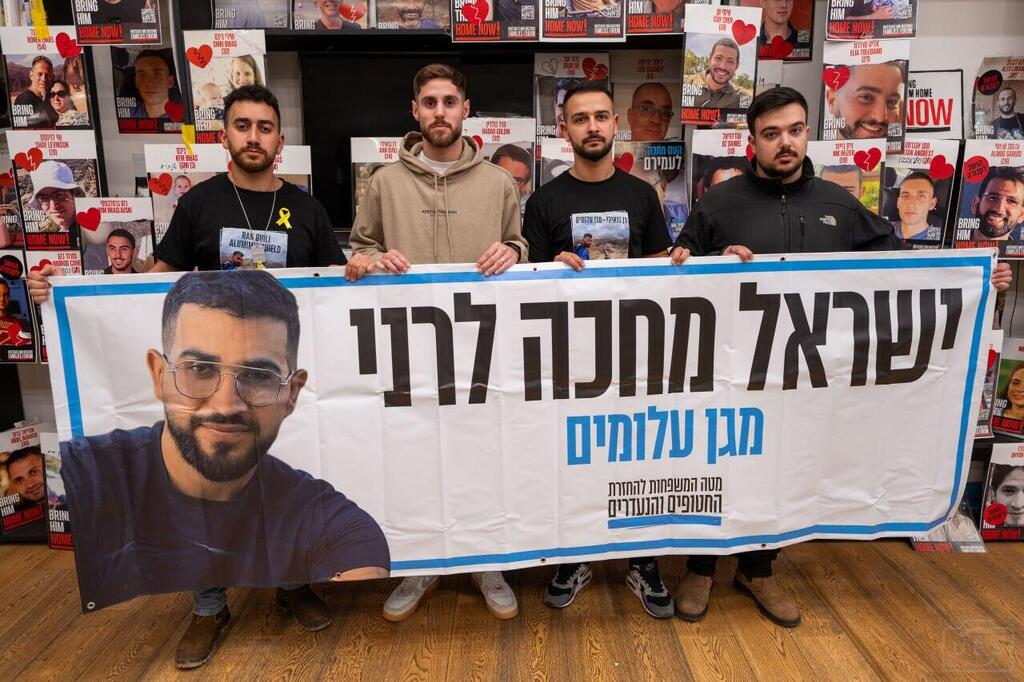
Friends of Ran Gvili call for the return of hus remains from Gaza
(Photo: Uriel Ben Sapir)
A source familiar with the matter emphasized the importance of retrieving Gvili’s remains, calling it a top priority for both Trump and Witkoff. “This is a highly sensitive issue at the highest levels,” the source said. “It’s the matter closest to their hearts and to the entire team. No one is forgetting Gvili.”
The source added that Israel has agreed to clear rubble from the areas slated for reconstruction, a move driven by clear Israeli interests. These include removing landmines and unexploded ordnance to prevent Hamas from repurposing them into explosives, as well as destroying tunnels in areas being evacuated.
“Even without being asked, Israel would need to do this,” the source said. “It’s the IDF’s responsibility to ensure no tunnels remain. Unexploded ordnance represents a vast stockpile of potential weapons. Israel’s overriding interest is to eliminate both the tunnels and the remnants. It all goes hand in hand. That’s the core of Israel’s national interest, and the fact that Finance Minister Smotrich agreed to fund it says a lot. Almost everything happening now reflects a shared interest among all parties. There’s no conflict of interest, including over the clearing of debris.”