


“When they catch the criminals, it is difficult to prove the offense. A day, two days, a week, and they are released home, and they come back for revenge.” That is how executives at the Neve Midbar water corporation described the situation in southern Israel after suspected criminals set fire to the electrical room of its wastewater treatment plant.
A fire investigator who examined the scene determined that the blaze was most likely deliberately set. Diesel fuel had been poured inside the electrical room and tires were also found there.
Footage from inside the charred electrical room


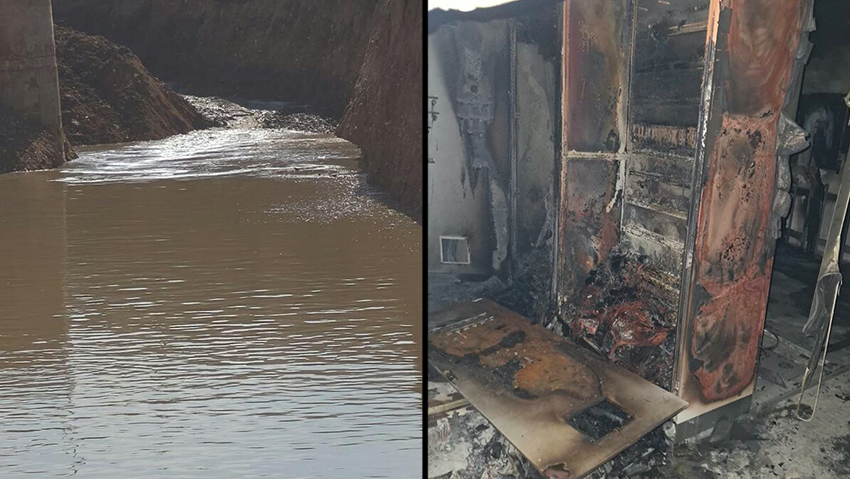
The consequences are already being felt across the region. Raw sewage is now flowing through the Hebron Stream toward Beersheba, creating the risk of severe odor and environmental hazards for communities along the route, including localities in the Al-Kasom and Bnei Shimon regional councils, Omer, Beersheba and communities in the Eshkol Regional Council.
The problem is expected to continue until the treatment plant can resume operations. The Environmental Protection Ministry estimates repairs could take several weeks.
Behind the suspected arson lies a series of protection-racket incidents and the corporation’s refusal to pay extortion demands, according to its management.
“The police are dealing with the issue and cooperating, but unfortunately sophisticated criminals leave almost no traces,” corporation officials said. “Last year there were many incidents of vandalism and destruction, including at pumping stations in the town of Tel Sheva. Sewage from Tel Sheva has already been flowing toward Beersheba for a month. These incidents keep happening again and again, following protection-racket incidents over the past year.”
The Environmental Protection Ministry said the fire had disabled the wastewater treatment plant, causing about 30,000 cubic meters of raw sewage per day to flow into the Hebron Stream and then into the Beersheba Stream.
“The repair may take several weeks,” the ministry said, adding that police are investigating. It recommended that local authorities downstream, including Al-Kasom, Omer, Bnei Shimon, Beersheba and Eshkol, warn residents that foul odors may develop and advise them to stay away from the stream until repairs are completed and the sewage flow stops.
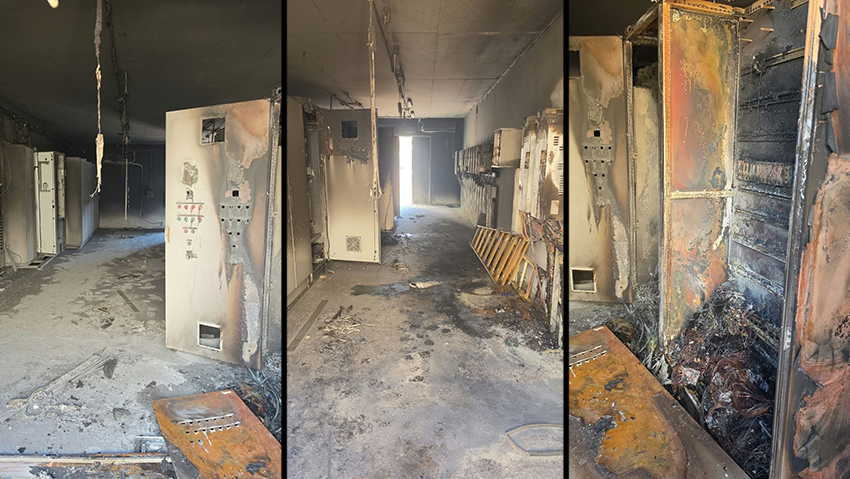
The Water Authority said it viewed the incident at the Neve Midbar wastewater treatment plant with “great severity,” saying the facility had been heavily damaged in what appeared to be deliberate arson.
According to the authority, damage to the plant’s infrastructure caused sewage to begin flowing into the Beersheba Stream channel. Water Authority personnel have been working continuously with the Neve Midbar water and sewage corporation in an effort to stop the environmental hazard as quickly as possible.
The corporation’s CEO is at the site leading emergency efforts, the authority said. Engineering work is underway to stop the sewage at the pretreatment facility, while crews are also trying to operate an emergency bypass using generators in an effort to halt the discharge into the stream entirely.
Beersheba Mayor Ruvik Danilovich sharply criticized the government’s handling of crime and extortion in the Negev.
“This is lawlessness by the State of Israel, which is incapable of dealing with criminal gangs that are harming the quality of life of hundreds of thousands of Negev residents,” Danilovich said. “Crime and protection rackets must be uprooted completely, without compromise, but unfortunately there is no deterrence.”
He said the incident reflected what he described as a long-running failure of governance in the region.
“Instead of all the government ministries responsible for the issue and all the public systems working together to cut off this serious crime, we are witnessing helplessness and inaction by the state,” he said. “Until when?”
A report published in April by then-State Comptroller Matanyahu Englman also warned of a lack of governance in the Negev and its far-reaching consequences.
“The lack of governance harms the deterrence capabilities of the various enforcement agencies against lawbreakers and affects residents’ sense of personal security and their level of trust in state institutions,” the report said.
It also cited serious economic consequences, including unnecessary welfare payments, underpayment of taxes, threats against legitimate businesses, financial damage, drug cultivation and the illicit drug economy.