

A month and a half after U.S. President Donald Trump unveiled his Gaza plan, and just over a month after the cease-fire took effect, the next phase remains out of reach. Facing diplomatic obstacles in the UN Security Council to approve a resolution establishing an international stabilization force in Gaza, the United States and eight Muslim and Arab countries issued a joint statement Friday expressing full support for the American draft.
The declaration, initiated by the U.S. mission to the UN, was intended to push the resolution forward and underscore regional commitment to Trump’s comprehensive Gaza proposal while Russia seeks to block it.
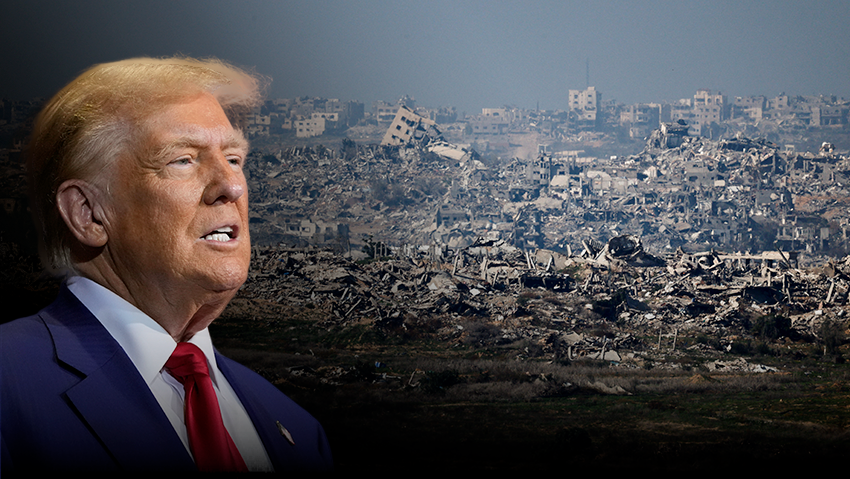
In the statement, the United States, Qatar, Egypt, the United Arab Emirates, Saudi Arabia, Indonesia, Pakistan, Jordan and Turkey voiced support for the draft resolution now under discussion. Washington says the text was crafted “after consultations and cooperation with Council members and regional partners.” The statement highlights that the decision endorses the “historic comprehensive plan to end the conflict in Gaza,” announced on Sept. 29 and adopted at the Sharm el-Sheikh “peace summit.”
“We issue this statement to propel a process that offers a path to Palestinian independence and statehood,” the countries wrote. “We stress that this is a genuine effort, and the plan provides a sustainable route to peace and stability not only between Israelis and Palestinians but across the region.” The countries said they expect “swift approval” of the resolution.
Western diplomats described the move as “a calculated U.S. step to preserve support” for its draft. They said Washington needs nine votes in the Security Council, a task made difficult by opposition from Russia and China and by Moscow’s competing proposal. Pakistan, a non-permanent member, has now formally joined the supporters, easing U.S. efforts. Algeria, another non-permanent member, remains “on the fence” and may ultimately decide the outcome.
In Israel, officials welcomed the statement but warned of “a Palestinian double game.” “They publicly back the American draft, but behind the scenes they’re working to undermine it,” a senior Israeli official said.
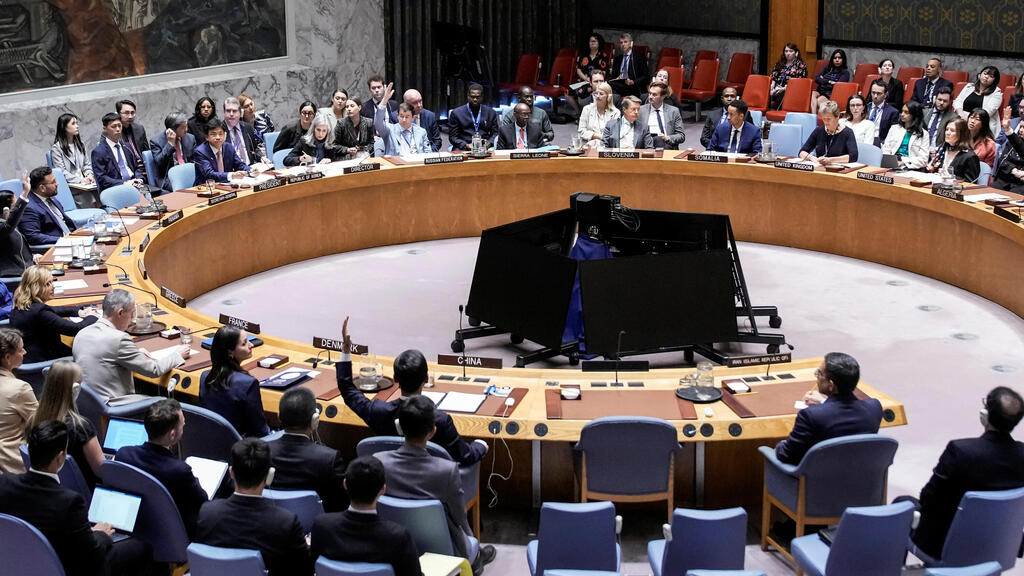
UN Security Council
(Photo: Reuters/Eduardo Munoz)
The joint statement comes at a critical moment as the process moves toward the second stage of Trump’s plan. The stabilization force, composed of international troops, is intended to replace the Israel Defense Forces in Gaza and assist reconstruction under international supervision. Announced in September, the broader plan includes a cease-fire, Gaza’s rehabilitation, disarmament of Hamas and demilitarization of the strip, but it has faced resistance from countries including Russia.
U.S. diplomats expect the vote to take place as early as next week, though success hinges on convincing Algeria and containing other objections.
Four diplomats told The New York Times on Friday that several disputes remain over the resolutions under discussion. China wants references to Trump’s entire peace plan removed. Russia, Algeria, France and others want explicit language supporting a Palestinian state. China, Russia and several European countries have asked for clarifications on the composition and role of the proposed governing body, the “peace council,” which would oversee implementation of Trump’s plan. Some states have also said the resolution should clearly define the Palestinian Authority’s role in Gaza’s “transitional administration.”
Indonesia: 'We have already trained 20,000 soldiers'
Meanwhile, after Arab states rejected participating in the stabilization force over concerns about a potential military clash with Hamas, Indonesia’s defense minister, Syafrie Syamsuddin, announced Saturday that his country has trained 20,000 soldiers for “health and construction missions as part of the peacekeeping operation” in Gaza.
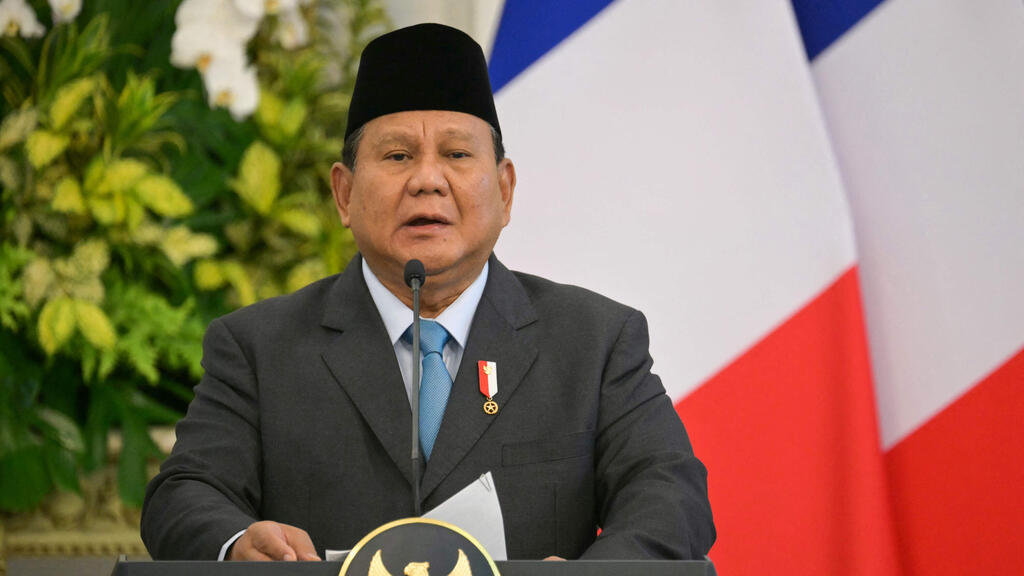
Indonesian President Prabowo Subianto
(Photo: Bay Ismoyo/ AFP)
Indonesia, the world’s largest Muslim-majority country — which is reportedly exploring normalization talks with Israel — is among the few states that have confirmed they will send troops to the force, expected to include Azerbaijan, Egypt, Qatar and others.
Still, the Indonesian minister said no decision has been made on when or how the forces would deploy or what their mandate would be, given the difficulties in passing the UN resolution and persuading countries to join. He stressed that the troops’ training focused on “health and construction” tasks. “We are waiting for further decisions regarding peace operations in Gaza,” he said.
Qatar’s Al-Araby Al-Jadeed reported Saturday that Indonesia and Jordan are establishing a joint committee for intelligence sharing on Gaza. The initiative was agreed during a meeting in Jakarta between the Indonesian defense minister and the chairman of Jordan’s joint chiefs of staff, who told reporters that Jordan’s geographic proximity to Gaza provides “strategic value for better understanding the situation on the ground.”
Meanwhile, EU foreign ministers will discuss a proposal next week for the European Union to lead the training of 3,000 Palestinian police officers, who could later be deployed in Gaza, according to a document obtained Saturday by Reuters.
The document, prepared by the EU’s diplomatic service ahead of Thursday’s ministerial meeting, outlines ways the bloc could help implement Trump’s 20-point plan — though it remains unclear how the plan would ultimately be guaranteed. The paper describes options for expanding two existing EU civilian missions in the region focused on border support and Palestinian Authority reform.
According to the document, the EU could “take the lead in training Gaza’s Palestinian police force through direct training and support for roughly 3,000 PA-employed officers, with the intention of eventually training the full 13,000-strong police force.”
Russia challenges Washington as the US draft is revised
Russia on Friday submitted its own draft resolution on Gaza, directly challenging the American effort. Moscow’s move disrupted Washington’s plan to bring its agreements with Arab states to a vote the same day — something that did not happen because the Russian proposal, though unlikely to pass, is expected to delay proceedings.
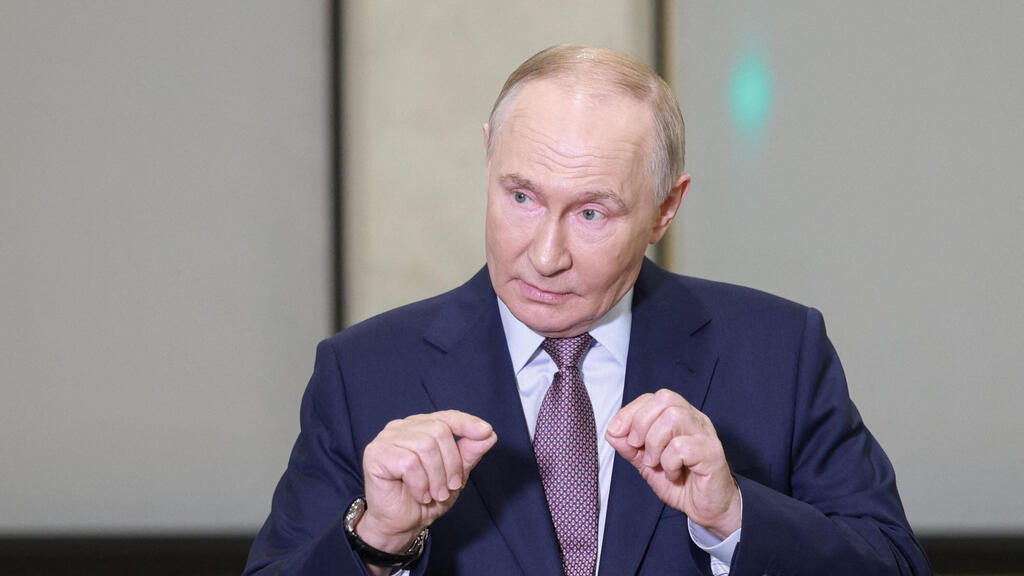
Russian President Vladimir Putin
(Photo: Alexander Shcherbak/ AFP)
The Russian draft excludes Trump’s “peace council.” It asserts that “the situation in the occupied Palestinian territories constitutes a threat to regional peace,” reiterates the need to comply with international law, calls on the UN secretary-general to explore options for an international stabilization force in Gaza, demands full and unhindered humanitarian access, rejects demographic or territorial changes in Gaza, and reaffirms support for a two-state solution and the territorial continuity of Gaza and the West Bank under the Palestinian Authority.
Israeli officials say the updated U.S. draft includes elements “uncomfortable for Israel,” among them not only the pathway to a Palestinian state but also a clause removing Israel’s veto over which countries may contribute troops to the stabilization force. Still, they say the proposal maintains the framework of the cease-fire agreement approved in Jerusalem, even if it is “less favorable.”
Key changes in the revised US proposal
• Section 1: A sentence was added that strengthens the call for full implementation “in all circumstances,” stating: “... calls on all parties to implement it in full, including upholding the cease-fire, in good faith and without delay.”
• Section 2: Expanded language on Palestinian self-determination was added: “After the Palestinian Authority’s reform plan is credibly implemented and Gaza’s development advances, conditions may be met for a reliable pathway to Palestinian self-determination and the establishment of a state.” This aligns closely with French President Emmanuel Macron’s recent plan, tied to PA reforms, and his announcement with Mahmoud Abbas on forming a committee to draft a Palestinian constitution. The section also states that “the United States will conduct dialogue between Israel and the Palestinians to agree on a political horizon for peaceful and prosperous coexistence.”
• The term “transitional administration” was replaced with “transitional directorate” to match the terminology of Trump’s 20-point plan. The peace council would serve as this “transitional directorate” in Gaza.
• According to Saudi outlet Asharq, Section 3 removes a paragraph barring any organization that misuses aid from receiving future or ongoing support, a deletion described as one of the more significant changes.
• Asharq also reported a revision to Section 7 addressing Israel’s withdrawal, now stating that the pullout will occur “once the international force achieves control and stability.” The amended text reads: “As the international force in Gaza establishes control and stability, the Israeli military will withdraw from the Gaza Strip based on criteria and timelines related to disarmament, agreed between the Israeli military, the international force, the guarantor states and the United States, except for a security presence around Gaza that will remain until the strip is adequately secured so that it does not become a source of new terrorist threats.”