


U.S. President Donald Trump appears to believe that the threat of military pressure could force Iran to shift its defiant position in negotiations over its nuclear program. If that effort fails, operational plans for large-scale strikes are likely already prepared.
Trump is likely aware that toppling Iran’s ruling system through airstrikes alone is not a realistic objective. However, sustained weakening of the regime could potentially reignite domestic protests. A strike would not necessarily bring Tehran back to the negotiating table on more favorable terms, but that may be one of Washington’s goals.
White House press secretary: 'Many reasons for a strike against Iran'
(Video: White House)


Assuming an attack becomes a fait accompli, attention would turn to potential targets. Israeli and U.S. officials are believed to be closely coordinating. Drawing lessons from the 12-day war in June last year — a brief but intense round of direct hostilities between Israel and Iran — senior officers from both countries reportedly spent weeks reviewing maps, aerial photographs and intelligence assessments together.
Public leaks suggesting disagreements, including claims that Washington opposed a strike, were intended in part to confuse Iran and may have served as strategic deception.
If coordination is in place, Israel and the United States likely have divided responsibilities over which targets each would strike.
The first and most urgent objective would likely be to disable Iran’s air defense systems to establish air superiority for Israeli and especially American aircraft.
Gallery
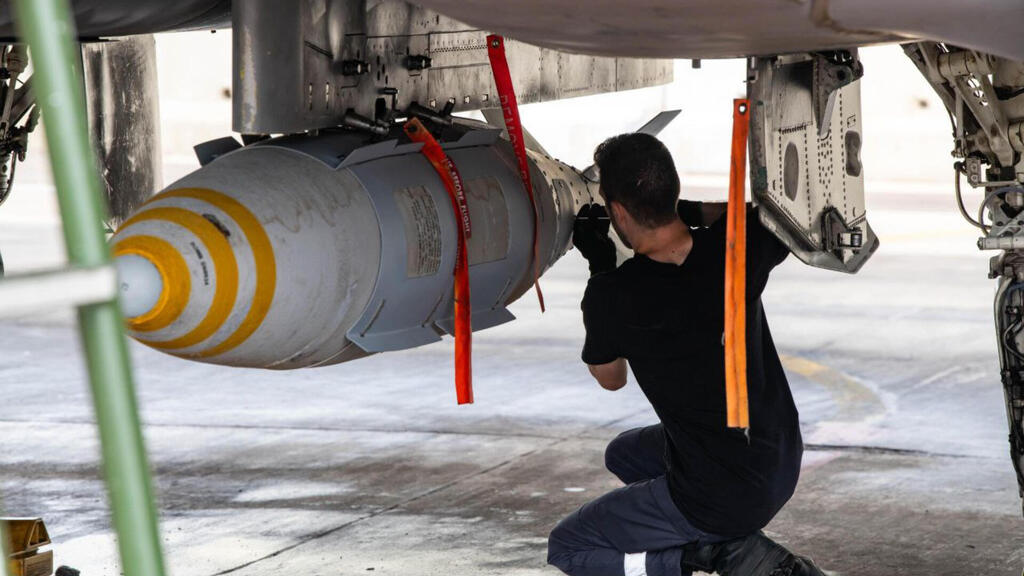
Israeli Air Force personnel prepare munitions on a fighter jet during the 12-day war against Iran
(Photo: IDF)
Iran has sought to rebuild its air defenses after what Israeli officials described as significant damage inflicted by Israeli strikes last year, which they said created a safer aerial corridor for Israeli Air Force jets operating over Iranian territory.
To bolster its defenses, Tehran would have needed advanced S-400 surface-to-air missile systems from Russia. However, Moscow is unlikely to have supplied them because of its own pressing needs for such systems in the war in Ukraine. There have also been varying reports that China has provided some assistance to Iran, though the extent of that support remains unclear.
In any case, U.S. and Israeli forces would first have to neutralize Iran’s air defense network before moving on to other strategic targets.
Anything that can take to the air would be destroyed
Another urgent objective would be to strike the mullah regime’s ballistic missile arsenal. For Israel, destroying long-range ballistic missiles that directly threaten its territory would be a top priority. For the United States, the focus would likely be on medium- and short-range missiles capable of targeting U.S. forces in the Persian Gulf and Washington’s regional allies.
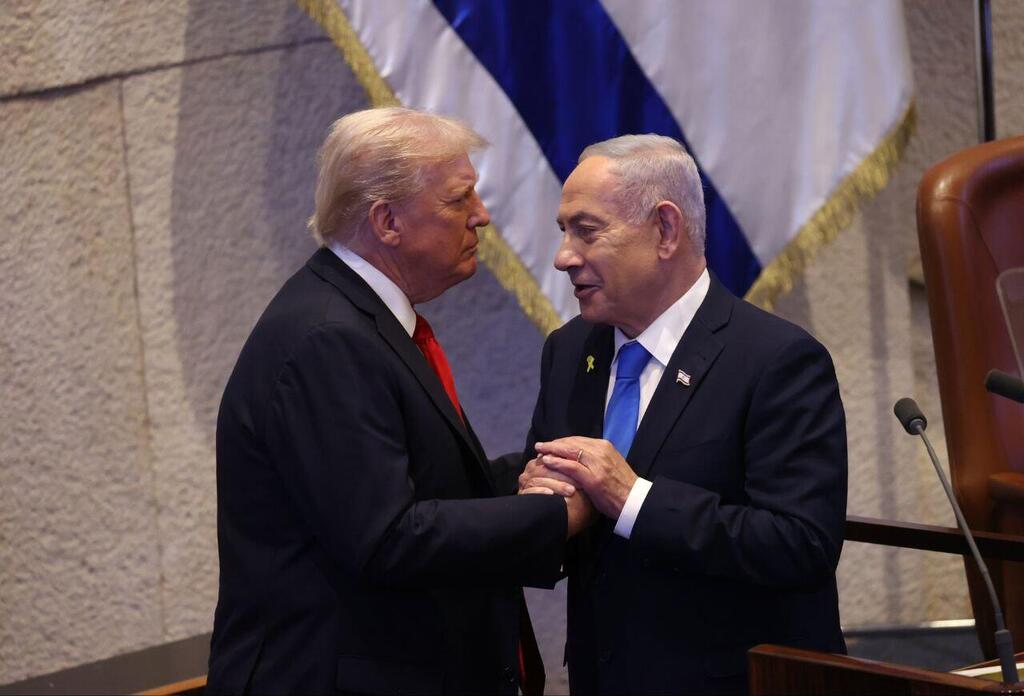
US President Donald Trump and Prime Minister Benjamin Netanyahu
(Photo: Alex Kolomoisky)
In addition, the United States would almost certainly seek to dismantle Iran’s drone array, which could inflict damage on American assets. In such a scenario, virtually anything that can take to the air would be destroyed.
Another key objective would be the fleet of Iran’s Islamic Revolutionary Guard Corps (IRGC), which poses a threat to U.S. naval forces. Neutralizing that fleet would be essential if Washington aims to remove Iran’s capacity to disrupt or close the Strait of Hormuz, a vital global oil shipping lane.
Israel’s objective would be to focus on defending against Iran and its regional proxies, while also preparing for the possibility of renewed confrontation with Hezbollah in Lebanon and the Houthis in Yemen. Israeli planning is aimed at removing the missile threat once and for all.
Dr. Raz Zimmt, director of the Iran Program at the Institute for National Security Studies in Tel Aviv, said the United States would likely seek a significant achievement beyond degrading missile capabilities.
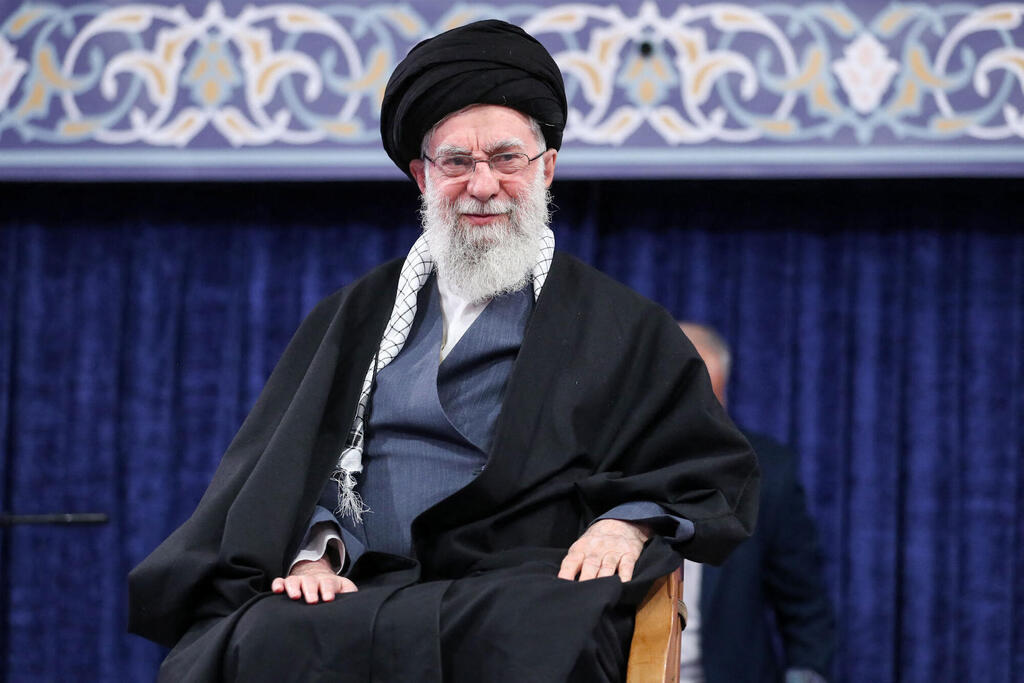
Iranian Supreme Leader Ali Khamenei
(Photo: AFP PHOTO / HO / KHAMENEI.IR)
“Regime change is overly optimistic,” he said. “The Americans may aim instead at destabilizing the regime, which might be more feasible. I don’t see how you destabilize the regime if you do not eliminate Supreme Leader Ali Khamenei. In theory, you could weaken the regime by striking IRGC and Basij headquarters, and if millions of citizens take to the streets a month later, it would be harder for the authorities to suppress them.”
The Basij is a paramilitary volunteer force affiliated with the IRGC that has been used to quell domestic unrest.
Zimmt added that achieving change independent of popular mobilization would require a move that fundamentally alters the regime’s structure.
“If you don’t kill Khamenei, and you repeat something like what Israel did in the opening hours — eliminating part of the general staff and attempting, unsuccessfully, to target senior officials — even if they were to succeed in removing other political figures, that would not necessarily destabilize the regime,” he said.
 Dr. Raz Zimmt
“If they want to shake the regime, they would have to remove Khamenei, and even that might not be sufficient. But it would in itself be a seismic event. The very fact that the system would have to enter a process of selecting a new leader would be dramatic. Removing the leader and part of the political elite is far harder to recover from.”
Still, Zimmt cautioned that it would be extremely difficult for the United States to ensure that large numbers of Iranians take to the streets. “There is no way to guarantee that the masses will come out,” he said. “More Iranians than before may hope for an American strike because they are angry and frustrated. But many are traumatized by what has happened in recent weeks. If it is not clear to them that the regime is truly wavering, it will be difficult to persuade them again to risk their lives and protest.”
“The bottom line,” he said, “is that there is no way to guarantee that millions will go into the streets. American strategy should not be based on the assumption that they will. If they do, it could be decisive and might enable regime change. But you cannot build a strategy on that assumption.”
'You can count on the Americans to be able to deepen the damage underground'
A key question is whether Israel or the United States would use a strike to inflict additional damage on Iran’s nuclear facilities. According to Zimmt, the main enrichment facilities at Natanz and Fordow are currently not operational.
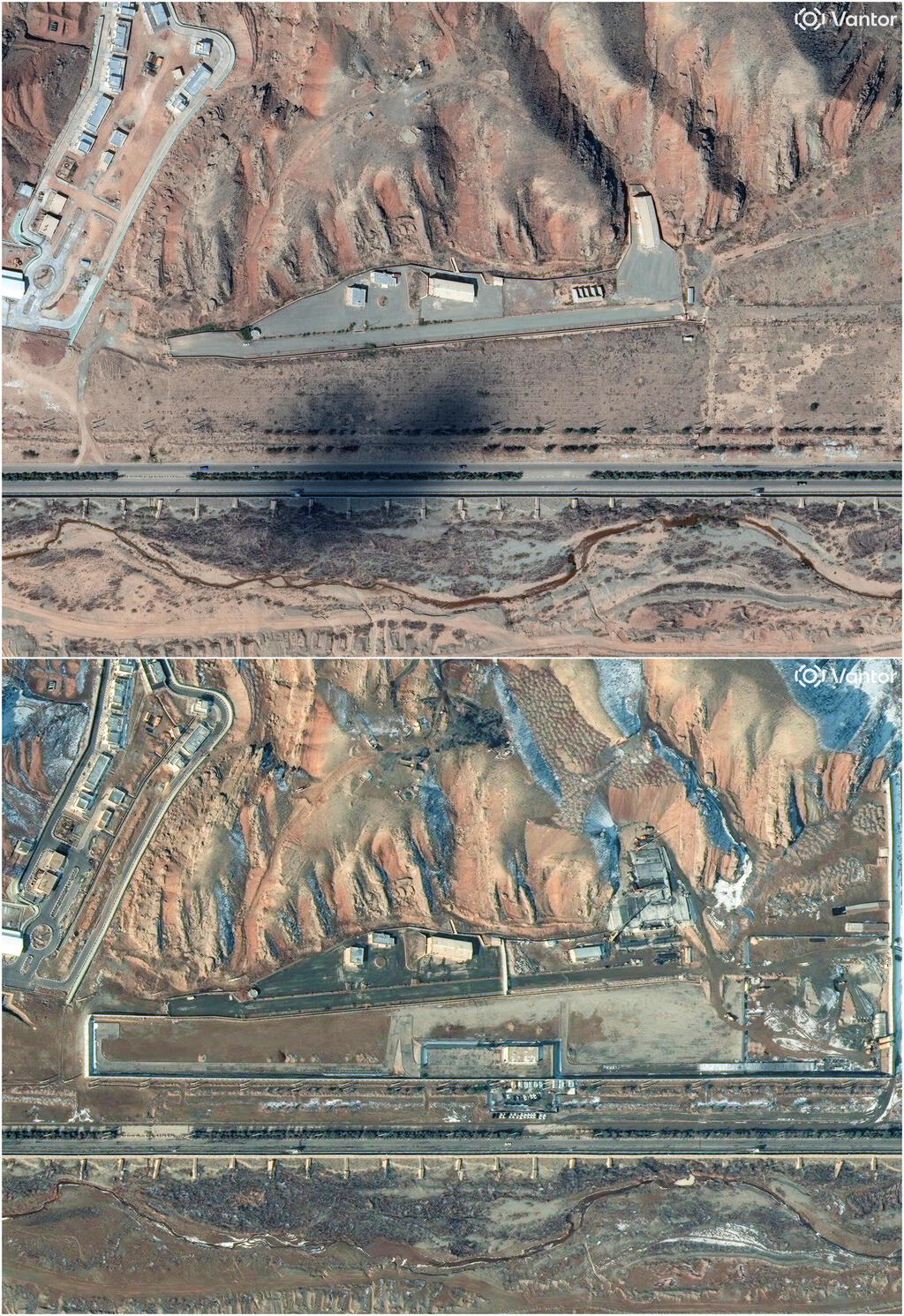
A combination picture of satellite images show the Parchin military complex before the Israeli strikes of October, 2024, in Parchin, Iran in this handout image dated October 20, 2024, (top), and concrete over the site at the Parchin military complex, in Parchin, Iran in this handout image dated January, 24, 2026, (bottom)
(Photo: Vantor/Handout via REUTERS)
“The Iranians have taken various steps to reinforce protection,” he said. “There is the facility at Parchin that was struck in October 2024, which in the past was associated with weaponization efforts, though it is not clear whether that is still the case. There is also the underground facility south of Natanz. It has not been attacked. It is deeper than Fordow, and it is unclear whether there is the capability to hit it. If there is such capability, they may try. The Iranians have been building it for years. It is supposed to serve as storage for centrifuges, and one cannot rule out the possibility that in the future it could be used for enrichment. But overall, it seems that at the moment the nuclear issue is less urgent.”
Another possibility, he said, is that Israel, the United States or both would attempt to strike Iran’s so-called “missile cities” — underground tunnel complexes used to store and launch ballistic missiles.
“Regarding the missiles, Israel managed to hit some of the launchers that emerged from the tunnels and to seal some of the entrances to those underground sites during the war,” Zimmt said. “We did not strike the facilities themselves because they are deep. You can count on the Americans to be able to deepen the damage underground.”
A further critical factor is missile defense. Israel and the United States are likely to coordinate closely on air defense and efforts to intercept ballistic missiles that Iran may launch toward regional targets and Israel itself. One of Israel’s requests to Washington has been to bolster air defense systems.
Unlike the 12-day war last year, which Israel initiated, in the event of a broader U.S.-led strike, additional countries may assist in intercepting Iranian missiles. Neighboring states as well as European countries could have an incentive to participate in missile defense efforts, reflecting the wider regional stakes.